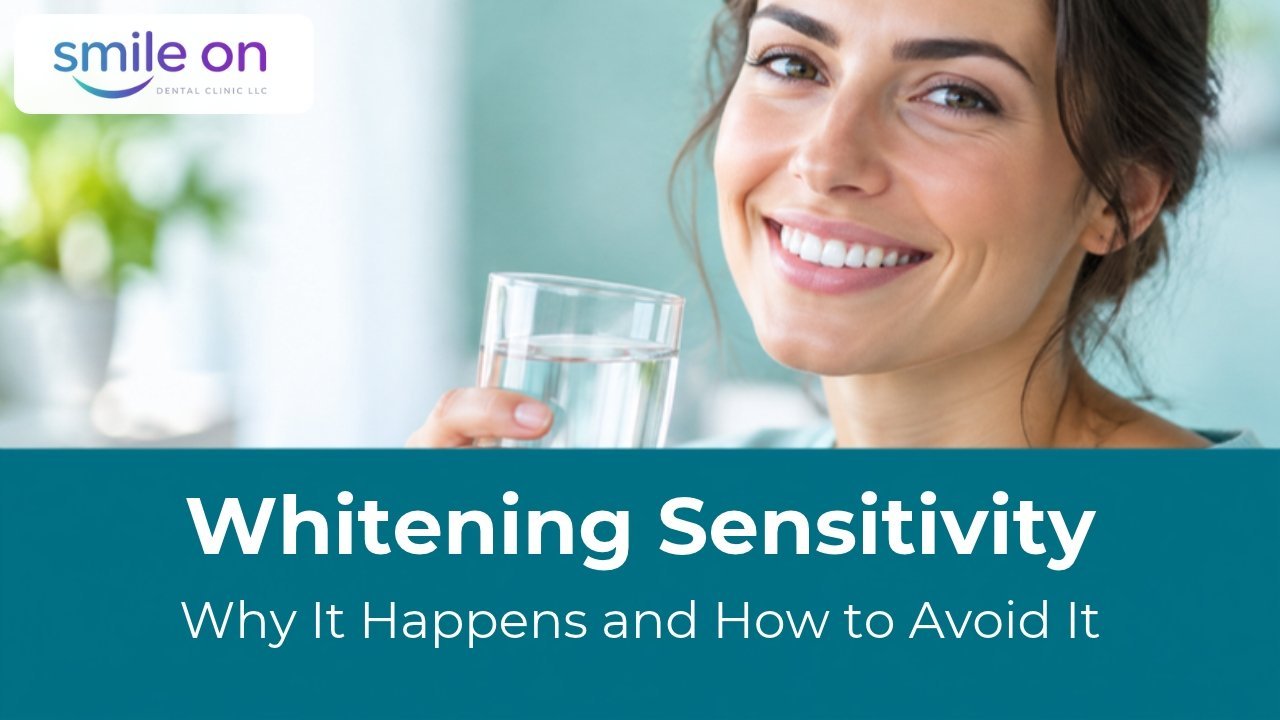
Sensitivity is the most common side effect of teeth whitening, and for most people it is mild and short-lived. It usually shows up as sharp twinges when you drink something cold or breathe in cold air, and it typically settles within 24 to 48 hours, sometimes lasting a few days. It happens because whitening gel temporarily opens tiny channels in the tooth that lead towards the nerve. It does not mean your teeth have been damaged, and there is a lot you can do to prevent and ease it.
This guide explains why whitening causes sensitivity, how long it lasts, who is more likely to get it, and practical ways to reduce it before, during and after treatment. It is written by the team at Smile On Dental Clinic in Al Satwa, Dubai, for anyone planning to whiten their teeth or dealing with sensitivity after a recent treatment.
Want whiter teeth without the worry?
Have your teeth checked and whitened by our dental team at Smile On Dental Clinic, Al Satwa. Scaling, polishing and whitening AED 499.
Why does teeth whitening cause sensitivity?
Whitening gels use hydrogen peroxide or carbamide peroxide to break down the stains inside the tooth. To reach those stains, the peroxide passes through the enamel into the layer underneath, called dentine. Dentine is full of microscopic tubes that lead to the nerve. While the gel is working, those tubes become more open and the nerve becomes temporarily more reactive, which is why cold, air or sweet foods can cause brief, sharp twinges.
Once treatment ends, the tooth naturally remineralises and the tubes close up again, so the sensitivity fades on its own.
How long does sensitivity last after whitening?
For most people, sensitivity after professional whitening lasts 24 to 48 hours. Some people notice it for up to a few days. With home whitening trays, it can come and go during the course of treatment and settle once you stop or reduce how often you wear them.
Contact your dentist if sensitivity:
- Lasts longer than a week
- Is severe, constant or throbbing rather than brief twinges
- Is focused on one tooth
- Comes with swelling or pain when biting
These can point to a different problem, such as a cavity, a cracked tooth or a leaking filling, which should be checked.
Who is more likely to get sensitivity?
Anyone can get some sensitivity after whitening, but it is more likely if you:
- Already have sensitive teeth, especially to cold
- Have receding gums, which leaves the root surfaces exposed
- Have worn enamel from grinding, acidic drinks or brushing too hard
- Have untreated cavities, cracks or leaking fillings, which let the gel reach the nerve more easily
- Use stronger gels or longer sessions, or whiten too often
- Use over-the-counter kits that do not fit well and let gel spread onto the gums
This is why a dental check before whitening matters. Treating cavities, sealing exposed areas and choosing the right strength for your teeth all reduce the chance of sensitivity.
Professional vs home whitening: does it make a difference?
| In-clinic whitening | Dentist-supplied home trays | Over-the-counter kits | |
|---|---|---|---|
| Gel strength | Highest, applied by the dental team | Lower, used over days or weeks | Variable, often unregulated |
| Gum protection | Gums are shielded before the gel goes on | Custom trays limit contact with gums | Generic trays often let gel touch gums |
| Sensitivity | Usually short, and managed with desensitising treatment | Usually mild and controllable by adjusting wear | Can be higher if the gel spreads or trays fit poorly |
| Supervision | Dentist checks your teeth first and monitors throughout | Dentist plans strength and schedule | None |
In-clinic whitening uses a stronger gel, but because your gums are protected, your teeth are checked first and the dental team can apply a desensitising agent, sensitivity is usually short and well controlled. The biggest risks tend to come from generic kits used without a check-up.
How to prevent sensitivity before whitening
Have a check-up and cleaning first. Cavities, cracks and exposed roots should be dealt with before whitening. A scale and polish also removes surface stains, so you may need less whitening to reach the shade you want.
Use a sensitivity toothpaste for two weeks beforehand. Toothpastes with potassium nitrate or stannous fluoride calm the nerve and block the tiny tubes in the dentine.
Tell your dentist if you already have sensitive teeth. They can choose a gentler gel, shorter sessions or a different approach.
Avoid whitening straight after a cleaning if your teeth feel tender. Give them a day or two to settle.
How to ease sensitivity after whitening
Keep using a sensitivity toothpaste. Brush with it twice a day, and you can also dab a little on the sensitive areas and leave it for a few minutes.
Avoid very hot or very cold food and drinks for 24 to 48 hours. Lukewarm drinks are kinder, and a straw helps keep cold drinks away from the front teeth.
Skip acidic food and drinks for a couple of days. Citrus, fizzy drinks and vinegar can make sensitivity worse while the enamel is recovering.
Brush gently with a soft toothbrush. Hard brushing can irritate the teeth and gums.
Use fluoride. A fluoride mouthwash or a fluoride gel from your dentist helps the enamel remineralise.
Pause home whitening if needed. If you are using trays at home, take a break for a day or two, or wear them for shorter periods.
Take an over-the-counter painkiller if necessary. For a day or two, this can take the edge off.
Will whitening damage my enamel?
No. Professional whitening carried out by a dentist, at the right strength and frequency, does not damage healthy enamel. The sensitivity is temporary and caused by the nerve reacting, not by the enamel being worn away. Problems are more likely with overuse, very frequent whitening, unregulated products or abrasive “whitening” powders and charcoal pastes, which can wear enamel over time.
Can you whiten teeth if you already have sensitive teeth?
Yes, in most cases. The key is to find and treat the cause of your sensitivity first, then plan the whitening around it. Your dentist may suggest a lower-strength gel, shorter sessions, a desensitising treatment before and after, or home trays so you can control the pace. If your gums have receded, the exposed roots will not whiten anyway, and protecting them reduces discomfort.
Whitening at Smile On Dental Clinic
At Smile On, whitening starts with a check of your teeth and gums so any cavities, cracks or exposed roots are dealt with first. Our scaling, polishing and whitening package is AED 499, and Zoom whitening is priced on consultation. The team protects your gums during treatment and gives you clear aftercare advice to keep sensitivity to a minimum.
To compare in-clinic, Zoom and home options, read our guide to Zoom vs laser vs home teeth whitening, or see our teeth whitening in Dubai and Zoom teeth whitening pages.
Ready for a brighter smile?
Book a whitening consultation at Smile On Dental Clinic in Al Satwa, Dubai. Scaling, polishing and whitening AED 499. Open daily, 9am to 9pm.
Frequently Asked Questions
Is it normal to have sensitive teeth after whitening?
Yes. Mild sensitivity is the most common side effect of whitening. It usually feels like brief twinges with cold food, drinks or air, and it typically settles within 24 to 48 hours.
How long does sensitivity last after teeth whitening?
For most people, 24 to 48 hours, sometimes up to a few days. If it lasts longer than a week or is severe, see your dentist.
How can I stop sensitivity after whitening?
Use a sensitivity toothpaste, avoid very hot, cold and acidic food and drinks for a couple of days, brush gently with a soft brush, and use fluoride. If you are whitening at home, take a short break from the trays.
Does teeth whitening damage enamel?
Professional whitening at the correct strength does not damage healthy enamel. The sensitivity is temporary and caused by the nerve reacting, not by enamel loss.
Can I whiten my teeth if I have sensitive teeth?
Usually yes. Your dentist will first check the cause of your sensitivity and may recommend a gentler gel, shorter sessions or a desensitising treatment.
Is in-clinic whitening more painful than home whitening?
In-clinic whitening uses a stronger gel, but the gums are protected and the dental team can apply a desensitising treatment, so any sensitivity is usually short. Home trays use a weaker gel over a longer period.
How much does teeth whitening cost at Smile On?
At Smile On Dental Clinic in Al Satwa, the scaling, polishing and whitening package is AED 499. Zoom whitening is priced on consultation.