Composite Bonding in Dubai: Is It Worth It? Cost, Results, and What Nobody Tells You
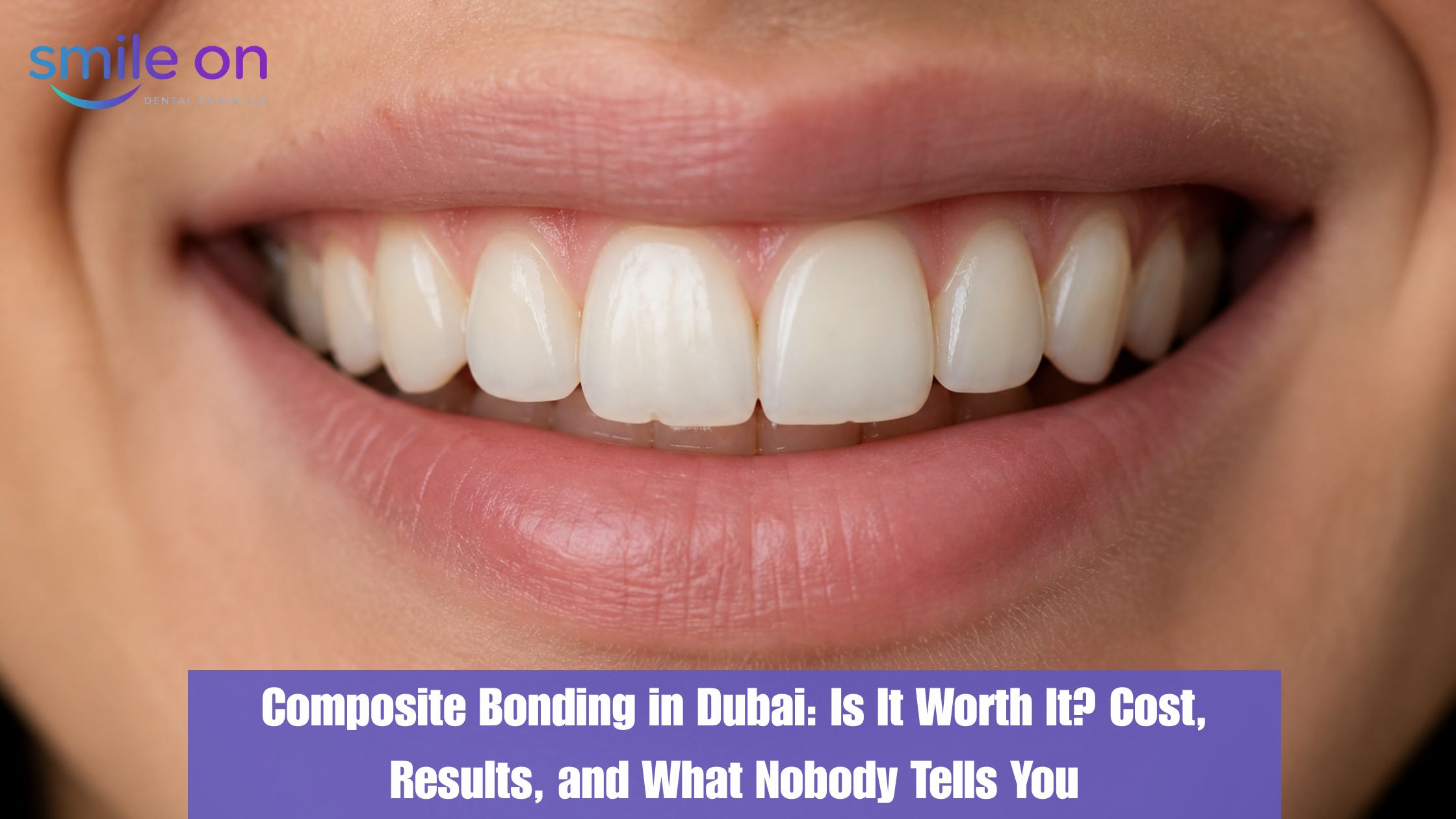
Most patients who walk into a cosmetic dental consultation in Dubai are already thinking about veneers. They have seen the results on social media, they have a budget in mind, and they have mentally committed. But for a significant number of those patients, composite bonding would give them the same result in one appointment, at a fraction of the cost, and without removing any healthy tooth structure. Composite bonding is genuinely one of the most undersold treatments in Dubai’s cosmetic dentistry scene. It does not have the brand recognition of Invisalign or the Instagram appeal of a Hollywood Smile, but for the right patient, the outcome is indistinguishable from far more expensive options. This is an honest breakdown of what it is, what it actually fixes, what it costs in Dubai, and when you should choose it over veneers. And when you should not. What Is Composite Bonding? Composite bonding is a cosmetic dental procedure where a tooth-coloured resin material is applied directly to the surface of your teeth, sculpted by hand, hardened with a UV curing light, and polished to match natural tooth enamel. There is no drilling in most cases. No removal of tooth structure. No temporary crowns and no waiting weeks for a lab result. In the majority of straightforward cases, the entire procedure takes one to two hours per session, and you leave with the finished result the same day. The material used, composite resin, is the same used for white dental fillings. In cosmetic bonding, however, it is applied in layers, shaped, and colour-matched with considerably more precision and artistry. The quality of the result depends almost entirely on the skill of the dentist doing the work. This is why choosing the right cosmetic dentistry clinic in Dubai matters more than the treatment type itself. What Problems Does Composite Bonding Fix? Composite bonding is genuinely versatile. It works well for the following. Chipped or cracked teeth. A small chip on a front tooth, the kind that catches your tongue or makes you self-conscious in photos, can usually be repaired in a single appointment. The resin is built up to restore the natural shape of the tooth. Gaps between teeth (diastema). If you have a gap between your two front teeth that you do not want to correct with orthodontics, composite bonding can close or reduce it by widening each tooth slightly on the inner edge. This is one of the most common uses in Dubai, where patients want a cosmetic fix without committing to months of aligner treatment. Discolouration that does not respond to whitening. Tetracycline staining, fluorosis, or intrinsic discolouration (staining inside the tooth rather than on the surface) does not respond to teeth whitening. Composite bonding covers the discolouration entirely rather than trying to bleach it away. Slightly uneven or short teeth. If one tooth is noticeably shorter than its neighbour, or the edges of your front teeth are uneven in a way that bothers you, bonding can add length and reshape the edge. Minor misalignment. Bonding can make a mildly crooked or rotated tooth appear more aligned by adjusting its shape. It does not move the tooth. It changes the visual impression of its position. For significant misalignment, orthodontics remains the appropriate route. What composite bonding is not suitable for: severe crowding, large structural damage, heavily stained teeth across the full arch, or patients who grind their teeth heavily without a protective bite guard. In these cases, the resin will chip or discolour too quickly to justify the investment. Before and After: What Realistic Results Look Like Composite bonding results vary depending on what is being treated, how much surface area is involved, and the skill of the dentist doing the work. For single-tooth repairs, such as a chip, a small gap, or a discoloured edge, the result is typically seamless. Done well, no one outside of a dental clinic will know which tooth was treated. For more extensive work, reshaping multiple front teeth, closing a wide gap, or adding length across four to six upper teeth, the result can be transformative. It requires a dentist who understands how to sculpt composite in a way that reflects light naturally. Composite that looks beautiful in the clinic can look flat or grey in certain lighting if the layering is not done correctly. This is why before and after photos matter. When you consult at any clinic offering composite bonding in Dubai, ask to see real patient cases, not stock images, where the original problem is similar to yours. If the clinic cannot provide these, that is useful information in itself. At Smile On Dental Clinic, our cosmetic consultations include a full assessment of whether composite bonding, porcelain veneers in Dubai, or a combination approach will give you the most durable and natural-looking outcome for your specific teeth. Composite Bonding vs Porcelain Veneers: When Each One Makes Sense This is the comparison most patients eventually land on. It is worth being direct about the trade-offs rather than positioning one as universally better. Choose composite bonding when: The issue is isolated, covering one or two teeth, a chip, or a gap. You want a reversible option, since composite can be removed or adjusted later without permanent consequences to the natural tooth. Budget is a consideration, as composite is significantly cheaper per tooth than porcelain. You want same-day results without lab delays. You are younger and want to preserve healthy tooth enamel until a more permanent solution makes sense. Choose porcelain veneers when: You are treating six to ten teeth and want uniformity across the full smile. You need a dramatic colour change that composite cannot achieve long-term, since composite can stain over the years. You want a result that lasts 15 or more years rather than five to seven. The structural issue is significant enough to warrant the additional preparation involved. You have already discussed and committed to a Hollywood Smile makeover or full smile redesign. The honest version: composite bonding is not a
Dental Implant Cost in Dubai: What You Actually Pay in 2026 (and Why Prices Vary)
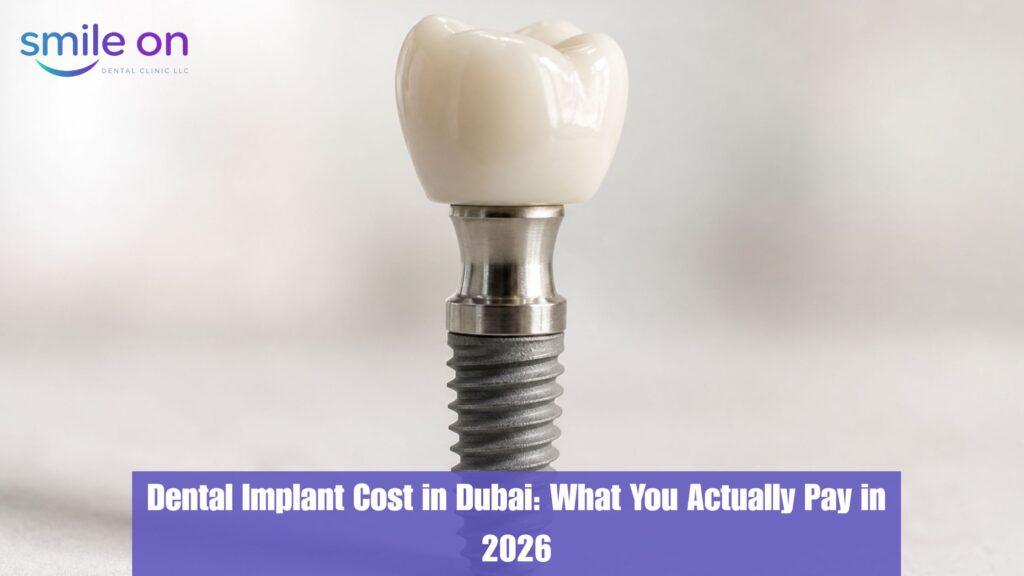
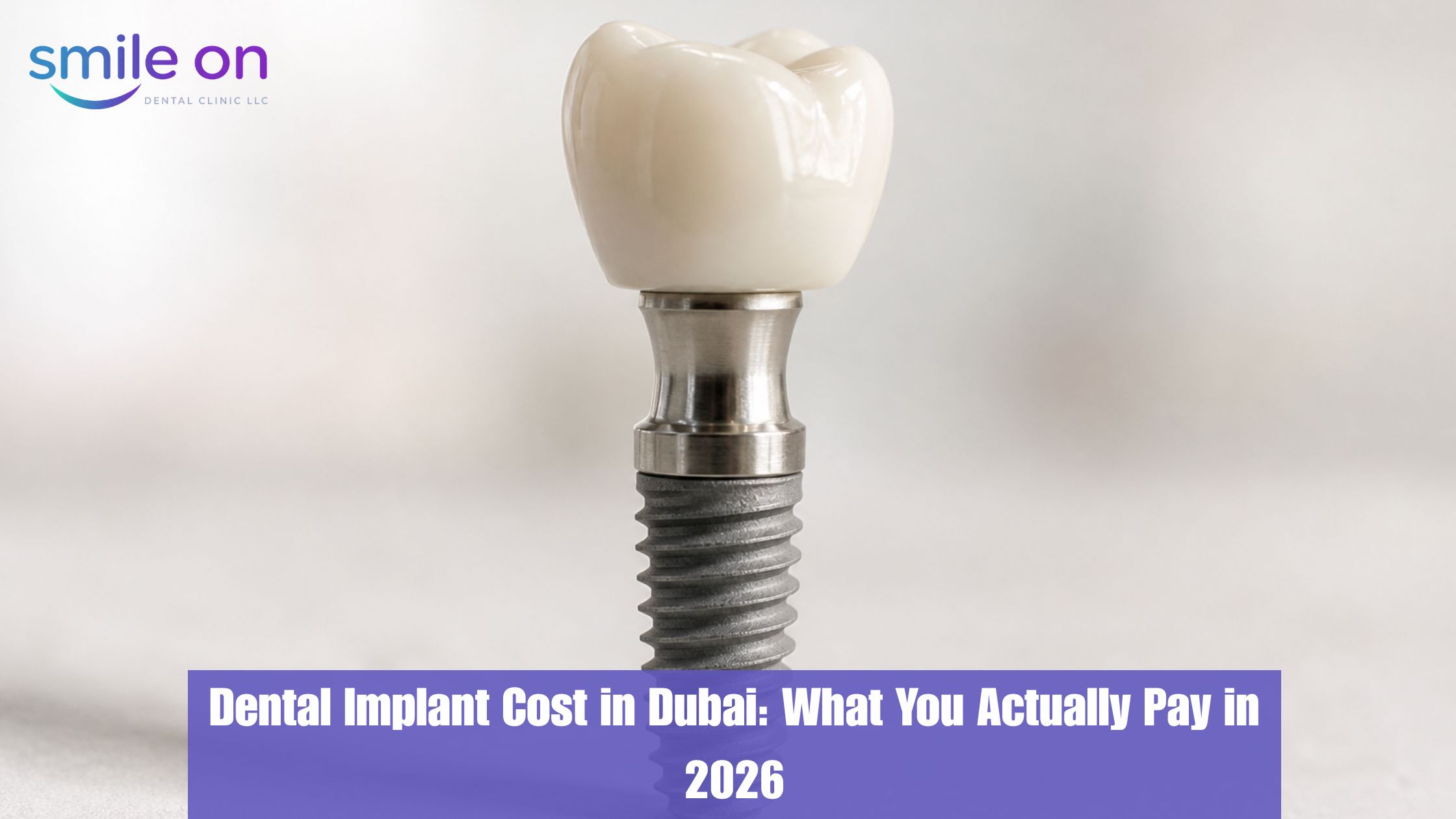
If you have been searching for dental implant prices in Dubai, you have probably seen numbers ranging from AED 1,500 to AED 15,000, sometimes for what appears to be the same treatment. That gap is not a typo, and it is not clinics trying to trick you. It reflects genuinely different components, materials, technologies, and the scope of work. This guide breaks down exactly what affects the cost, what a realistic price range looks like in Dubai in 2026, what questions to ask before you sign anything, and what warning signs to watch for when a quote seems unusually low. Searching for the best dental implants in Dubai? By the end of this guide, you will know exactly what to look for and what questions to ask any clinic before you commit. What Does a Dental Implant Actually Include? Before comparing prices, it helps to understand what you are actually buying. A dental implant is not a single item; it is a three-part system. The implant post is a small titanium screw surgically placed into your jawbone. This is what fuses with the bone over time (a process called osseointegration) and acts as the root of your new tooth. The abutment is a connector piece that sits on top of the implant post, above the gumline. It holds the crown in place. The crown is the visible part the artificial tooth that is matched to the colour and shape of your natural teeth. Important: When clinics quote a price, they may be quoting for just the post, or for the full system including crown and abutment. This is one of the most common sources of confusion when patients compare costs across clinics. Always confirm in writing what the quoted price includes. What Determines the Cost of Dental Implants in Dubai Several factors pull the final price up or down. Here is what actually matters. 1. The Implant Brand Not all implant posts are the same. Premium brands like Straumann, Nobel Biocare, and Osstem have decades of clinical research behind them, documented success rates, and global service networks. These cost more than lesser-known or generic implant systems. If a clinic does not tell you which brand they are using, ask. The brand matters for long-term reliability, not just the immediate result. 2. Whether You Need Bone Grafting Dental implants require sufficient bone density to anchor properly. If you have been missing a tooth for some time, or if you have existing bone loss from gum disease, you may need a bone graft before the implant can be placed. This is a separate procedure with its own cost typically between AED 1,500 and AED 4,000 depending on the extent of grafting required. Some clinics include a basic assessment for bone volume in the consultation; others charge for the CT scan separately. 3. The Crown Material The visible crown on top can be made from different materials. Porcelain-fused-to-metal (PFM) crowns are more affordable. Full zirconia crowns are stronger, more stain-resistant, and look more natural they are also more expensive. If aesthetics matter to you (especially for front teeth), zirconia is worth the premium. 4. Number of Implants A single implant costs very differently from replacing a full arch of teeth. Multiple implants, or implant-supported bridges that use fewer implants to replace more teeth, are priced differently again. Make sure any quote is clear about how many implants are being placed, not just how many teeth are being replaced. 5. The Complexity of Your Case Patients who need sinus lifts, have unusual jaw anatomy, or have significant existing dental issues will have more complex surgical planning and longer treatment timelines. Complexity is priced accordingly. Types of Dental Implants and What They Cost in Dubai in 2026 Here is a realistic breakdown of what patients in Dubai are paying in 2026. These are indicative ranges your actual cost will depend on the factors above. Implant Type Typical Range (AED) Notes Standard Single Implant AED 4,500 – 9,000 Full system: post, abutment, crown Same-Day Dental Implant AED 6,000 – 12,000 Per implant. Suitability assessment required All-on-4 (full arch) AED 25,000 – 55,000 Per arch. Includes bridge on 4 implants All-on-6 (full arch) AED 30,000 – 65,000 Per arch. More support, more implants Bone Grafting (if needed) AED 1,500 – 4,000 Depends on extent of grafting required 3D CT Scan (CBCT) AED 300 – 600 Sometimes included in consultation Standard Single Dental Implant This is the most common implant procedure one titanium post, one abutment, one crown, replacing a single missing tooth. The process usually spans several months: the post is placed and left to fuse with the bone (3 to 6 months), then the crown is attached. Premium implant brands sit at the higher end of this range; budget systems and grey-market clinics sit at the lower end. Same-Day Dental Implants Same-day implants (also called immediate-load implants) allow a temporary crown to be placed on the same day as the post. This is not suitable for every patient you need adequate bone density and no active infection. Where it is appropriate, it eliminates the long waiting period between post placement and crown fitting. Patients in Al Satwa and Jumeirah searching for same-day dental implants should look for clinics with 3D guided implant surgery capability, which ensures precise placement with less surgical guesswork. All-on-4 Dental Implants All-on-4 (or All-on-6) is a full-arch solution that replaces an entire row of teeth using just four or six strategically placed implants that support a fixed bridge. This is a significant procedure requiring thorough planning, 3D CT imaging, and a team experienced in full-mouth rehabilitation. The cost is significantly higher, but it replaces what would otherwise require dozens of individual implants. What Is Typically Included — and What Gets Charged Separately Even in a reasonably priced clinic, there are often additional costs that patients do not anticipate. Here is what to clarify upfront. Usually included in the quoted price: Often charged separately: Pro Tip: Ask for a written, itemised breakdown
What Is Orthodontic Wax? How to Use It and When You Actually Need It
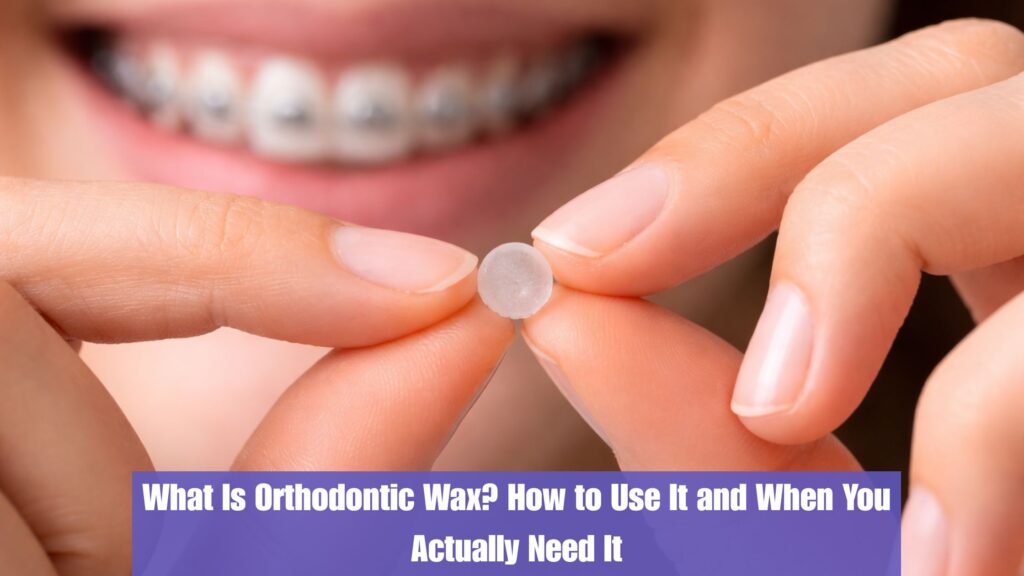
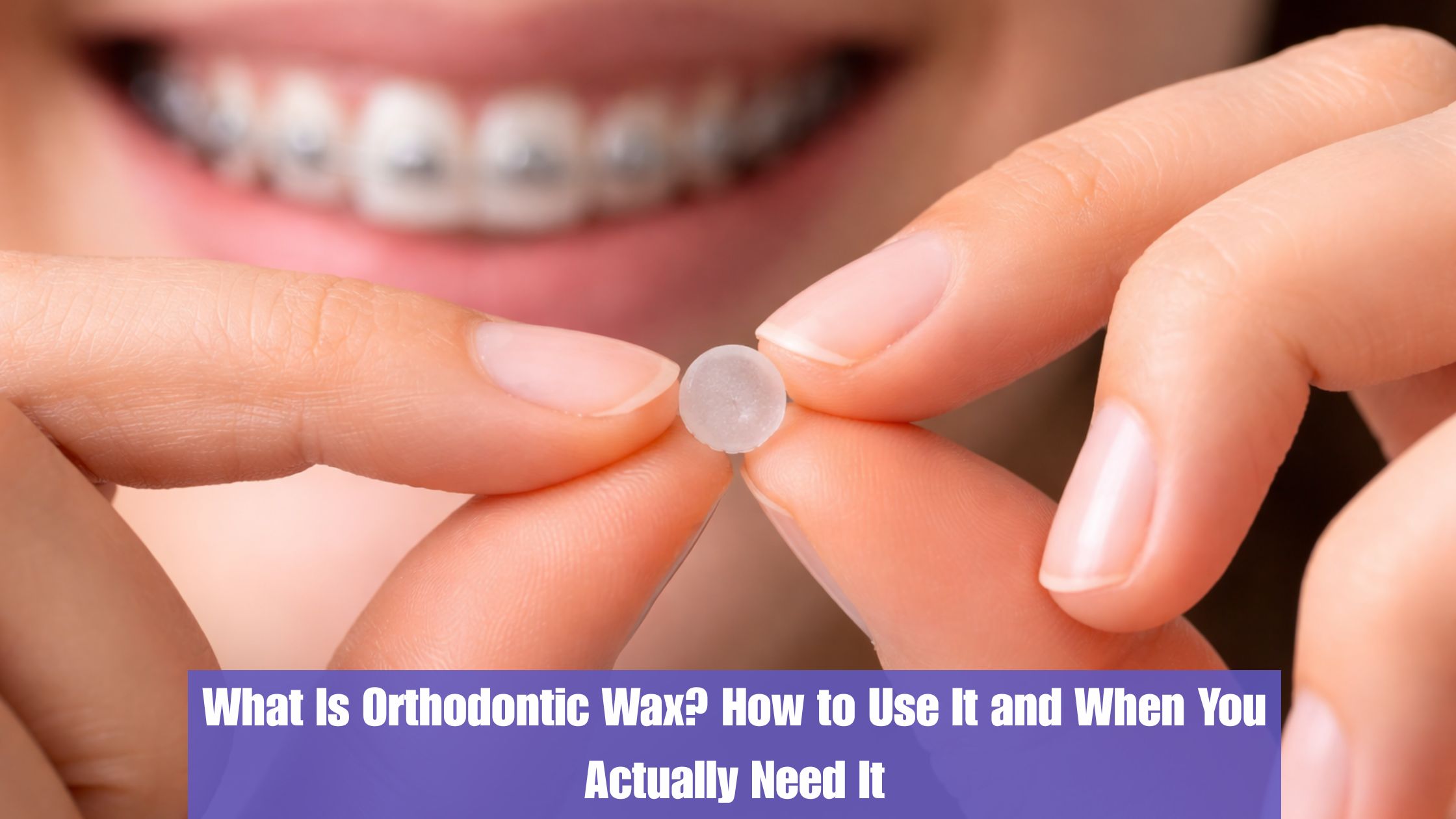
If you just got braces and your cheeks are already paying the price, orthodontic wax is probably the first thing your orthodontist handed you on the way out. But most patients leave the clinic unsure of exactly what it is, when to use it, and whether they are applying it correctly. This guide answers all of it. You will learn what orthodontic wax is made from, how to apply it properly, when it genuinely helps, and just as importantly, when the wax is not the solution, and you need to call your orthodontist instead. What Is Orthodontic Wax? Orthodontic wax, also called braces wax or dental wax, is a soft, non-toxic material designed to create a smooth barrier between your braces and the soft tissue inside your mouth. It covers the brackets, wires, or any protruding parts that are rubbing against your cheeks, lips, or gums and causing irritation. The wax is solid at room temperature but softens quickly from the warmth of your fingers, making it easy to mould and press into place. Once applied, it sits over the problem area like a small cushion, stopping the friction that causes soreness and giving any existing cuts or ulcers time to heal without being constantly aggravated. Most orthodontic waxes are made from one or more of the following materials: All of these are non-toxic and safe to have in your mouth. If a small piece dislodges while you are sleeping or talking, there is no cause for concern. The Canadian Association of Orthodontists confirms that accidentally swallowing a small amount of orthodontic wax does not pose any health risk. Some wax products include added flavouring such as mint or cinnamon, which many patients find more pleasant to use. Unflavoured versions are just as effective and are the better choice for anyone with sensitivities. Why the First Two Weeks of Braces Are the Hardest Understanding why orthodontic wax is needed most at the start of treatment helps you use it more strategically. When braces are first placed, the inside of your cheeks and lips has not yet developed any tolerance to the metal brackets and wires. The soft tissue in your mouth is relatively delicate, and anything with a hard edge pressed against it repeatedly causes friction, irritation, and eventually small sores. Within one to two weeks, most patients find that their mouth adapts naturally. The tissue toughens slightly, your tongue and cheeks learn to position themselves away from the hardware, and the discomfort becomes far less noticeable. Until that happens, orthodontic wax bridges the gap. The same thing occurs after every tightening appointment. Your orthodontist adjusts the wire tension, which temporarily increases pressure on certain teeth. The surrounding tissue, which had adjusted to the previous wire position, now needs to readjust again. Wax during the 48 to 72 hours after each adjustment appointment is not just useful, it is worth doing proactively rather than waiting for soreness to develop. How to Apply Orthodontic Wax Correctly Applying wax incorrectly is the most common reason patients find it does not stay in place or does not provide much relief. Here is the correct process. Step 1 — Wash your hands. Before touching anything that goes in your mouth, wash your hands thoroughly with soap and water. Braces create hard-to-clean areas where bacteria accumulate. You do not want to introduce more through your fingertips. Step 2 — Brush your teeth. Clean your braces before applying wax. Food particles trapped between the wax and your brackets create an environment for bacterial growth. A clean surface also helps the wax adhere better. Step 3 — Dry the problem area. This step is where most patients go wrong. Wax does not stick well to a wet surface. Use a tissue or a small piece of gauze to pat the bracket or wire dry before applying. The drier the surface, the longer the wax will hold. Step 4 — Pinch off a pea-sized amount. You need less wax than you think. A piece roughly the size of a pea is enough for one bracket. Roll it between your fingers for five seconds to warm it up and make it pliable. Step 5 — Press it firmly over the problem area. Apply the ball of wax directly over the bracket or wire irritating. Press it down with your finger and smooth the edges so it covers the sharp area completely. You can use your tongue to check that it sits flat and does not have any rough edges sticking up. Step 6 — Replace it regularly. Do not leave the same piece of wax in place for more than 24 to 48 hours. Old wax traps food and bacteria, which increases the risk of plaque buildup and bad breath. Always remove wax before eating and apply a fresh piece afterwards if needed. When to Use Orthodontic Wax: The Main Situations Wax is a reactive tool for most patients, but using it proactively in the right situations makes the whole braces experience more manageable. After getting braces fitted. The first week is when wax use will be highest. Your mouth is adjusting to a completely new set of hardware, and virtually every bracket is a potential irritation point. Carry wax with you at all times during this period. After every tightening appointment. Wire adjustments change the tension across your braces. The 48 to 72 hours following an adjustment are typically the most uncomfortable. Apply wax to any areas that feel sharper than usual before the discomfort develops rather than after. When a wire end is poking. Wires can shift slightly or the end of a wire can start to protrude as teeth move. If a wire end is catching your cheek, apply wax over it immediately as a temporary fix. Then contact your orthodontist to have it trimmed or repositioned. Wax is not a long-term solution here; it is buying you time until the clinic can fix it properly. For musicians. Patients who play wind instruments often find
What Is a Dental Crown? Types, Costs, and What to Expect in Dubai
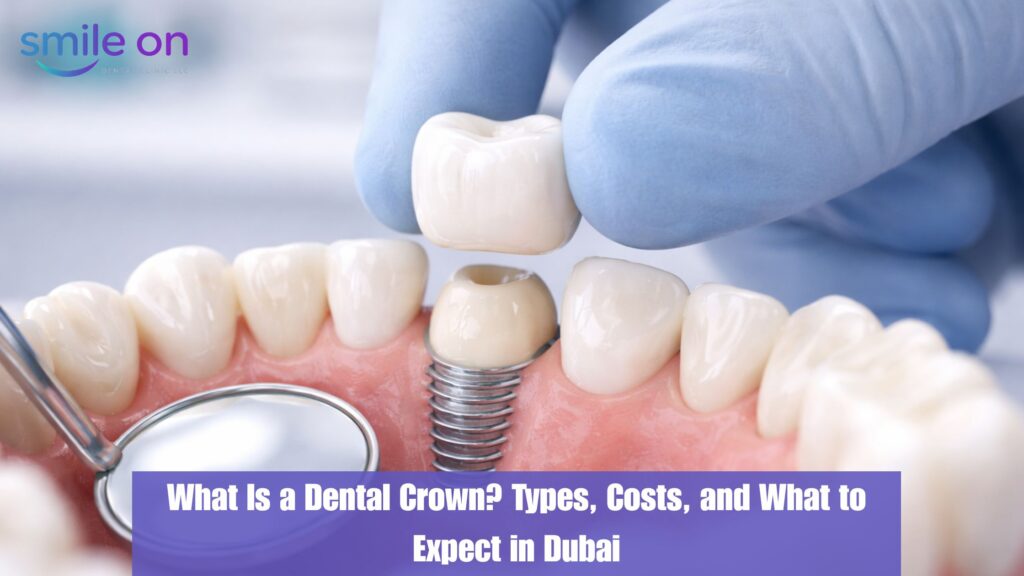
A dental crown is a tooth-shaped cap that fits over a damaged, weakened, or decayed tooth to restore its shape, strength, and appearance. Once cemented in place, it covers the entire visible portion of the tooth above the gum line and functions just like a natural tooth. If your dentist in Dubai has recommended a crown, or you are trying to understand whether you need one, this guide covers everything. You will learn how crowns work, what types are available, what the procedure involves, how much it costs in the UAE, and how long you can expect one to last Why Would You Need a Dental Crown? A crown becomes necessary when a tooth is too damaged for a filling to do the job, but extraction is not yet required. There are several clinical situations where a crown is the right call. Severely decayed teeth. When a cavity takes up too much of the tooth’s structure, a filling alone cannot restore its integrity. A crown covers and protects what remains. Cracked or fractured teeth. A cracked tooth is unpredictable. It may feel fine now but split further with normal chewing. A crown holds the tooth together and prevents the crack from spreading. After root canal treatment. A tooth that has had a root canal becomes brittle over time. A crown placed over it provides the structural protection it needs to survive long-term. Without one, the tooth is at high risk of fracturing. Worn-down teeth. Teeth grinding (bruxism) or acid erosion can wear teeth down significantly. Crowns rebuild lost tooth structure and restore a proper bite. Broken cusps. A large piece of tooth breaking off, whether from biting down on something hard or an old failing filling giving way, typically requires a crown rather than a patch repair. Supporting a dental bridge. Crowns anchor both ends of a dental bridge, which replaces one or more missing teeth. The neighbouring teeth receive crowns to hold the bridge firmly in place. Covering a dental implant. After a dental implant is placed and has integrated with the jawbone, a crown is attached on top to act as the visible, functional tooth. Crowns are also used in cosmetic cases, to reshape a malformed tooth, cover severe discolouration that whitening cannot fix, or as part of a full smile makeover. That said, purely cosmetic use is less common than restorative use. Types of Dental Crowns Not all crowns are made from the same material, and the right choice depends on where the tooth sits in your mouth, your aesthetic preferences, and your budget. Here is what is available at dental clinics in Dubai. Porcelain crowns (all-ceramic) Porcelain crowns are the most natural-looking option. They match the colour, translucency, and texture of real teeth closely enough that most people cannot tell the difference. They are the standard choice for front teeth where appearance matters most. The trade-off is that they are slightly less durable than metal-based options and can chip if subjected to heavy biting force. Zirconia crowns Zirconia has become the dominant crown material in modern dentistry, and for good reason. It combines the strength of metal with the aesthetics of ceramic. Zirconia crowns are exceptionally durable, biocompatible, and tooth-coloured. They work well for both front and back teeth. In Dubai, zirconia crowns are the most commonly recommended option for patients who want longevity without compromising on appearance. Porcelain-fused-to-metal (PFM) crowns PFM crowns have a metal substructure with a porcelain coating on the outside. They were the standard for many years before zirconia became widely available. They are strong and look reasonably natural, but over time the porcelain can chip, and a dark line may appear at the gum line as the gum recedes slightly. They remain a cost-effective option in many cases. Metal crowns (gold or alloy) Pure metal crowns, typically gold or a base metal alloy, are the most durable option available. They rarely chip, require minimal removal of tooth structure, and last for decades. The obvious drawback is aesthetics. Most patients opt for metal crowns only on back molars where they are not visible during normal conversation or smiling. E-max (lithium disilicate) crowns E-max crowns are pressed ceramic crowns known for their strength and exceptional aesthetics. They sit between standard porcelain and zirconia in terms of durability and are a popular choice for front teeth restorations where both appearance and strength matter. The Dental Crown Procedure: Step by Step Getting a dental crown in Dubai typically takes two appointments, though same-day crowns are possible at clinics with in-house milling technology. First appointment: preparation and impressions Your dentist will numb the area with a local anaesthetic. The tooth is then filed down on all sides to create space for the crown to sit over it. How much tooth is removed depends on the crown material. Metal crowns require less reduction than ceramic ones. Once the tooth is shaped, an impression is taken. This can be a physical mould using dental putty or a digital scan using an intraoral camera. The impression is sent to a dental laboratory where your permanent crown is fabricated. This process typically takes 7 to 14 days. A temporary crown is fitted to protect the prepared tooth while you wait. Temporary crowns are made from acrylic or composite and are not as strong as the final restoration, so avoid sticky or hard foods during this period. Second appointment: fitting the permanent crown When the permanent crown arrives, the temporary is removed. Your dentist will check the fit, the bite, and the shade match before cementing it permanently. Minor adjustments can be made chairside. Once you are both satisfied with the result, the crown is bonded into place with dental cement. The entire second appointment usually takes 30 to 45 minutes. You may experience some sensitivity for a few days afterwards, particularly to temperature, but this settles as the tooth adjusts. How Much Does a Dental Crown Cost in Dubai? Dental crown cost in the UAE varies based on the
Dental Implants in Dubai: Costs, Procedure & How to Choose the Right Clinic
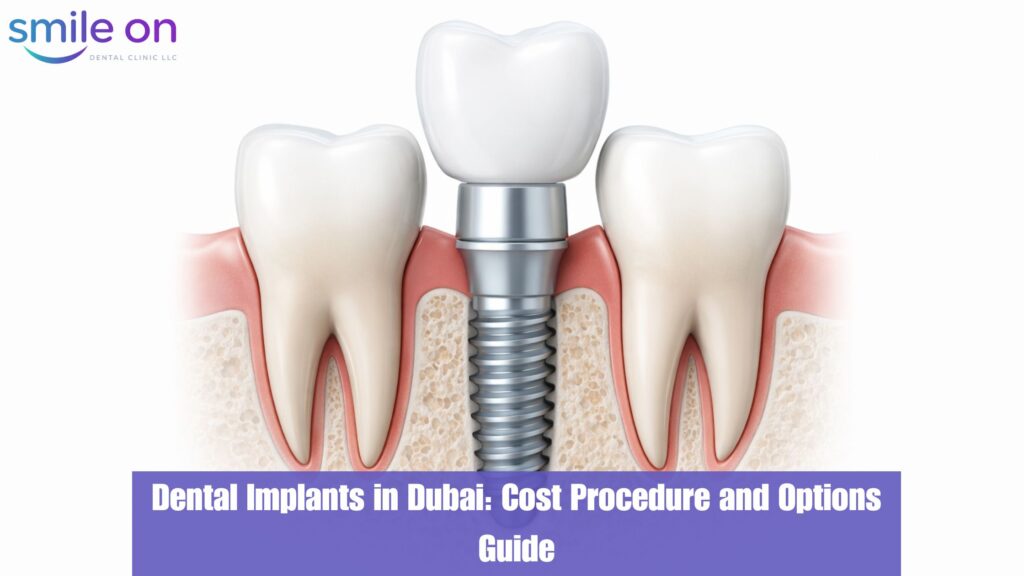
Losing a tooth, whether from decay, injury, or gum disease, affects more than just how you look. It changes how you chew, how you speak, and over time, it can affect the structure of your jaw. Dental implants remain the most complete and long-lasting solution for missing teeth, and Dubai has some excellent options if you are considering this treatment. But implants are also a significant commitment in terms of cost, time, and what is involved physically. Before you decide, it helps to understand exactly what you are signing up for. This guide covers everything from how the procedure works to what it costs in Dubai, so you can make a confident, informed decision. What Are Dental Implants? A dental implant is essentially an artificial tooth root. It is a small titanium screw that a dentist surgically places into your jawbone where the missing tooth used to be. Over the following weeks and months, the implant fuses with the bone through a process called osseointegration, which is what gives it its remarkable stability. Once the implant has integrated, a connector piece (called an abutment) is attached, and finally, a custom-made crown is placed on top. The result looks, feels, and functions like a real tooth. Who Is a Good Candidate for Dental Implants? Most healthy adults with missing teeth are candidates for implants, but there are some factors your dentist will assess before recommending them: If you have had bone loss due to long-term tooth loss, a bone graft may be needed before the implant can be placed. This adds time to the process but does not make implants impossible. The Dental Implant Procedure — Step by Step The full implant process typically takes place over several months. Here is a clear breakdown of what to expect: Step 1: Consultation and Assessment Your dentist will take X-rays or a 3D cone beam CT scan to evaluate your bone structure, gum health, and the positioning of nearby teeth and nerves. This is the foundation of your implant plan. Step 2: Bone Grafting (If Required) If the bone in your jaw is not dense enough to support an implant, a bone graft will be performed first. This involves placing bone material (often synthetic or from a donor) into the jaw to build it up. Healing takes 3 to 6 months before implant placement can proceed. Step 3: Implant Placement Under local anaesthesia (and sedation if you prefer), the titanium implant is placed into the jawbone. The gum is stitched closed over it. You will feel pressure during the procedure, but no sharp pain. Most patients find it more manageable than they expected. Step 4: Osseointegration — The Healing Phase This is the waiting period. The implant needs to fuse with the surrounding bone, which typically takes 3 to 6 months. You will have a temporary crown or gap during this time. You cannot rush this stage — it is what makes implants so strong and durable. Step 5: Abutment Placement Once the implant has integrated, a small connector piece is attached. Some discomfort for a few days is normal. The gum is then given 1 to 2 weeks to heal around the abutment. Step 6: Final Crown Placement A custom crown matched to the colour and shape of your natural teeth is fixed onto the abutment. This is the final step. You leave with a complete, functional tooth. Types of Dental Implants Available in Dubai Single Tooth Implant The most common type. One implant with one crown replaces a single missing tooth without affecting the surrounding teeth. This is the gold standard solution for individual tooth loss. Implant-Supported Bridge If you are missing two or three consecutive teeth, implants can support a bridge without needing to crown the healthy teeth on either side, which is a major advantage over traditional bridges. All-on-4 Implants All-on-4 is a full-arch restoration technique where an entire row of teeth (upper or lower) is supported by just four implants. It is designed for patients with significant tooth loss or those who currently wear dentures. It is often completed in fewer appointments and can sometimes be done in a single day hence the name ‘same day dental implants’. All-on-6 Implants Similar to All-on-4 but uses six implants for added stability. Recommended for patients with better bone density who want maximum support for their new arch. Dental Implants Cost in Dubai — What to Realistically Expect Cost is usually the first question patients ask. Here is an honest breakdown: Treatment Typical Cost (AED) Notes Single tooth implant AED 3,500 – 7,000 Per tooth, includes crown Bone graft (if needed) AED 1,500 – 4,000 Depends on extent Implant-supported bridge (3 teeth) AED 10,000 – 18,000 Per arch section All-on-4 (per arch) AED 25,000 – 50,000 Full arch restoration All-on-6 (per arch) AED 30,000 – 60,000 Higher stability option These are market ranges, not clinic-specific quotes. Costs vary based on the clinic, the materials used (titanium vs zirconia implants), the number of teeth, and whether preparatory work like extraction or bone grafting is needed. Most reputable clinics in Dubai offer payment plans or can work with your dental insurance if it covers implants it is worth asking before you assume you need to pay everything upfront. Dental Implants vs Other Tooth Replacement Options How do implants compare to the alternatives? Dental Implants Fixed Bridge Dentures Longevity 20+ years / lifetime 10-15 years 5-10 years Bone preservation Yes No No Adjacent teeth affected No Yes (crowns needed) No Feels natural Yes Mostly yes Less natural Maintenance Brush & floss normally Extra flossing needed Daily removal needed Cost Higher upfront Moderate Lower upfront The key advantage of implants over bridges and dentures is that they preserve jawbone. When you lose a tooth, the bone underneath begins to shrink over time because there is no root stimulating it. Implants are the only tooth replacement option that prevents this. Recovery After Dental Implant Surgery: What to Expect Most patients are back to normal activities
Teeth Whitening in Dubai: Zoom, Laser, or Home Kits Which One Actually Works?
Everyone wants a brighter smile, and in Dubai where looks and confidence go hand in hand, teeth whitening has become one of the most requested dental treatments. Walk into almost any dental clinic in the city and you will find patients asking the same question: what is actually the best way to whiten teeth? The honest answer is that it depends on your teeth, your budget, and how fast you want results. In this guide, we walk you through the three most popular options: Zoom whitening, laser whitening, and home kits so you can make a decision that actually makes sense for you. Why Do Teeth Get Discoloured in the First Place? Before picking a whitening method, it helps to understand why teeth lose their brightness. There are two types of staining: Extrinsic staining: This sits on the surface of your teeth and comes from things like coffee, tea, red wine, tobacco, and dark coloured foods. This type responds well to whitening. Intrinsic staining: This is deeper inside the tooth structure and can be caused by certain medications, old dental work, fluorosis, or trauma. This type is harder to treat with standard whitening and may need veneers or bonding instead. A quick check with your dentist before you book any whitening treatment will tell you which type you are dealing with and whether whitening is the right route at all. Option 1: Zoom Whitening in Dubai How It Works Zoom is one of the most well known in clinic whitening treatments available today. The procedure uses a hydrogen peroxide gel applied to your teeth, which is then activated using a special Zoom LED light. The light helps the whitening agent break down stains more effectively and quickly. A full Zoom session usually takes about 60 to 90 minutes, done entirely in the dental chair. What Results Can You Expect? Most patients see their teeth lighten by 6 to 8 shades in a single session. Results can vary depending on the original shade and type of staining, but the improvement is noticeable immediately. Results can last anywhere from one to three years depending on your diet and oral hygiene habits. Cost of Zoom Whitening in Dubai Zoom whitening in Dubai typically ranges from AED 1,200 to AED 2,500 per session depending on the clinic. Some packages include custom take home trays as a top up option. Who Is It Best For? People with extrinsic staining from food, tea, or coffeeThose who want fast, dramatic results in a single visitPatients preparing for a special event like a wedding or job interview Option 2: Laser Teeth Whitening in Dubai How It Works Laser whitening is similar to Zoom in that a whitening gel is applied to the teeth, but instead of an LED lamp, a dental laser is used to activate the bleaching agent. The laser allows for more precise application and can target individual teeth if needed. Results and Longevity Results are comparable to Zoom, with most patients seeing a lightening of 5 to 8 shades. Because of the precision involved, laser whitening can sometimes deliver more even results across all teeth, though this also depends on the skill of the treating dentist. Cost of Laser Whitening in Dubai Laser teeth whitening in Dubai can cost anywhere from AED 1,500 to AED 3,500, making it slightly more expensive than Zoom on average. Who Is It Best For? Patients looking for precise, even whitening across multiple teethThose who have tried other treatments without satisfactory resultsPatients with minor sensitivity concerns Option 3: Home Whitening Kits Are They Worth It? There are two types of home whitening kits: the custom trays you get from your dentist, and the over the counter products you buy from a pharmacy or online. Dentist Provided Home Kits Your dentist takes impressions of your teeth and creates custom fitted trays. You are then given a professional grade whitening gel to use at home, usually for 30 to 60 minutes a day over two to four weeks. These are considerably more effective than off the shelf products because the trays fit properly and the gel is stronger. In Dubai, these typically cost between AED 600 and AED 1,200. Over the Counter Products Whitening strips, toothpastes, and generic trays are widely available in Dubai pharmacies. They contain lower concentrations of whitening agents, which means results are more subtle and take longer. They are fine for maintenance but not for significant whitening. Who Should Use Home Kits? Zoom vs Laser vs Home Kits — Quick Comparison Feature Zoom Whitening Laser Whitening Home Kits Treatment time 60-90 min 60-90 min 2-4 weeks Shades lighter 6-8 shades 5-8 shades 2-4 shades Cost (AED) 1,200 – 2,500 1,500 – 3,500 600 – 1,200 Results duration 1-3 years 1-3 years 3-6 months Best for Fast results Precision whitening Gradual improvement Is Teeth Whitening Safe? Yes, when done properly. Professional whitening treatments in Dubai are supervised by licensed dentists who check your teeth and gums before starting. The most common side effect is temporary sensitivity, which usually settles within 24 to 48 hours. However, whitening is not suitable for everyone. It is not recommended for: This is exactly why a pre-treatment consultation matters. A good dentist will tell you upfront if whitening is the right option or if something else will give you better results. How to Make Teeth Whitening Results Last Longer Getting your teeth whitened is only half the job. How you look after them afterwards determines how long the results stick around. How to Choose the Right Whitening Clinic in Dubai Dubai has no shortage of dental clinics offering whitening, but not all of them are equal. Here is what to look for: Ready to Book Your Teeth Whitening Treatment in Dubai? At Smile On Dental Clinic, we offer professional teeth whitening treatments tailored to your teeth, your goals, and your budget. Whether you want fast results for a big occasion or a gradual approach using custom trays at home, we will help you
Transparent Braces in Dubai: Types, How They Work, and What to Expect
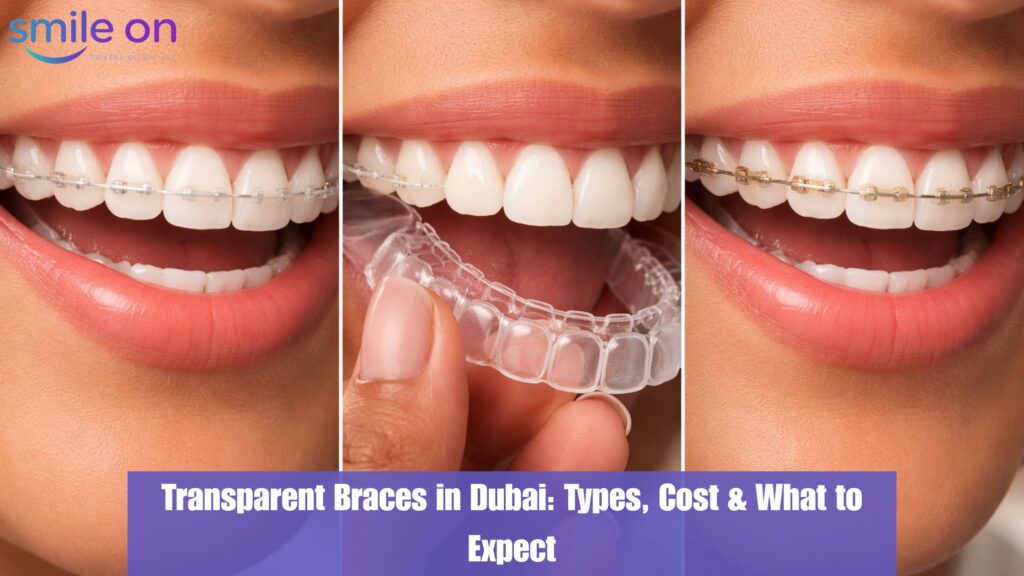
If you have been putting off orthodontic treatment because you do not want a mouth full of metal, you are not alone. Most adults in Dubai who search for transparent braces already know they want straighter teeth. What they are not always clear on is that transparent braces is not a single product. It is a category that includes three genuinely different treatment types, each with distinct advantages, limitations, and price points. Understanding the difference before your consultation saves time and helps you ask better questions. What Are Transparent Braces and What Types Are Available? Transparent braces is a broad term that refers to any orthodontic system designed to be less visible than traditional metal brackets and wires. Within that category, there are three distinct options: Ceramic braces are fixed brackets and wires bonded to the front of the teeth, just like metal braces. The difference is that the brackets are made from tooth-coloured ceramic or clear composite material, making them significantly less noticeable than metal. They are still visible on close inspection but blend with the natural tooth colour from normal conversational distance. Lingual braces are fixed braces in the same mechanical sense, but the brackets and wires are bonded to the inside surfaces of the teeth, facing the tongue. From the outside, they are genuinely invisible. Nobody can see them when you speak, smile, or laugh. Clear aligners are removable, transparent plastic trays worn over the teeth to gradually shift them into alignment. They are classified as transparent braces because they are virtually invisible when worn correctly. Invisalign is the most widely known system in Dubai, though several alternatives including Spark and ClearCorrect are available. Each of these works differently, suits different clinical cases, and involves a different day-to-day experience. The right choice depends on what your teeth need corrected, how important complete invisibility is to you, and what lifestyle commitments you are prepared to make. Ceramic Braces: What They Are and Who They Suit Ceramic braces work exactly the same way as metal braces. Brackets are bonded to the front surfaces of the teeth and connected by an archwire that is periodically adjusted to move the teeth progressively into the correct position. The only material difference is the bracket itself, which is made from tooth-coloured ceramic or clear composite rather than stainless steel. The result is a bracket that blends with the natural enamel and is significantly less noticeable than metal, particularly from normal distances. Most ceramic braces also use white or tooth-coloured wires to reduce visibility further. Under close inspection or in certain lighting, they are visible. On a video call or across a conference table, most people would not notice them. Ceramic braces suit patients who need fixed orthodontic treatment but want a less conspicuous look than metal. They handle the same clinical complexity as metal braces, including moderate to severe crowding, bite correction, and rotation of teeth, which is a broader range than most clear aligner systems manage reliably. The main practical consideration is staining. The ceramic brackets themselves are stain-resistant, but the elastic ligatures holding the wire can pick up colour from coffee, tea, red wine, and certain foods. Regular appointments for adjustments manage this, but patients who consume a lot of staining drinks should be aware of it. At Smile On Dental Clinic, ceramic braces are available as a clear fixed option for patients who need the clinical strength of braces with reduced visual impact. The Damon brace system, which uses self-ligating technology to reduce friction and bracket bulk, is also available and provides a notably lower-profile result than traditional ceramic brackets. Lingual Braces: The Option Nobody Sees at All Lingual braces are the only fixed orthodontic treatment that is genuinely invisible from the outside. The brackets are custom-fabricated to fit the inside surface of each individual tooth, and the archwire runs along the back surfaces, facing the tongue. When you smile, speak, or open your mouth normally, nothing is visible. This makes lingual braces particularly well suited to professionals, public speakers, performers, and anyone for whom visible orthodontic hardware during treatment is not acceptable. They are also the right choice for patients who want the clinical reliability of fixed braces for complex corrections while maintaining complete aesthetic discretion. The trade-off is adjustment. Because the brackets are positioned close to the tongue, there is an initial adaptation period of one to three weeks during which speech may feel slightly different and the tongue needs time to adjust to the new contact points. Most patients move through this phase without lasting difficulty, but it is a genuine experience that ceramic braces and aligners do not create. Lingual braces are more technically demanding to place and adjust than front-surface braces, which means they are typically performed by orthodontists with specific training in the system. They are priced higher than both metal and ceramic braces as a result. Smile On Dental Clinic offers lingual braces as a discreet fixed treatment option. If complete invisibility during treatment is your priority and your case requires the control that only fixed braces can provide, lingual braces are the most appropriate choice. Clear Aligners: When They Count as Transparent Braces Clear aligners qualify as transparent braces because they are nearly invisible when worn. A properly fitted aligner tray sits snugly against the teeth and is visible only on very close inspection under direct light. In normal social, professional, and photographic contexts, most people will not notice them. The defining characteristic that separates aligners from ceramic and lingual braces is removability. Aligners come out for eating, drinking anything other than water, brushing, and flossing. This makes them the most lifestyle-compatible orthodontic option for most adults. There are no food restrictions and oral hygiene is not complicated by brackets and wires. The clinical trade-off is that removability creates a compliance dependency that fixed braces do not have. Aligners must be worn for twenty to twenty-two hours each day for treatment to progress as planned. Patients who remove them frequently, forget
Clear Aligners: How They Work, What They Cost, and Whether They’re Right for You
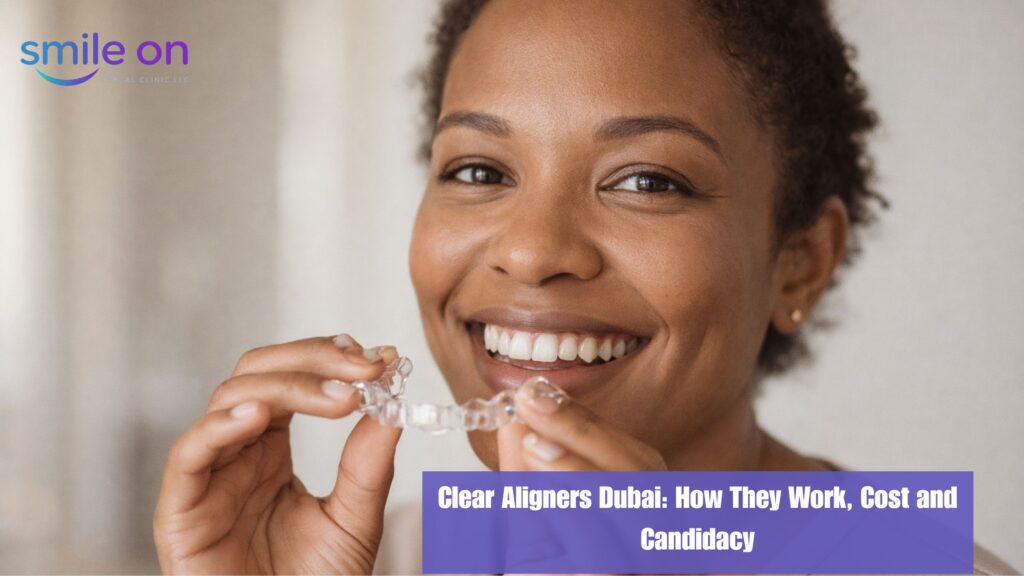
You have probably seen clear aligners advertised everywhere. Transparent trays, no metal, removable for meals, finished in months. The pitch is compelling. But before you book a consultation, it helps to understand what clear aligners actually do, what they genuinely cannot do, and what you are committing to when you say yes to treatment. This guide covers everything you need to make an informed decision. No fluff, no sales pressure. What Are Clear Aligners and How Do They Work? Clear aligners are a series of custom-made, transparent plastic trays worn over the teeth to gradually move them into a corrected position. Each tray is slightly different from the last, applying controlled pressure to specific teeth at specific points in the treatment plan. You wear each tray for one to two weeks before progressing to the next one in the series. The aligners are fabricated from digital scans of your teeth taken at your first appointment. An orthodontist or specialist dentist uses dedicated software to map out every planned tooth movement from your current position to the final result. You can typically see a simulation of the expected outcome before treatment begins. The most widely used clear aligner system is Invisalign, though multiple other systems are available in Dubai including Spark, ClearCorrect, and various branded alternatives. The underlying technology across systems is broadly similar. What differs is the material quality, precision of the treatment planning software, and the level of specialist oversight involved. Clear Aligners vs Traditional Braces: The Real Differences Both treatments move teeth using controlled force over time. The mechanism is the same. The experience is not. Visibility. Clear aligners are nearly invisible when worn correctly. Traditional braces use metal or ceramic brackets bonded to the teeth with visible wires. If aesthetics during treatment matter to you, aligners have a clear advantage. Removability. Aligners come out for meals, brushing, and flossing. This means no food restrictions and easier oral hygiene maintenance throughout treatment. Braces are fixed and require more careful cleaning around brackets and wires. The trade-off is that removability requires discipline. Aligners only work when they are in your mouth. Comfort. Aligners exert pressure on teeth during each tray change, which causes temporary soreness for a day or two. Braces can cause irritation to the cheeks and lips from brackets and wires, particularly in the first few weeks. Neither is pain-free, but the nature of the discomfort is different. Complexity range. Braces are more effective for cases involving significant bite correction, large tooth movements, or rotations of certain teeth. Clear aligners handle mild to moderate alignment cases very well. For complex orthodontic presentations, braces often remain the more reliable choice. Your orthodontist will tell you honestly which option suits your specific case.Treatment time. Mild to moderate aligner cases in Dubai typically run between six and eighteen months. Traditional braces are generally quoted at eighteen to twenty-four months, though complex cases in both categories can take longer. The biggest factor in aligner treatment time is compliance. Patients who wear their trays consistently achieve their results faster. Patients who do not wear them enough extend their treatment, sometimes significantly. Who Is a Good Candidate for Clear Aligners? Clear aligners are well suited to adults and older teenagers with mild to moderate orthodontic concerns. Good candidates typically have: Clear aligners are generally not the best option for patients with severe crowding, significant bite problems affecting jaw function, teeth that require complex rotational movements, or patients who are not confident they can maintain the required wear time. Braces in these cases are not a lesser alternative. They are the clinically correct one. Children under twelve are typically not ideal candidates because their jaws are still developing. Invisalign First, a specific system designed for younger patients with mixed dentition, is an exception and is discussed separately. The only reliable way to determine whether you are a candidate is through a clinical assessment with an orthodontist or specialist dentist who can evaluate your teeth, bite, and jaw relationship properly. How Long Does Clear Aligner Treatment Take? Treatment duration depends primarily on how much tooth movement is needed and how consistently the aligners are worn. For mild cases involving minor crowding or small gaps, treatment commonly completes in six to nine months. For moderate cases, twelve to eighteen months is a typical timeframe. Complex cases can extend to twenty-four months or beyond, at which point traditional braces may be a more predictable choice. The compliance factor is where many patients underestimate the impact of their own behaviour. Clear aligners need to be worn for twenty to twenty-two hours every day. That leaves a window of two to four hours for eating, drinking anything other than water, and cleaning your teeth. When patients wear aligners for fewer hours than prescribed, teeth do not move as planned, and treatment extends. Some patients require additional trays and additional months beyond the original estimate. This is not a reason to avoid aligners. It is a reason to be honest with yourself about whether you will commit to wearing them before you start. What Affects the Cost of Clear Aligners in Dubai? Clear aligner treatment in Dubai typically ranges from AED 7,000 to AED 25,000. That is a wide range, and understanding what drives the variation helps you compare quotes meaningfully rather than choosing on price alone. Case complexity. Mild cases requiring fewer trays and less total movement are less expensive than moderate or complex cases. The number of aligners manufactured determines a significant portion of the overall cost. The aligner system used. Branded systems like Invisalign are priced differently from other clear aligner providers. Within Invisalign, there are tier levels ranging from Invisalign Lite for straightforward cases to Invisalign Comprehensive for full treatment. Each tier carries a different price point. Your orthodontist should explain which tier is appropriate for your case and why. What is included in the quoted price. Some clinics quote only the aligner trays. Others include the 3D digital scan, all monitoring appointments, refinement trays
Orthodontic Braces in Dubai: Types, Costs, and Everything You Need to Know
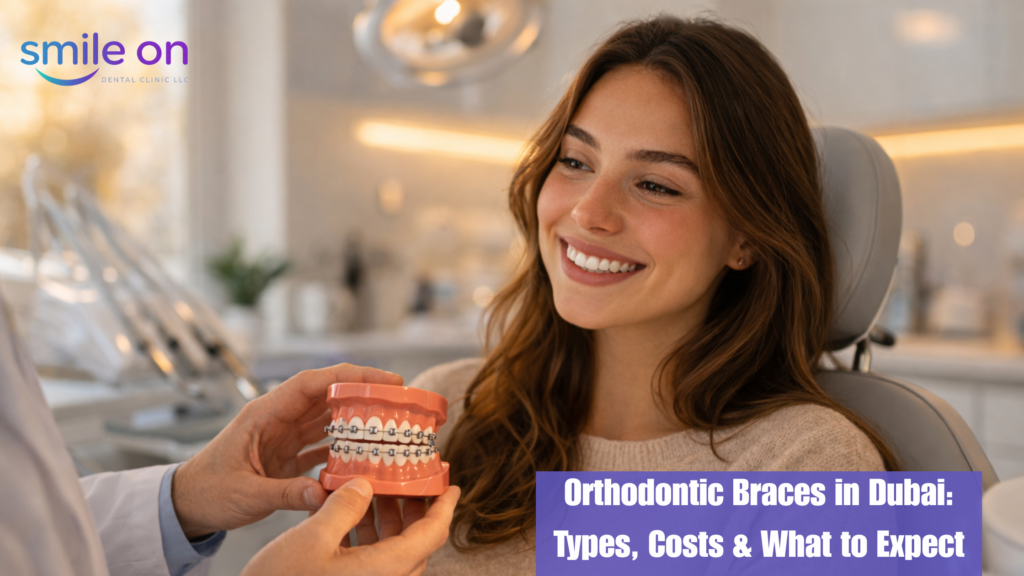
You’ve probably noticed more adults around you wearing braces than you’d expect. At the office, at brunch, on the metro. That’s not a coincidence. Orthodontic braces have changed dramatically, and in Dubai’s image-conscious, professionally driven population, demand for tooth alignment treatment has grown across all age groups. Quick answer: Orthodontic braces are dental appliances that apply gentle, consistent pressure to move teeth and correct bite alignment over time. They treat crowding, spacing, overbites, underbites, and crossbites. In Dubai, treatment typically takes 12 to 24 months and costs between AED 5,000 and AED 18,000, depending on the type and case complexity. This guide covers every type of orthodontic braces available in Dubai, how they work, what they cost, how long treatment takes, and what your daily life will actually look like from the first fitting to the final retainer. What Are Orthodontic Braces and What Problems Do They Fix? Orthodontic braces are appliances used to correct the alignment of teeth and jaws. They work by applying controlled, sustained pressure to teeth over a period of months or years, gradually guiding them into better positions and correcting how the upper and lower jaws meet. Braces treat a wide range of conditions. Dental crowding happens when teeth overlap because there isn’t enough space in the arch. Spacing refers to gaps between teeth. An overbite is when the upper front teeth cover too much of the lower teeth vertically. An underbite is when the lower teeth sit in front of the upper teeth. A crossbite means upper and lower teeth don’t align correctly on one or both sides. An open bite means the front teeth don’t meet when the mouth is closed. These aren’t just cosmetic concerns. Crowded teeth are harder to brush and floss, increasing the risk of cavities and gum disease. Bite problems can cause uneven wear on enamel, jaw discomfort, and, in some cases, headaches. Correcting alignment with orthodontic braces often makes long-term dental health significantly easier to maintain, not just your smile more appealing. Results vary by individual case, and a clinical assessment is always the starting point. How Do Orthodontic Braces Actually Work? This is one of the most searched questions about braces and one that most clinic pages surprisingly skip over. Understanding the mechanics helps you stay committed through the process. Orthodontic braces work by exerting a continuous, gentle force on your teeth in a specific direction. This pressure stimulates a biological process in the surrounding bone called bone remodelling. On the side of the tooth being pushed, bone cells called osteoclasts break down existing bone tissue. On the tension side, osteoblasts form new bone to fill the space. This is how a tooth physically moves through solid jaw bone without damage to the surrounding structure, provided the forces are carefully controlled by a trained orthodontist. For fixed braces, brackets bonded to each tooth act as handles. The archwire threaded through them is the engine. When your orthodontist adjusts the wire at each appointment, they’re calibrating the direction and amount of force applied. For clear aligners, each tray in the series is manufactured slightly differently from the last, with micro-movements built in so each new tray nudges teeth incrementally closer to the planned final position. The soreness you feel after an adjustment or when switching to a new aligner is your body responding to that new pressure. It typically settles within 48 to 72 hours. It is not a sign that something is wrong; it’s confirmation that the process is working. What Are the Types of Orthodontic Braces Available in Dubai? Dubai clinics offer the full spectrum of modern orthodontic options. The right choice depends on the complexity of your case, your lifestyle, and how much visibility matters to you during treatment. Metal Braces Metal braces remain the most clinically reliable and cost-effective option, particularly for complex cases. Stainless steel brackets are bonded to the front of each tooth and connected by an archwire that your orthodontist tightens at regular intervals. Modern metal braces are significantly smaller and more comfortable than older versions. They are the most affordable type available in Dubai and handle the widest range of cases including severe crowding, significant bite corrections, and longer treatment timelines. For children and teenagers, metal braces are the most commonly recommended starting point. Ceramic Braces Ceramic braces use the same mechanical system as metal braces but with tooth-coloured or clear brackets. They are much less noticeable at a normal conversational distance, which is a meaningful advantage for adults and teenagers who are conscious of their appearance during treatment. The trade-off: ceramic brackets are slightly more fragile, can stain from coffee, tea, or turmeric-heavy food (very relevant in Dubai’s dining culture), and may add marginally to treatment time in some cases. They cost slightly more than metal braces. If you want a fixed brace with less visual impact, ceramic is the established middle-ground option. Damon Braces (Self-Ligating) Damon braces use a built-in sliding mechanism to hold the archwire instead of elastic ties, which reduces friction as teeth move. Many patients find them more comfortable and the reduced friction can mean fewer adjustment appointments. They are available in both metal and clear versions. At Smile On Dental Clinic, Damon braces are one of the fixed brace options available under specialist care. Lingual Braces Lingual braces are bonded to the back surfaces of your teeth, making them completely invisible from the front. For professionals in client-facing roles, people who appear publicly, or anyone for whom visible braces genuinely aren’t an option, lingual braces offer the effectiveness of a fixed appliance with total discretion. There is a real adaptation period: your tongue will notice them immediately, and speech may be slightly affected for one to two weeks. They are the most technically demanding type to fit and adjust, which is why they cost more and require an orthodontist with specific experience in lingual systems. Invisalign and Clear Aligners Invisalign uses a series of custom-made, removable clear trays to move teeth gradually, with
Orthodontic Treatment in Dubai: Your Complete Guide to Straighter Teeth
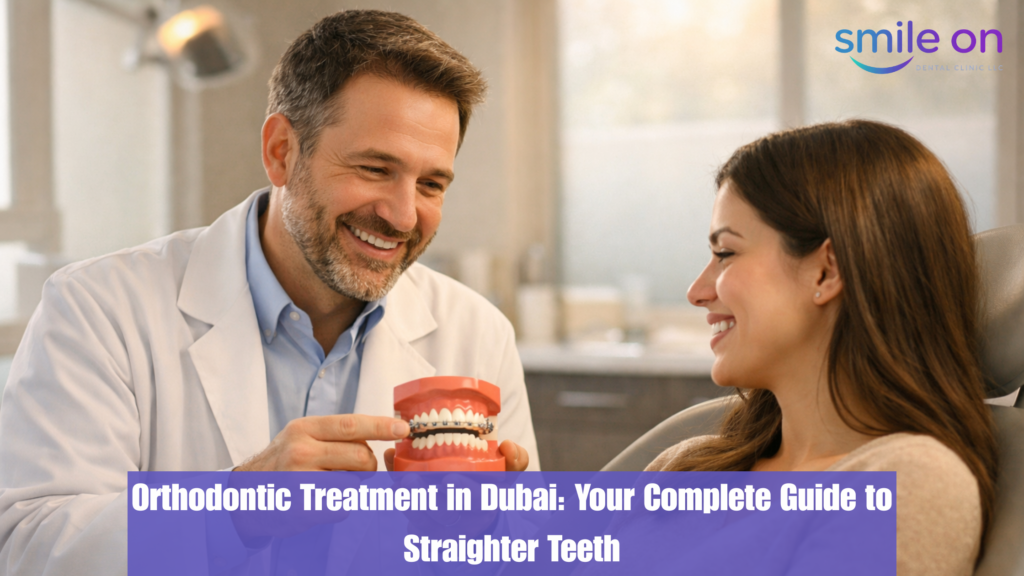
You’ve been thinking about it for a while. Maybe it’s the slight crowding on your lower teeth, an overbite you’ve learned to live with, or gaps you’ve always felt self-conscious about. Whatever the reason, if you’re considering orthodontic treatment, you’re not alone. Thousands of people in Dubai, both children and adults, start this process every year, and the options available today are far better than what most people imagine. Orthodontic treatment is the branch of dentistry focused on correcting the alignment of teeth and jaws. It uses appliances like braces or clear aligners to move teeth gradually into their correct positions, improving both function and appearance. In Dubai, where appearance and professional presentation matter to many residents and expats, demand for orthodontic care has grown significantly. This guide covers everything you need to know: the types of treatment available, who needs it, how long it takes, what it costs, and how to choose the right orthodontist in Dubai. What Does Orthodontic Treatment Actually Fix? Orthodontic treatment addresses a range of alignment issues, not just crooked teeth. The most common conditions treated include crowding (teeth that overlap due to insufficient space), spacing (gaps between teeth), overbite (upper teeth covering too much of the lower teeth), underbite (lower teeth sitting in front of upper teeth), crossbite, and open bite. Beyond aesthetics, misaligned teeth can cause real functional problems. Crowded teeth are harder to clean, which increases the risk of decay and gum disease. An uncorrected bite issue can lead to jaw pain, uneven wear on tooth enamel, and even headaches in some cases. So when people pursue orthodontic treatment, they’re often investing in their long-term dental health, not just a more confident smile. The right treatment for you depends on the type and severity of the misalignment, your age, and your lifestyle preferences. That’s why a proper clinical assessment from a qualified orthodontist is always the starting point. What Are the Types of Orthodontic Treatment Available in Dubai? Dubai clinics now offer several well-established types of orthodontic appliances, and the choice between them depends on your specific case as much as your personal preferences. Traditional Metal Braces Metal braces remain one of the most reliable and cost-effective options for complex cases. They use metal brackets bonded to the teeth, connected by an archwire that applies gentle, consistent pressure over time. Modern metal braces are smaller and more comfortable than older versions, and they work well for patients of all ages. Damon Braces Damon braces use a self-ligating bracket system, meaning they don’t require the elastic ties used in traditional braces. This can reduce friction during tooth movement and may mean fewer adjustment visits. Many patients find them more comfortable, and they can work faster in certain cases. Lingual Braces Lingual braces are fixed to the back surface of your teeth, making them essentially invisible from the front. They’re a good choice for adults who want the effectiveness of fixed braces without the visible brackets. They do require a short adjustment period for speech and tongue comfort. Invisalign (Clear Aligners) Invisalign uses a series of custom-made, removable clear aligners to shift teeth gradually. Each set of aligners is worn for about one to two weeks before moving to the next. Because they’re removable, you can eat and brush normally without any restrictions. Invisalign is popular with adults and older teenagers in Dubai, particularly those in professional or social environments where visible braces feel like an obstacle. The right choice isn’t always obvious from the outside. An orthodontist will assess your bite, jaw structure, and bone density before recommending a specific appliance. How Long Does Orthodontic Treatment Take? This is one of the first questions people ask, and the honest answer is: it varies, but there are useful benchmarks. For mild cases, such as minor crowding or small gaps, treatment with clear aligners can be completed in as little as six to twelve months. Moderate cases typically take twelve to eighteen months. More complex cases involving significant bite correction or jaw alignment can take anywhere from eighteen months to three years. Age plays a role too. Teenagers tend to see faster tooth movement than adults because their bone density is lower and their jaws are still developing. That said, adults achieve excellent results with orthodontic treatment; it simply requires patience and consistency. Compliance matters more than most people expect. With removable aligners, wearing them for the recommended 20 to 22 hours a day is essential for staying on track. Missing appointments or not wearing your aligners as prescribed are the most common reasons treatment takes longer than expected. What Is the Cost of Orthodontic Treatment in Dubai? Orthodontic treatment costs in Dubai vary depending on the type of appliance, the complexity of the case, and the clinic you choose. As a general guide: Traditional metal braces typically range from AED 5,000 to AED 10,000 for a full course of treatment. Damon or self-ligating braces tend to be slightly higher, in the AED 7,000 to AED 12,000 range. Lingual braces, due to their custom fabrication, usually start from AED 12,000 and can go higher for complex cases. Invisalign treatment in Dubai commonly ranges from AED 8,000 to AED 18,000, depending on the number of aligners required. These figures are estimates and your actual cost will be confirmed after a clinical assessment. Many clinics, including Smile On Dental Clinic, offer flexible payment plans, which makes the process more manageable for families or individuals budgeting carefully. Some UAE insurance plans cover a portion of orthodontic costs for children, so it’s worth checking your policy. Who Should Consider Orthodontic Treatment, and When Is the Right Age? There is no single right age for orthodontic treatment, but timing can affect both the ease of treatment and the long-term outcome. For children, the ideal window for a first orthodontic assessment is around age seven. At this stage, an orthodontist can spot developing issues early, even while most baby teeth are still present. Early intervention doesn’t always mean starting braces