If the thought of a dental appointment makes your heart race, you are far from alone. Dental anxiety is one of the most common reasons adults delay check-ups and treatment, and that delay often turns small, easy problems into bigger ones. The good news is that dental fear is very treatable. Most anxious patients manage well with a few practical changes to how the appointment is run, and for those who need more help, sedation can make treatment calm and comfortable.
This guide covers why dental anxiety happens, practical ways to feel calmer before and during your visit, and when sedation is worth considering. It is written by the team at Smile On Dental Clinic in Al Satwa, Dubai, for anyone who has been putting off the dentist because of nerves, and for parents of anxious children.
Nervous about the dentist?
Tell us when you book and we will plan a slower, calmer visit at Smile On Dental Clinic, Al Satwa. Sedation options are available.
What is dental anxiety, and why does it happen?
Dental anxiety is a feeling of fear, stress or unease about visiting the dentist. For some people it is mild nervousness the night before. For others, called dental phobia, it is strong enough that they avoid the dentist entirely, sometimes for years.
It usually comes from one or more of these:
- A bad past experience. A painful or rushed treatment, often in childhood, is the most common trigger.
- Fear of pain or needles. Many people expect treatment to hurt more than it does today.
- Loss of control. Lying back with someone working in your mouth, unable to speak, can feel very vulnerable.
- Embarrassment. Worry about the state of your teeth or being judged after a long gap.
- Sounds and smells. The drill, the suction and the clinic smell can trigger anxiety on their own.
- Gag reflex. A strong gag reflex makes impressions, X-rays and some treatments genuinely difficult.
Knowing which of these applies to you helps, because each one has a different fix.
10 ways to feel calmer at the dentist
Most dental anxiety can be eased with good communication and small changes to how the appointment is run. These are the approaches that make the biggest difference for our patients.
1. Tell the clinic you are anxious when you book. This is the single most useful step. It lets the team allow extra time, explain more, and go at your pace. A good clinic will never think less of you for saying it.
2. Start with a consultation only. If it has been a long time, book a visit that is just a conversation and a gentle look, with no treatment. Meeting the dentist and seeing the room in a low-pressure way takes a lot of the fear out of the next visit.
3. Agree a stop signal. Raising your hand to pause is simple, but knowing you can stop at any moment gives back a sense of control.
4. Ask for a “tell, show, do” approach. The dentist explains what they are about to do, shows you the instrument, then does it. No surprises means less tension.
5. Ask about numbing gel before injections. A topical numbing gel on the gum before the injection makes the needle far less noticeable, and modern local anaesthetic means most treatment is pain free.
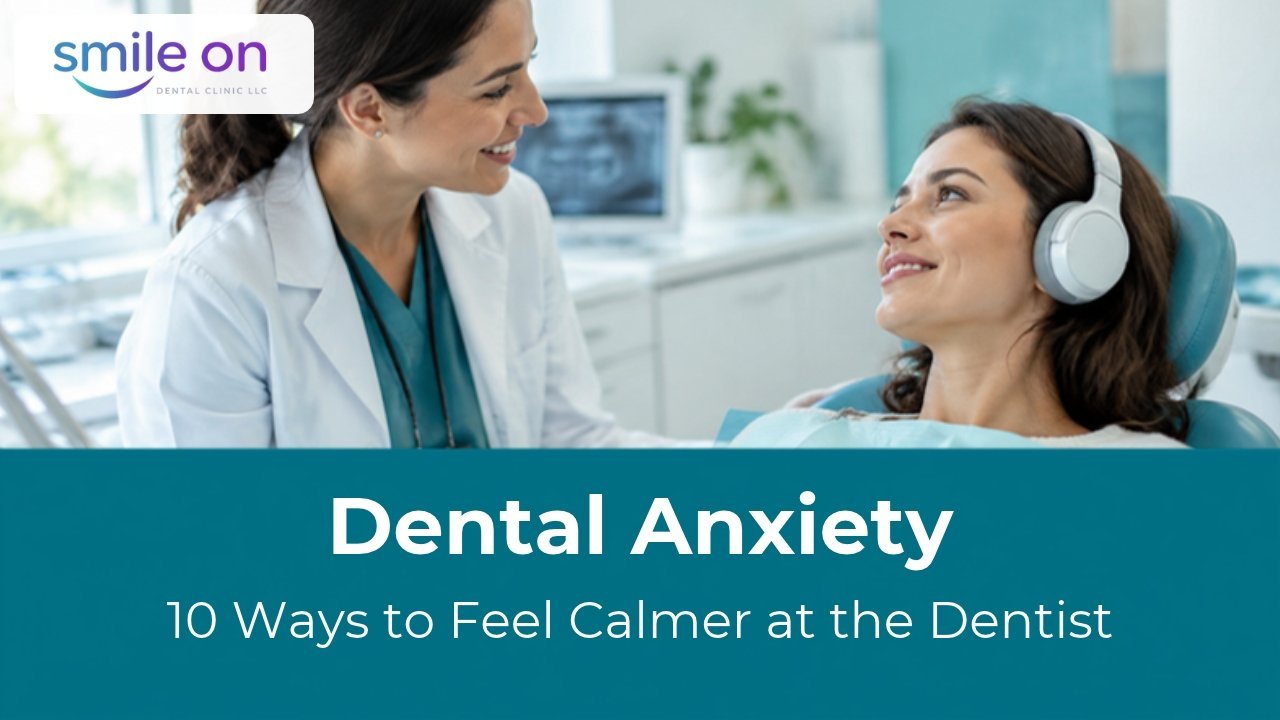
6. Bring headphones. Music or a podcast blocks out the sound of the drill and suction, which is a major trigger for many people.
7. Choose the right time. A morning appointment means less time to build up worry during the day. Avoid scheduling straight after a stressful meeting.
8. Use slow breathing. Breathing in for four seconds and out for six, through your nose, calms the body’s stress response. Practise it in the waiting room.
9. Break treatment into shorter visits. If you need several things done, shorter appointments are often easier to manage than one long session.
10. Bring someone with you. A friend or family member in the waiting room, or in the treatment room if the clinic allows, can be reassuring.
When is sedation dentistry worth considering?
Sedation is worth considering when anxiety is strong enough that you cannot get through treatment, or you keep avoiding care altogether, even with the steps above. It is also useful for long procedures, a strong gag reflex, and some patients with medical or physical conditions.
Sedation does not mean being put to sleep. In most cases you stay awake and able to respond, but feel deeply relaxed. The main options are:
| Type | How it is given | How you feel | Getting home |
|---|---|---|---|
| Nitrous oxide (laughing gas) | Through a small mask over the nose | Calm and relaxed, fully aware | Wears off in minutes, you can usually drive |
| Oral conscious sedation | A tablet taken before the appointment | Drowsy and very relaxed, may remember little | You need someone to take you home |
| IV sedation | Through a small cannula in the arm | Deeply relaxed, sleep-like but not unconscious | You need a responsible adult with you for the rest of the day |
Your dentist will review your medical history and medications before recommending a type, and will explain any fasting or preparation needed. At Smile On Dental Clinic, sedation is AED 500, on top of the cost of the treatment itself. You can read more about each option, who it suits and how to prepare on our sedation dentistry in Dubai page.
Dental anxiety in children
Children pick up on adult nerves quickly, so how you talk about the dentist matters as much as the visit itself. Keep it positive and simple, avoid words like “hurt” or “needle”, and do not use the dentist as a threat. Early, regular visits where nothing much happens help children see the dentist as normal.
Our pediatric team uses child-friendly explanations, short appointments and lots of encouragement. For children who need treatment but cannot cope with it, sedation can be discussed with the dentist. For more practical tips, read our guide on how to keep your child calm during their first dental visit, or see our pediatric dentistry page.
What happens if you keep avoiding the dentist?
Avoiding the dentist tends to make anxiety worse over time, because problems grow and the treatment needed becomes bigger. A small cavity that needs a quick filling can progress to a root canal or extraction, and early gum inflammation can become gum disease that needs deep cleaning.
The reverse is also true. Regular, short check-ups catch problems while they are small and treatment is quick and simple, which means fewer difficult appointments and less to fear. Many patients find that after one or two calm visits, their anxiety drops a long way.
If it has been years since your last visit, there is no need to feel embarrassed. Dentists see patients in every situation, and the priority is simply to help you get comfortable and healthy again.
What to expect at a first visit after a long gap
At Smile On, a first visit for an anxious patient is about getting to know you and making a plan, not jumping into treatment. You can expect:
- A conversation about what worries you and what has happened before
- A gentle check of your teeth and gums, with X-rays only if needed and only with your agreement
- A clear explanation of what, if anything, needs treating, in order of priority, with costs
- A plan to tackle treatment at a pace that suits you, with sedation discussed if it would help
A routine dental checkup at Smile On is AED 150. Nothing is done without your agreement, and you can stop or ask questions at any point.
Ready to take the first step?
Book a calm, no-pressure visit at Smile On Dental Clinic in Al Satwa, Dubai. Let us know you are nervous and we will take it slowly. Open daily, 9am to 9pm.
Frequently Asked Questions
How common is dental anxiety?
Very common. Many adults feel some nervousness about the dentist, and a smaller group avoid dental care altogether because of fear. Dentists are used to treating anxious patients and can adapt how they work.
What can I do to calm my nerves before a dental appointment?
Tell the clinic you are anxious when you book, choose a morning slot, bring headphones, practise slow breathing, and agree a stop signal with your dentist before treatment starts.
Will I be asleep during sedation dentistry?
In most cases, no. With nitrous oxide or oral sedation you stay awake but deeply relaxed. IV sedation produces a sleep-like state, but you are not unconscious like under general anaesthesia.
How much does sedation dentistry cost in Dubai?
At Smile On Dental Clinic in Al Satwa, sedation is AED 500, in addition to the cost of the treatment you are having.
Can I drive home after sedation?
After nitrous oxide you can usually drive once it wears off, which takes a few minutes. After oral or IV sedation you need a responsible adult to take you home.
Is sedation safe for children?
Nitrous oxide is widely used and considered safe for children when given by trained dental professionals. Your dentist will assess your child’s medical history before recommending any sedation.
I have not been to the dentist in years. Will I be judged?
No. Dentists regularly see patients after long gaps. The focus is on helping you feel comfortable and planning treatment at a pace that suits you.