Root Canal Treatment in Dubai: Procedure, Cost, and What to Expect
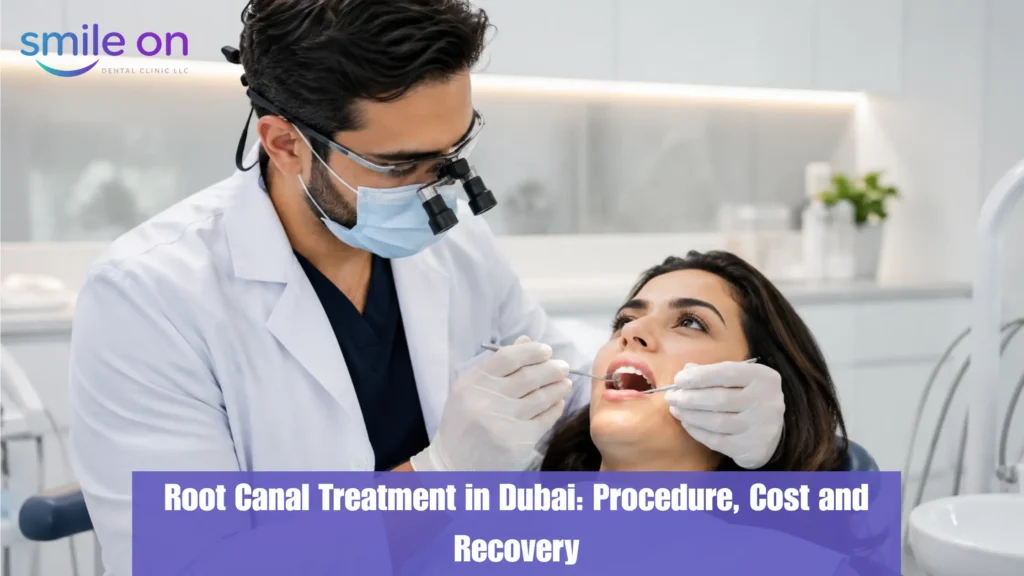
12 min read Share: Root canal treatment saves a tooth that would otherwise need to be extracted. It involves removing infected or damaged tissue from inside the tooth, disinfecting the internal canal system, and sealing it to prevent reinfection. In Dubai, root canal treatment typically costs between AED 1,000 and AED 4,000 per tooth, depending on which tooth is being treated, the complexity of the canal anatomy, and whether a dental crown is included. If your dentist has told you that you need a root canal, or if you are experiencing symptoms that suggest you might, this guide covers exactly what the procedure involves, what causes the need for one, what the recovery looks like, and how to evaluate whether your quote is reasonable. What Is Root Canal Treatment and When Is It Needed? A root canal is a procedure that treats infection or damage inside the tooth’s pulp chamber. The pulp is the soft tissue at the centre of every tooth, containing nerves, blood vessels, and connective tissue. When this pulp becomes infected or irreversibly inflamed, the tooth does not heal on its own. Without treatment, the infection spreads to the surrounding bone, forms an abscess, and the tooth is eventually lost. Root canal treatment becomes necessary in several clinical situations. Deep decay that has reached the pulp. A cavity that goes untreated long enough will eventually penetrate through the enamel and dentin into the pulp chamber. Once bacteria reach the pulp, infection is essentially inevitable. A cracked or fractured tooth. A crack that extends into the pulp creates a direct pathway for bacteria. Even if the crack is not visible to the naked eye, it can expose the nerve and trigger infection. Trauma to the tooth. A blow to the face, a sports injury, or biting down on something unexpectedly hard can damage the pulp even if the tooth appears intact externally. The pulp may die slowly over weeks or months following the trauma. Repeated dental procedures on the same tooth. Each time a tooth is drilled for a filling or adjusted for a crown, the pulp is stressed. After multiple procedures, the pulp may become irreversibly inflamed (a condition called irreversible pulpitis) even without bacterial infection. A failed previous restoration. An old filling or crown with microleakage (a gap between the restoration and tooth structure) allows bacteria to seep in gradually and infect the pulp. The key clinical indicators that a root canal is needed include spontaneous pain (pain that occurs without any trigger), prolonged sensitivity to hot or cold that lingers for 30 seconds or more after the stimulus is removed, pain when biting or pressing on the tooth, swelling in the gum near the affected tooth, a discoloured (darkened) tooth, and a visible pimple-like swelling on the gum (a sinus tract or fistula draining pus from an abscess). What Happens During Root Canal Treatment: Step by Step The procedure is performed by a general dentist or, for complex cases, an endodontist (a dentist who has completed postgraduate specialty training in root canal therapy). Here is what happens during each phase. Diagnosis and Treatment Planning Your dentist will take a periapical X-ray (a detailed image of the individual tooth and surrounding bone) to assess the extent of infection, the number and shape of root canals, and whether there is bone loss around the root tip. In complex cases, a cone beam CT scan (CBCT) provides a three-dimensional view that reveals canal anatomy that standard X-rays cannot show. A series of clinical tests (cold test, electric pulp test, percussion test, palpation test) determine whether the pulp is alive, dead, or irreversibly inflamed. These tests guide the diagnosis and confirm which tooth is actually causing the symptoms. Referred pain, where one tooth causes pain that feels like it is coming from a different tooth, is common in the back of the mouth. Anaesthesia and Access Local anaesthesia is administered to numb the tooth and surrounding area completely. You should feel no pain during the procedure. For patients with dental anxiety, sedation dentistry options including oral sedation and nitrous oxide are available at some Dubai clinics. A rubber dam (a thin latex or silicone sheet) is placed over the tooth to isolate it from the rest of the mouth. This prevents saliva contamination, stops irrigating solutions from entering your throat, and creates a sterile working field. The rubber dam is a non-negotiable quality indicator. If a clinic performs root canals without one, that is a red flag. The dentist then drills a small access opening through the top of the tooth (for front teeth) or the biting surface (for molars) to reach the pulp chamber. Cleaning and Shaping Using specialised endodontic files, which are thin, flexible instruments made from nickel-titanium alloy, the infected or dead pulp tissue is removed from the pulp chamber and root canals. The canals are then shaped (widened in a precise taper) using rotary file systems driven by an electric endodontic motor. Throughout the cleaning process, the canals are irrigated with sodium hypochlorite (a powerful disinfectant that dissolves organic tissue and kills bacteria) and EDTA (a chelating agent that removes the smear layer and opens dentinal tubules for better disinfection). An electronic apex locator is used to measure the exact length of each canal to ensure the files reach the tip of the root without extending beyond it. This device has largely replaced the need for multiple X-rays during the procedure. Obturation (Filling the Canals) Once the canals are cleaned, shaped, and dried, they are filled with a biocompatible rubber-like material called gutta-percha, combined with a sealer cement. The gutta-percha is either laterally condensed (packed in from the sides) or vertically condensed using warm obturation techniques (heated gutta-percha that flows into canal irregularities for a more thorough seal). The goal of obturation is a complete, three-dimensional seal of the entire canal system from the access opening to the root tip. An incomplete seal allows bacteria to recolonise the canal space and cause reinfection. Restoration
Signs of Gum Disease: When to See a Periodontist in Dubai
12 min read Share: Gum disease starts quietly. There is no sharp pain, no dramatic swelling, nothing that screams emergency. For most people, the first sign is blood on the toothbrush or a faint metallic taste after flossing. Easy to dismiss. Easy to ignore. And that is exactly why gum disease remains one of the most common and most underdiagnosed dental conditions in Dubai. Nearly half of all adults over the age of 30 have some form of periodontal disease, according to data published by the World Health Organization. In the UAE, where lifestyle factors like high coffee consumption, irregular dental visits, and summer dehydration accelerate oral bacterial growth, the numbers track even higher among working-age adults. The good news: gum disease is treatable at every stage. The earlier you catch it, the simpler and cheaper the fix. This guide walks you through what gum disease actually looks like, what causes it, how a periodontist in Dubai treats it, what it costs, and the specific point where home care is no longer enough and specialist intervention becomes necessary. What Is Gum Disease and Why Does It Matter? Gum disease, clinically known as periodontal disease, is a bacterial infection of the tissues surrounding and supporting the teeth. It begins when dental plaque, a sticky biofilm of bacteria, accumulates along the gumline. If that plaque is not removed through daily brushing, flossing, and regular professional cleaning, it mineralises into tartar (calculus). Tartar cannot be removed at home. It irritates the gum tissue and triggers a chronic inflammatory response. There are two distinct stages. Gingivitis is the early, reversible stage where the gums become inflamed but no permanent tissue or bone damage has occurred. Periodontitis is the advanced stage where the infection extends below the gumline, destroying the connective tissue and alveolar bone that anchor teeth in place. Once bone is lost, it does not grow back on its own. This matters beyond your mouth. Peer-reviewed research published in the Journal of Periodontology and The Lancet has established links between chronic periodontal disease and increased risk of cardiovascular disease, poorly controlled Type 2 diabetes, adverse pregnancy outcomes, and respiratory infections. The chronic low-grade inflammation caused by untreated gum disease contributes to systemic inflammatory burden throughout the body. How to Spot Gum Disease Before It Gets Serious Most patients who walk into a periodontal consultation in Dubai are surprised to learn their gum disease has been developing for months or even years. The condition is rarely painful in its early stages, which is precisely what makes it dangerous. Here is what to watch for at each stage. Gingivitis: The Warning Phase Gums that bleed when you brush or floss are the single most reliable early warning sign. Healthy gums do not bleed. If you see pink on your toothbrush or in the sink, that is active inflammation, not “aggressive brushing.” Other early indicators include gums that appear redder than their usual coral-pink colour (particularly along the margin where gum meets tooth), mild puffiness or tenderness when pressing on the gum tissue, and persistent bad breath that returns within hours of brushing. Halitosis that does not respond to mouthwash or improved brushing is frequently a sign of bacterial accumulation below the gumline rather than a surface-level hygiene issue. Periodontitis: The Damage Phase If gingivitis is left untreated, it progresses. The signs become more visible. Gum recession is often the first thing patients notice. Teeth appear longer because the gum tissue is pulling away from the tooth surface, exposing root structure that was previously covered. You may notice increased sensitivity to hot and cold foods in areas where recession has occurred. Periodontal pockets form as the gum detaches from the tooth. These pockets trap food, bacteria, and debris in spaces that are impossible to clean with a toothbrush. You may notice a persistent bad taste, visible pus between teeth and gums, or a dull ache around specific teeth. Tooth mobility develops as bone loss progresses. Teeth may feel slightly loose. Your bite may feel different when you chew. Teeth may shift position over weeks or months, creating new gaps or overlapping. If you recognise any of these signs in your own mouth, the condition is treatable. But the window for simple, non-surgical treatment narrows as the disease progresses. The single most important action is getting a professional periodontal assessment rather than waiting for symptoms to resolve on their own. They will not. What Causes Gum Disease? The Risk Factors That Matter in Dubai Inadequate oral hygiene is the primary driver, but it is not the only one. Several factors increase susceptibility, and many of them are particularly prevalent among Dubai’s resident population. Smoking and tobacco use. This is the single largest modifiable risk factor. Smokers are up to six times more likely to develop periodontitis than non-smokers, and tobacco use significantly impairs healing after periodontal treatment. Shisha smoking, common in the UAE, carries similar oral health risks to cigarette use. Diabetes. The relationship between diabetes and gum disease runs both ways. Elevated blood glucose levels increase vulnerability to oral infections. At the same time, active periodontal disease makes glycaemic control harder to maintain. The UAE has one of the highest diabetes prevalence rates in the world (approximately 16.3% of adults according to the International Diabetes Federation), making this a particularly relevant risk factor locally. Dehydration and reduced saliva flow. Dubai’s extreme summer heat, outdoor lifestyle, and Ramadan fasting all contribute to periods of dehydration. Saliva is one of the mouth’s primary natural defences against bacterial overgrowth. When saliva production drops, plaque accumulation accelerates and gum inflammation risk increases. Hormonal fluctuations. Pregnancy gingivitis is a well-documented condition where hormonal shifts make gum tissue more reactive to bacterial plaque. Women going through menopause also experience increased gum sensitivity. These are not cosmetic concerns. Without management, pregnancy gingivitis can progress to periodontitis. Medications. Certain drugs commonly prescribed in the UAE, including some blood pressure medications (calcium channel blockers), immunosuppressants, and antiepileptics, can cause gum tissue overgrowth (gingival hyperplasia)
Dental Implant Cost in Dubai: What You Actually Pay in 2026 (and Why Prices Vary)
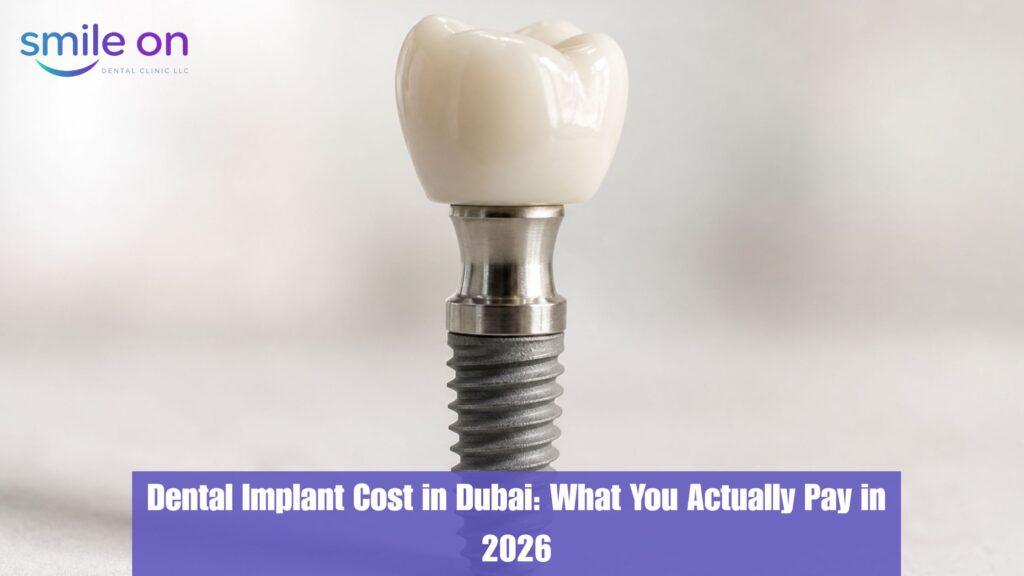
8 min read Share: If you have been searching for dental implant prices in Dubai, you have probably seen numbers ranging from AED 1,500 to AED 15,000, sometimes for what appears to be the same treatment. That gap is not a typo, and it is not clinics trying to trick you. It reflects genuinely different components, materials, technologies, and the scope of work. This guide breaks down exactly what affects the cost, what a realistic price range looks like in Dubai in 2026, what questions to ask before you sign anything, and what warning signs to watch for when a quote seems unusually low. Searching for the best dental implants in Dubai? By the end of this guide, you will know exactly what to look for and what questions to ask any clinic before you commit. What Does a Dental Implant Actually Include? Before comparing prices, it helps to understand what you are actually buying. A dental implant is not a single item; it is a three-part system. The implant post is a small titanium screw surgically placed into your jawbone. This is what fuses with the bone over time (a process called osseointegration) and acts as the root of your new tooth. The abutment is a connector piece that sits on top of the implant post, above the gumline. It holds the crown in place. The crown is the visible part the artificial tooth that is matched to the colour and shape of your natural teeth. Important: When clinics quote a price, they may be quoting for just the post, or for the full system including crown and abutment. This is one of the most common sources of confusion when patients compare costs across clinics. Always confirm in writing what the quoted price includes. What Determines the Cost of Dental Implants in Dubai Several factors pull the final price up or down. Here is what actually matters. 1. The Implant Brand Not all implant posts are the same. Premium brands like Straumann, Nobel Biocare, and Osstem have decades of clinical research behind them, documented success rates, and global service networks. These cost more than lesser-known or generic implant systems. If a clinic does not tell you which brand they are using, ask. The brand matters for long-term reliability, not just the immediate result. 2. Whether You Need Bone Grafting Dental implants require sufficient bone density to anchor properly. If you have been missing a tooth for some time, or if you have existing bone loss from gum disease, you may need a bone graft before the implant can be placed. This is a separate procedure with its own cost typically between AED 1,500 and AED 4,000 depending on the extent of grafting required. Some clinics include a basic assessment for bone volume in the consultation; others charge for the CT scan separately. 3. The Crown Material The visible crown on top can be made from different materials. Porcelain-fused-to-metal (PFM) crowns are more affordable. Full zirconia crowns are stronger, more stain-resistant, and look more natural they are also more expensive. If aesthetics matter to you (especially for front teeth), zirconia is worth the premium. 4. Number of Implants A single implant costs very differently from replacing a full arch of teeth. Multiple implants, or implant-supported bridges that use fewer implants to replace more teeth, are priced differently again. Make sure any quote is clear about how many implants are being placed, not just how many teeth are being replaced. 5. The Complexity of Your Case Patients who need sinus lifts, have unusual jaw anatomy, or have significant existing dental issues will have more complex surgical planning and longer treatment timelines. Complexity is priced accordingly. Types of Dental Implants and What They Cost in Dubai in 2026 Here is a realistic breakdown of what patients in Dubai are paying in 2026. These are indicative ranges your actual cost will depend on the factors above. Implant Type Typical Range (AED) Notes Standard Single Implant AED 4,500 – 9,000 Full system: post, abutment, crown Same-Day Dental Implant AED 6,000 – 12,000 Per implant. Suitability assessment required All-on-4 (full arch) AED 25,000 – 55,000 Per arch. Includes bridge on 4 implants All-on-6 (full arch) AED 30,000 – 65,000 Per arch. More support, more implants Bone Grafting (if needed) AED 1,500 – 4,000 Depends on extent of grafting required 3D CT Scan (CBCT) AED 300 – 600 Sometimes included in consultation Standard Single Dental Implant This is the most common implant procedure one titanium post, one abutment, one crown, replacing a single missing tooth. The process usually spans several months: the post is placed and left to fuse with the bone (3 to 6 months), then the crown is attached. Premium implant brands sit at the higher end of this range; budget systems and grey-market clinics sit at the lower end. Same-Day Dental Implants Same-day implants (also called immediate-load implants) allow a temporary crown to be placed on the same day as the post. This is not suitable for every patient you need adequate bone density and no active infection. Where it is appropriate, it eliminates the long waiting period between post placement and crown fitting. Patients in Al Satwa and Jumeirah searching for same-day dental implants should look for clinics with 3D guided implant surgery capability, which ensures precise placement with less surgical guesswork. All-on-4 Dental Implants All-on-4 (or All-on-6) is a full-arch solution that replaces an entire row of teeth using just four or six strategically placed implants that support a fixed bridge. This is a significant procedure requiring thorough planning, 3D CT imaging, and a team experienced in full-mouth rehabilitation. The cost is significantly higher, but it replaces what would otherwise require dozens of individual implants. What Is Typically Included — and What Gets Charged Separately Even in a reasonably priced clinic, there are often additional costs that patients do not anticipate. Here is what to clarify upfront. Usually included in the quoted price: Often charged separately: Pro Tip: Ask for
Clear Aligners: How They Work, What They Cost, and Whether They’re Right for You
7 min read Share: You have probably seen clear aligners advertised everywhere. Transparent trays, no metal, removable for meals, finished in months. The pitch is compelling. But before you book a consultation, it helps to understand what clear aligners actually do, what they genuinely cannot do, and what you are committing to when you say yes to treatment. This guide covers everything you need to make an informed decision. No fluff, no sales pressure. What Are Clear Aligners and How Do They Work? Clear aligners are a series of custom-made, transparent plastic trays worn over the teeth to gradually move them into a corrected position. Each tray is slightly different from the last, applying controlled pressure to specific teeth at specific points in the treatment plan. You wear each tray for one to two weeks before progressing to the next one in the series. The aligners are fabricated from digital scans of your teeth taken at your first appointment. An orthodontist or specialist dentist uses dedicated software to map out every planned tooth movement from your current position to the final result. You can typically see a simulation of the expected outcome before treatment begins. The most widely used clear aligner system is Invisalign, though multiple other systems are available in Dubai including Spark, ClearCorrect, and various branded alternatives. The underlying technology across systems is broadly similar. What differs is the material quality, precision of the treatment planning software, and the level of specialist oversight involved. Clear Aligners vs Traditional Braces: The Real Differences Both treatments move teeth using controlled force over time. The mechanism is the same. The experience is not. Visibility. Clear aligners are nearly invisible when worn correctly. Traditional braces use metal or ceramic brackets bonded to the teeth with visible wires. If aesthetics during treatment matter to you, aligners have a clear advantage. Removability. Aligners come out for meals, brushing, and flossing. This means no food restrictions and easier oral hygiene maintenance throughout treatment. Braces are fixed and require more careful cleaning around brackets and wires. The trade-off is that removability requires discipline. Aligners only work when they are in your mouth. Comfort. Aligners exert pressure on teeth during each tray change, which causes temporary soreness for a day or two. Braces can cause irritation to the cheeks and lips from brackets and wires, particularly in the first few weeks. Neither is pain-free, but the nature of the discomfort is different. Complexity range. Braces are more effective for cases involving significant bite correction, large tooth movements, or rotations of certain teeth. Clear aligners handle mild to moderate alignment cases very well. For complex orthodontic presentations, braces often remain the more reliable choice. Your orthodontist will tell you honestly which option suits your specific case.Treatment time. Mild to moderate aligner cases in Dubai typically run between six and eighteen months. Traditional braces are generally quoted at eighteen to twenty-four months, though complex cases in both categories can take longer. The biggest factor in aligner treatment time is compliance. Patients who wear their trays consistently achieve their results faster. Patients who do not wear them enough extend their treatment, sometimes significantly. Who Is a Good Candidate for Clear Aligners? Clear aligners are well suited to adults and older teenagers with mild to moderate orthodontic concerns. Good candidates typically have: Clear aligners are generally not the best option for patients with severe crowding, significant bite problems affecting jaw function, teeth that require complex rotational movements, or patients who are not confident they can maintain the required wear time. Braces in these cases are not a lesser alternative. They are the clinically correct one. Children under twelve are typically not ideal candidates because their jaws are still developing. Invisalign First, a specific system designed for younger patients with mixed dentition, is an exception and is discussed separately. The only reliable way to determine whether you are a candidate is through a clinical assessment with an orthodontist or specialist dentist who can evaluate your teeth, bite, and jaw relationship properly. How Long Does Clear Aligner Treatment Take? Treatment duration depends primarily on how much tooth movement is needed and how consistently the aligners are worn. For mild cases involving minor crowding or small gaps, treatment commonly completes in six to nine months. For moderate cases, twelve to eighteen months is a typical timeframe. Complex cases can extend to twenty-four months or beyond, at which point traditional braces may be a more predictable choice. The compliance factor is where many patients underestimate the impact of their own behaviour. Clear aligners need to be worn for twenty to twenty-two hours every day. That leaves a window of two to four hours for eating, drinking anything other than water, and cleaning your teeth. When patients wear aligners for fewer hours than prescribed, teeth do not move as planned, and treatment extends. Some patients require additional trays and additional months beyond the original estimate. This is not a reason to avoid aligners. It is a reason to be honest with yourself about whether you will commit to wearing them before you start. What Affects the Cost of Clear Aligners in Dubai? Clear aligner treatment in Dubai typically ranges from AED 7,000 to AED 25,000. That is a wide range, and understanding what drives the variation helps you compare quotes meaningfully rather than choosing on price alone. Case complexity. Mild cases requiring fewer trays and less total movement are less expensive than moderate or complex cases. The number of aligners manufactured determines a significant portion of the overall cost. The aligner system used. Branded systems like Invisalign are priced differently from other clear aligner providers. Within Invisalign, there are tier levels ranging from Invisalign Lite for straightforward cases to Invisalign Comprehensive for full treatment. Each tier carries a different price point. Your orthodontist should explain which tier is appropriate for your case and why. What is included in the quoted price. Some clinics quote only the aligner trays. Others include the 3D digital scan, all