Gum disease starts quietly. There is no sharp pain, no dramatic swelling, nothing that screams emergency. For most people, the first sign is blood on the toothbrush or a faint metallic taste after flossing. Easy to dismiss. Easy to ignore. And that is exactly why gum disease remains one of the most common and most underdiagnosed dental conditions in Dubai.
Nearly half of all adults over the age of 30 have some form of periodontal disease, according to data published by the World Health Organization. In the UAE, where lifestyle factors like high coffee consumption, irregular dental visits, and summer dehydration accelerate oral bacterial growth, the numbers track even higher among working-age adults.
The good news: gum disease is treatable at every stage. The earlier you catch it, the simpler and cheaper the fix. This guide walks you through what gum disease actually looks like, what causes it, how a periodontist in Dubai treats it, what it costs, and the specific point where home care is no longer enough and specialist intervention becomes necessary.
What Is Gum Disease and Why Does It Matter?
Gum disease, clinically known as periodontal disease, is a bacterial infection of the tissues surrounding and supporting the teeth. It begins when dental plaque, a sticky biofilm of bacteria, accumulates along the gumline. If that plaque is not removed through daily brushing, flossing, and regular professional cleaning, it mineralises into tartar (calculus). Tartar cannot be removed at home. It irritates the gum tissue and triggers a chronic inflammatory response.
There are two distinct stages. Gingivitis is the early, reversible stage where the gums become inflamed but no permanent tissue or bone damage has occurred. Periodontitis is the advanced stage where the infection extends below the gumline, destroying the connective tissue and alveolar bone that anchor teeth in place. Once bone is lost, it does not grow back on its own.
This matters beyond your mouth. Peer-reviewed research published in the Journal of Periodontology and The Lancet has established links between chronic periodontal disease and increased risk of cardiovascular disease, poorly controlled Type 2 diabetes, adverse pregnancy outcomes, and respiratory infections. The chronic low-grade inflammation caused by untreated gum disease contributes to systemic inflammatory burden throughout the body.
How to Spot Gum Disease Before It Gets Serious
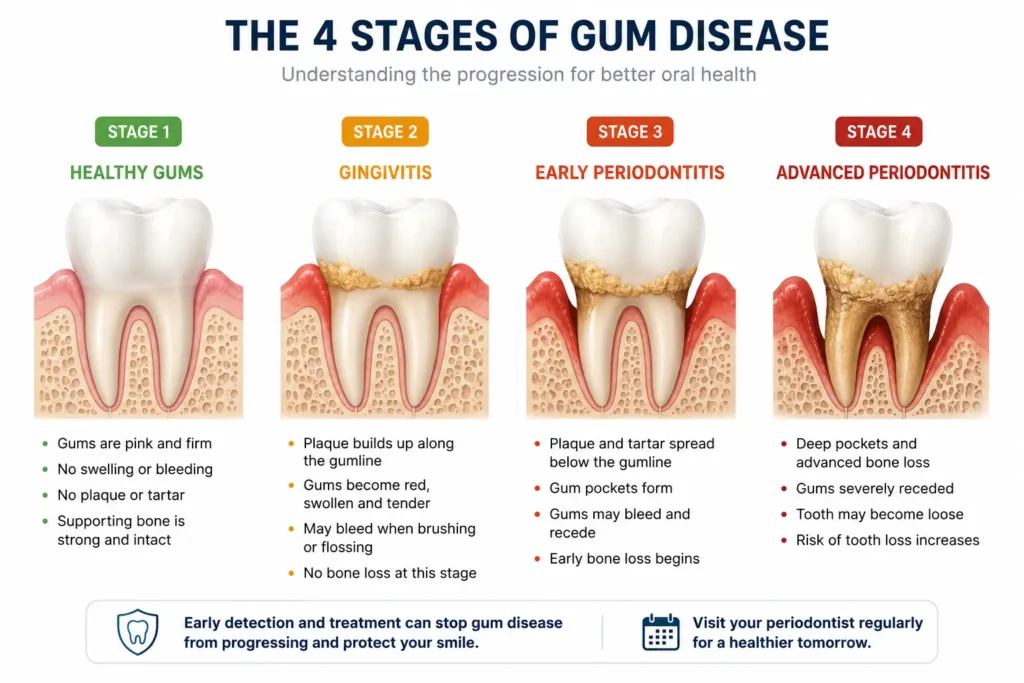
Most patients who walk into a periodontal consultation in Dubai are surprised to learn their gum disease has been developing for months or even years. The condition is rarely painful in its early stages, which is precisely what makes it dangerous.
Here is what to watch for at each stage.
Gingivitis: The Warning Phase
Gums that bleed when you brush or floss are the single most reliable early warning sign. Healthy gums do not bleed. If you see pink on your toothbrush or in the sink, that is active inflammation, not “aggressive brushing.”
Other early indicators include gums that appear redder than their usual coral-pink colour (particularly along the margin where gum meets tooth), mild puffiness or tenderness when pressing on the gum tissue, and persistent bad breath that returns within hours of brushing. Halitosis that does not respond to mouthwash or improved brushing is frequently a sign of bacterial accumulation below the gumline rather than a surface-level hygiene issue.
Periodontitis: The Damage Phase
If gingivitis is left untreated, it progresses. The signs become more visible.
Gum recession is often the first thing patients notice. Teeth appear longer because the gum tissue is pulling away from the tooth surface, exposing root structure that was previously covered. You may notice increased sensitivity to hot and cold foods in areas where recession has occurred.
Periodontal pockets form as the gum detaches from the tooth. These pockets trap food, bacteria, and debris in spaces that are impossible to clean with a toothbrush. You may notice a persistent bad taste, visible pus between teeth and gums, or a dull ache around specific teeth.
Tooth mobility develops as bone loss progresses. Teeth may feel slightly loose. Your bite may feel different when you chew. Teeth may shift position over weeks or months, creating new gaps or overlapping.
If you recognise any of these signs in your own mouth, the condition is treatable. But the window for simple, non-surgical treatment narrows as the disease progresses. The single most important action is getting a professional periodontal assessment rather than waiting for symptoms to resolve on their own. They will not.
Ready to find out which is right for your teeth?
Book a cosmetic consultation at Smile On Dental Clinic in Al Satwa. We assess your teeth properly and give you a written recommendation with rationale before you decide anything.
What Causes Gum Disease? The Risk Factors That Matter in Dubai
Inadequate oral hygiene is the primary driver, but it is not the only one. Several factors increase susceptibility, and many of them are particularly prevalent among Dubai’s resident population.
Smoking and tobacco use. This is the single largest modifiable risk factor. Smokers are up to six times more likely to develop periodontitis than non-smokers, and tobacco use significantly impairs healing after periodontal treatment. Shisha smoking, common in the UAE, carries similar oral health risks to cigarette use.
Diabetes. The relationship between diabetes and gum disease runs both ways. Elevated blood glucose levels increase vulnerability to oral infections. At the same time, active periodontal disease makes glycaemic control harder to maintain. The UAE has one of the highest diabetes prevalence rates in the world (approximately 16.3% of adults according to the International Diabetes Federation), making this a particularly relevant risk factor locally.
Dehydration and reduced saliva flow. Dubai’s extreme summer heat, outdoor lifestyle, and Ramadan fasting all contribute to periods of dehydration. Saliva is one of the mouth’s primary natural defences against bacterial overgrowth. When saliva production drops, plaque accumulation accelerates and gum inflammation risk increases.
Hormonal fluctuations. Pregnancy gingivitis is a well-documented condition where hormonal shifts make gum tissue more reactive to bacterial plaque. Women going through menopause also experience increased gum sensitivity. These are not cosmetic concerns. Without management, pregnancy gingivitis can progress to periodontitis.
Medications. Certain drugs commonly prescribed in the UAE, including some blood pressure medications (calcium channel blockers), immunosuppressants, and antiepileptics, can cause gum tissue overgrowth (gingival hyperplasia) or dry mouth, both of which increase periodontal risk.
Genetic predisposition. Some individuals are genetically more susceptible to aggressive forms of periodontal disease regardless of their hygiene habits. If your parents lost teeth to gum disease, your risk is higher and early professional monitoring is particularly important.
When Should You See a Periodontist Instead of a General Dentist?
A general dentist handles routine cleanings and can diagnose and manage gingivitis. But there is a specific clinical threshold where specialist involvement becomes necessary.
You should see a periodontist, a dentist who has completed additional years of postgraduate training in the diagnosis and treatment of gum and bone disease, if any of the following apply.
Your gums continue to bleed after a professional cleaning and four to six weeks of improved home care. Persistent bleeding after intervention means the disease has progressed beyond what surface cleaning can address.
A periodontal examination reveals pocket depths of 4mm or greater. Healthy pockets measure 1 to 3mm. Anything beyond 4mm indicates attachment loss and requires specialist evaluation.
You have visible gum recession, tooth mobility, or shifting teeth. These are signs of active bone loss that need specialist-level assessment and treatment planning.
You have a systemic condition that complicates periodontal disease, particularly diabetes, cardiovascular disease, or immunocompromise.
You are being evaluated for dental implants. A periodontist assesses whether your bone and gum tissue can support implant placement. Untreated periodontal disease is one of the primary causes of implant failure.
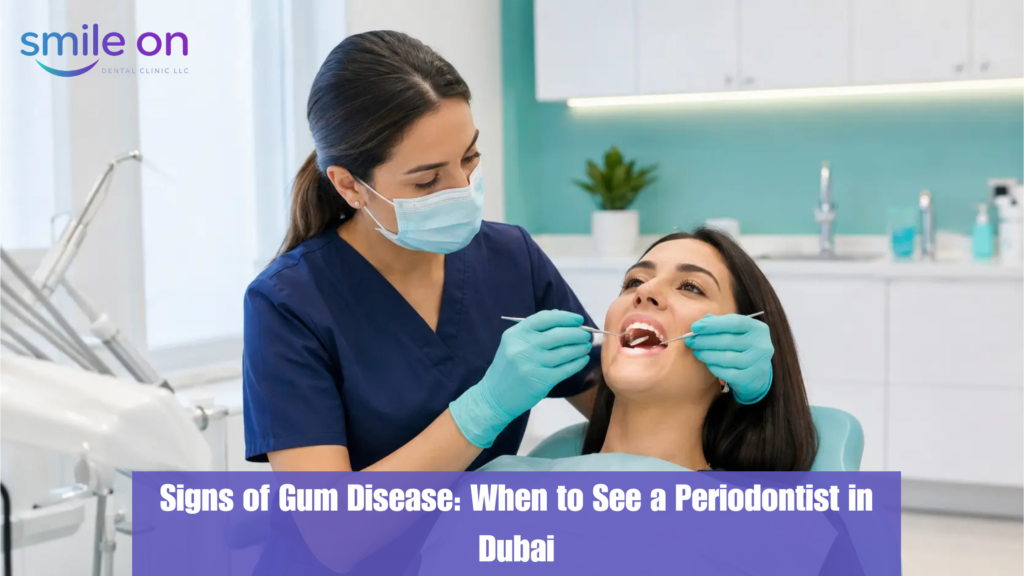
In Dubai, periodontists are registered specialists with the Dubai Health Authority. At Smile On Dental Clinic in Al Satwa, Dr. Arun Devarajan manages periodontic cases ranging from non-surgical deep cleaning through advanced surgical and laser interventions.
How Gum Disease Is Treated in Dubai
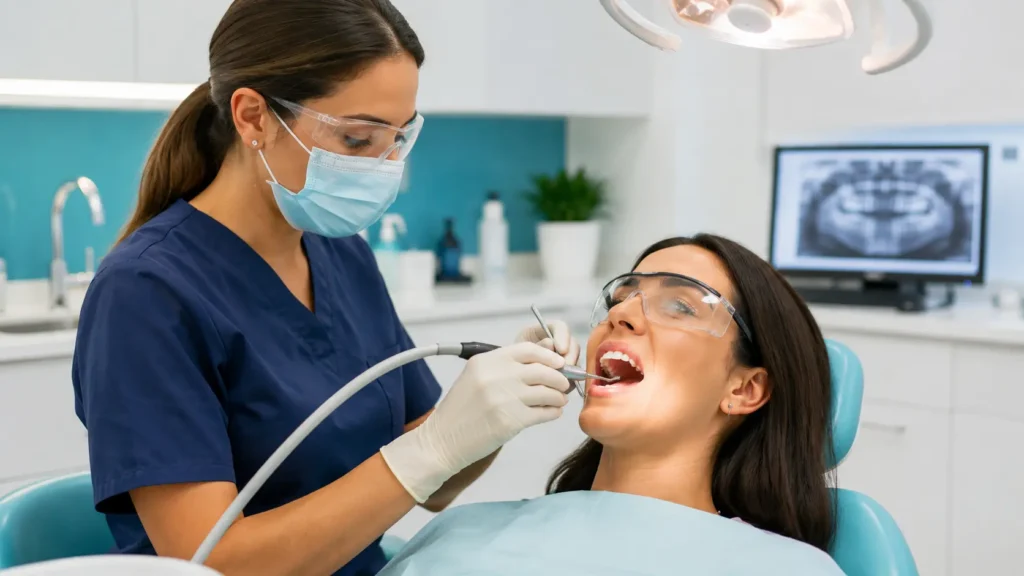
Treatment depends entirely on how far the disease has progressed. A periodontist will conduct a full-mouth periodontal charting (measuring pocket depths at six points around every tooth), take periapical or panoramic radiographs to assess bone levels, and design a treatment plan based on the findings.
Non-Surgical Treatment
Professional prophylaxis (dental cleaning) is the first-line treatment for gingivitis. Your hygienist removes plaque and tartar deposits from above and just below the gumline using ultrasonic scalers and hand instruments. Combined with improved home care, this is often sufficient to reverse gingivitis completely. A professional teeth cleaning at Smile On Dental Clinic takes approximately 45 minutes.
Scaling and root planing (SRP) is the standard non-surgical treatment for early to moderate periodontitis. It is a deeper, more thorough version of cleaning. Scaling removes tartar from above and below the gumline, including inside periodontal pockets. Root planing smooths the root surfaces, removing bacterial toxins embedded in the cementum and creating a clean surface that allows the gum tissue to reattach. SRP is performed under local anaesthesia, typically over two appointments (one for each side of the mouth). Each session takes 60 to 90 minutes.
Adjunctive antibiotic therapy may be prescribed alongside SRP. This can involve locally delivered antibiotics (placed directly into deep pockets using a syringe or chip) or systemic antibiotics for more widespread infection.
Surgical Treatment
For moderate to advanced periodontitis where non-surgical treatment has not achieved sufficient pocket depth reduction, surgical intervention becomes necessary.
Flap surgery (open flap debridement) involves lifting the gum tissue away from the bone to access and remove deep tartar deposits and infected tissue that scaling instruments cannot reach. The gum is then repositioned and sutured to reduce pocket depth. This is the most common periodontal surgery performed in Dubai.
Bone grafting rebuilds bone destroyed by periodontitis. Graft material (autogenous bone from the patient, allograft, xenograft, or synthetic substitute) is placed in areas of bone loss to serve as a scaffold for new bone regeneration.
Guided tissue regeneration (GTR) uses a biocompatible membrane barrier placed between the bone graft and gum tissue. The membrane prevents fast-growing gum tissue from invading the healing bone space, allowing bone and periodontal ligament to regenerate properly.
Laser Gum Treatment
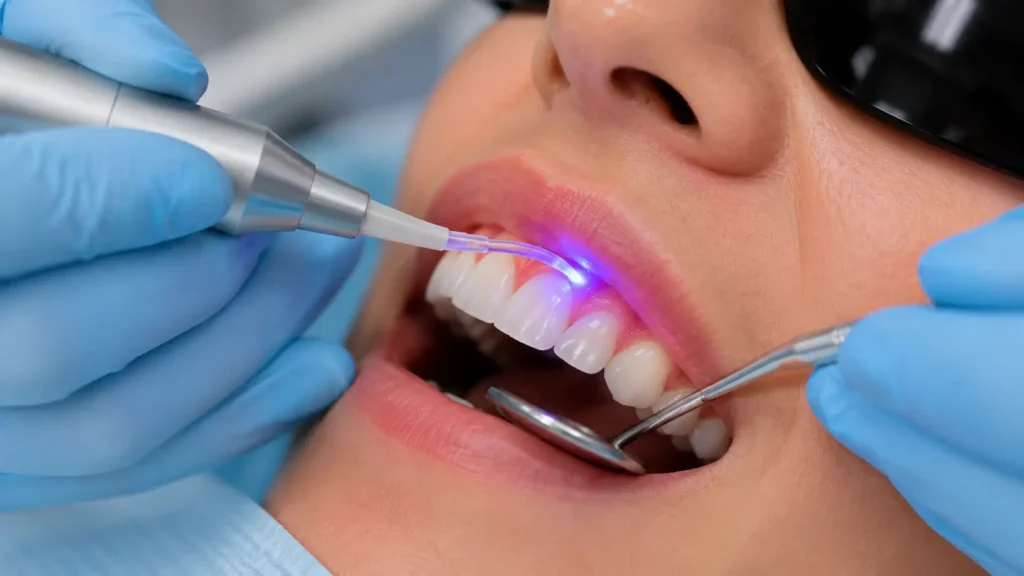
Laser periodontal therapy uses focused diode or Nd:YAG laser energy to selectively remove infected tissue, eliminate bacteria within periodontal pockets, and promote clot formation for faster healing. It offers several advantages over conventional surgery: less bleeding during the procedure, reduced post-operative swelling, faster healing, and in many cases, the ability to treat the condition without scalpels or sutures.
Laser gum treatment is not appropriate for every case. Severe bone loss typically still requires conventional flap surgery with grafting. But for mild to moderate periodontitis, laser therapy provides effective pocket reduction with a significantly more comfortable patient experience.
Smile On Dental Clinic offers laser gum treatment as part of its periodontics department. The choice between laser and conventional surgical approaches is made based on clinical findings during your assessment.
How Much Does Gum Disease Treatment Cost in Dubai?
Costs vary depending on severity, the number of teeth affected, and whether surgical intervention is needed.
| Treatment | Typical Cost Range (AED) | Notes |
|---|---|---|
| Professional cleaning (prophylaxis) | 300 to 600 | For gingivitis; single session |
| Scaling and root planing (per quadrant) | 500 to 1,200 | Usually 2 to 4 quadrants needed |
| Full-mouth SRP (all 4 quadrants) | 2,000 to 4,800 | Completed over 2 sessions |
| Flap surgery (per quadrant) | 2,000 to 5,000 | For moderate to advanced disease |
| Bone grafting (per site) | 3,000 to 8,000 | Depends on graft material and extent |
| Laser gum treatment (per session) | 1,500 to 4,000 | Per quadrant or per area |
| Guided tissue regeneration | 4,000 to 10,000 | Complex regenerative cases |
Most dental insurance plans in the UAE cover scaling and root planing as a preventive or basic procedure. Surgical treatments typically require pre-authorisation. Smile On Dental Clinic works with major insurance providers and can verify your coverage before treatment begins.
The cost difference between early and late-stage treatment is significant. A full-mouth scaling and root planing for early periodontitis costs roughly AED 3,000 to AED 4,000. A complex case requiring multiple surgical sites, bone grafting, and laser therapy can exceed AED 30,000. This is the single strongest financial argument for not delaying a periodontal assessment.
How to Prevent Gum Disease: What Actually Works
Prevention is not complicated, but it requires consistency.
Brush twice daily with a soft-bristled brush. Electric toothbrushes with pressure sensors (Oral-B iO, Philips Sonicare) are clinically more effective at plaque removal along the gumline than manual brushing. Angle the bristles 45 degrees toward the gumline and use gentle circular motions.
Floss every day. Brushing alone misses approximately 35% of tooth surfaces. If traditional floss feels awkward, water flossers (Waterpik) provide an effective alternative, particularly for patients with bridges, implants, or braces.
Get professional cleanings every six months. If you have a history of gum disease or are in a high-risk category, your periodontist may recommend cleanings every three to four months (supportive periodontal therapy).
Stop smoking. No amount of dental care can fully offset the periodontal damage caused by daily tobacco use. Quitting is the single most impactful thing you can do for your gum health.
Stay hydrated. This is especially important during Dubai’s summer months and during Ramadan. Reduced saliva flow allows bacterial plaque to accumulate faster. Aim for at least 2 to 3 litres of water daily when outdoor temperatures exceed 35 degrees Celsius.
Manage diabetes aggressively. If you are diabetic, tight glycaemic control (HbA1c below 7%) reduces your periodontal disease risk substantially. Work with both your endocrinologist and your periodontist as a coordinated care team.
Frequently Asked Questions About Gum Disease
Can gum disease be cured completely?
Gingivitis is fully reversible with professional cleaning and consistent home care. The gum tissue heals completely and returns to its normal healthy state. Periodontitis cannot be reversed because lost bone does not regenerate on its own without surgical intervention. However, it can be effectively managed and stabilised to prevent further damage. With ongoing maintenance, most patients with treated periodontitis keep their teeth for life.
Is gum disease treatment painful?
Scaling and root planing is performed under local anaesthesia. You will feel pressure but not pain during the procedure. Post-treatment sensitivity typically lasts two to five days and is manageable with over-the-counter pain relief. Laser treatments generally cause less post-procedure discomfort than conventional surgery. Surgical procedures involve a recovery period of 7 to 14 days with prescribed pain management.
How do I know if I need a periodontist or just a regular cleaning?
If your gums bleed every time you brush and the bleeding has not stopped after two weeks of improved home care, you need a periodontal assessment. If a dentist has measured pocket depths of 4mm or more during an exam, or if you have visible gum recession or loose teeth, a periodontist should be involved. A general dentist can handle gingivitis and routine cleanings. Anything beyond that benefits from specialist evaluation.
Does gum disease cause bad breath?
Yes. Persistent halitosis is one of the most common and most socially impactful symptoms of periodontal disease. The bacteria colonising deep periodontal pockets produce volatile sulfur compounds that cause a distinct, unpleasant odour. This type of bad breath does not respond to mouthwash because the source is subgingival (below the gumline), not on the tongue or tooth surfaces. Treating the underlying gum disease resolves it.
Can gum disease affect dental implants?
Absolutely. Untreated periodontal disease is one of the leading causes of dental implant failure. The same bacteria that destroy natural bone around teeth can destroy bone around implants (a condition called peri-implantitis). Any patient considering dental implants in Dubai should have their periodontal health assessed and stabilised before implant placement.
Is bleeding during brushing normal?
No. Healthy gums do not bleed. Bleeding during brushing or flossing is a clinical sign of gingival inflammation and should be evaluated by a dentist or periodontist. It is one of the earliest detectable signs of gum disease and should never be dismissed as normal.
How often should I see a periodontist for maintenance?
After active periodontal treatment, most periodontists recommend supportive periodontal therapy (SPT) every three to four months for the first one to two years. This may be extended to every six months once the condition is fully stabilised. The maintenance schedule is individualised based on your response to treatment and risk factors.
Your Gums Are Trying to Tell You Something
If your gums bleed when you brush, if your breath does not improve no matter what you do, if your teeth look longer than they used to, these are not minor annoyances to live with. They are clinical signs of a treatable condition that gets more expensive and more complex the longer you wait.
At Smile On Dental Clinic in Al Satwa, Dubai, our periodontics team provides everything from routine deep cleaning to laser gum treatment and surgical bone regeneration. We are licensed by the Dubai Health Authority and work with major insurance providers across the UAE.
A periodontal assessment takes less than an hour and gives you a clear picture of where your gum health stands and what, if anything, needs to happen next.
Book a Dental Consultation
Al Satwa, Dubai