How Much Does a Teeth Retainer Cost in Dubai?
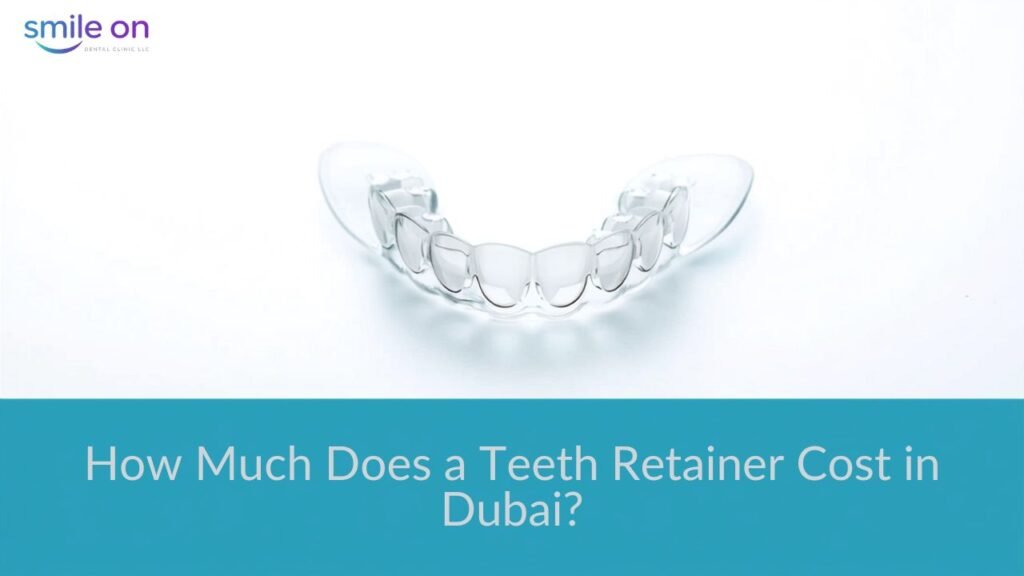
7 min read Share: A teeth retainer in Dubai typically costs between AED 500 and AED 1,500 per arch, depending on the type you get. Clear removable retainers sit at the lower end of that range, Hawley retainers land in the middle, and fixed (bonded) retainers usually cost the most because they involve chairside placement rather than a lab-made appliance you take home. This guide breaks down what drives that price, what each retainer type actually involves, and what to check before you commit to one, so you’re not comparing quotes without knowing what’s behind them. It’s most useful if you’ve just finished braces or Invisalign and your orthodontist has brought up retainers, or if you’re replacing one that’s lost or broken. Before we get into the numbers, here’s the part that matters more than price: skipping a retainer, or wearing the wrong one inconsistently, is how relapse happens. Worth reading through before you decide based on cost alone. Teeth Retainer Cost in Dubai by Type Retainer Type What It Is Cost in AED (per arch) Clear/Essix retainer Custom clear plastic tray, removable 500 – 800 Hawley retainer Wire and acrylic, removable 700 – 1,100 Fixed (bonded) retainer Thin wire bonded behind teeth, permanent 900 – 1,500 Replacement (lost/broken) Re-fabrication of an existing type 400 – 900 These figures reflect typical Dubai clinic pricing as of 2026. Some clinics bundle the first retainer into the overall braces or Invisalign package, so it’s worth asking your orthodontist whether that applies to you before assuming it’s a separate line item. What Actually Drives the Price Retainer type. This is the single biggest factor. Clear removable retainers are lab-fabricated from a digital or physical impression and don’t require an in-chair bonding appointment, which keeps them cheaper. Fixed retainers need a dentist to bond a wire directly to the back of your teeth, chairside, which adds clinical time and pushes the cost up. Number of arches. Most patients need both upper and lower retainers, not just one. Quoted prices are almost always per arch, so double the single-arch figure to budget realistically for a full set, unless a clinic explicitly quotes a package rate for both. Material and fabrication method. Retainers made from a digital scan, rather than a traditional putty impression, sometimes carry a small premium, though the fit is typically more precise. Ask whether your clinic uses digital scanning as part of the quote. Clinic and location. Clinics closer to central Dubai and higher-footfall areas like Downtown, Marina, or Jumeirah tend to price slightly above clinics in areas like Al Satwa or Deira, though the difference for a retainer specifically is usually smaller than it is for bigger orthodontic procedures. Whether it’s included in your original treatment. Many orthodontists bundle the first set of retainers into the total cost of braces or Invisalign treatment. If yours didn’t, or if you’re past your original treatment window, expect to pay separately. Does Insurance Cover Retainer Costs in Dubai? Usually not, and this catches people off guard. Dental cover in most UAE health insurance plans is an optional add-on rather than something included automatically, and even where dental benefits exist, orthodontic-related costs, including retainers, are commonly excluded from basic and mid-tier plans entirely. A small number of premium plans, typically Bupa Premium or MetLife Executive tiers, include a lifetime orthodontic sub-benefit somewhere in the range of AED 3,000 to AED 6,000, which can sometimes be applied to retainers if your original braces or Invisalign treatment fell under the same benefit. This is worth checking directly with your insurer rather than assuming, since coverage details and waiting periods vary significantly between providers like Daman, AXA, Bupa, Sukoon, and Cigna. If your retainer was part of a documented orthodontic treatment plan, ask your clinic to check whether it can be billed under that plan’s remaining balance before you pay out of pocket. If you’re self-paying, budgeting for the full AED 500 to AED 1,500 per arch range without expecting reimbursement is the safer assumption. What’s Usually Included vs. Charged Separately A retainer quote should include the impression or digital scan, fabrication of the appliance, and the fitting appointment. What’s commonly billed separately: replacement retainers if you lose or damage the original, adjustment visits months later if your bite has shifted slightly, and any additional consultation if you’re switching retainer types partway through treatment. Some clinics also charge separately for a retainer case, cleaning tablets, or a follow-up check at the three-month mark, so it’s reasonable to ask upfront whether the quote is truly all-inclusive or a starting figure. If a quoted price seems unusually low, ask specifically what it covers. A retainer that doesn’t include a proper impression or fitting appointment is not comparable to one that does, even if the sticker price looks similar. Clear, Hawley, or Fixed: Which One Costs What and Why Clear retainers are the most commonly recommended option today, largely because they’re the least visible and the easiest to keep clean since you remove them to eat and brush. Their lower cost reflects a simpler fabrication process, not lower quality. Hawley retainers use a wire that wraps around the front teeth, held in acrylic that sits against the roof of the mouth or under the tongue. They’re more durable than clear plastic and easier to adjust if your orthodontist needs to fine-tune tooth position slightly, which is part of why they sit in the middle of the price range. Fixed retainers are bonded permanently behind your front teeth, usually the lower ones, and are the option most likely to be recommended if your orthodontist is concerned about long-term compliance with a removable retainer. The higher cost reflects the in-chair bonding procedure itself, not just the appliance. Real-World Scenarios: Which Retainer Actually Fits Your Case The recent Invisalign patient who travels often for work. A removable clear retainer usually makes the most sense here. It’s discreet in meetings, easy to remove for flights and meals, and doesn’t need an in-clinic visit if