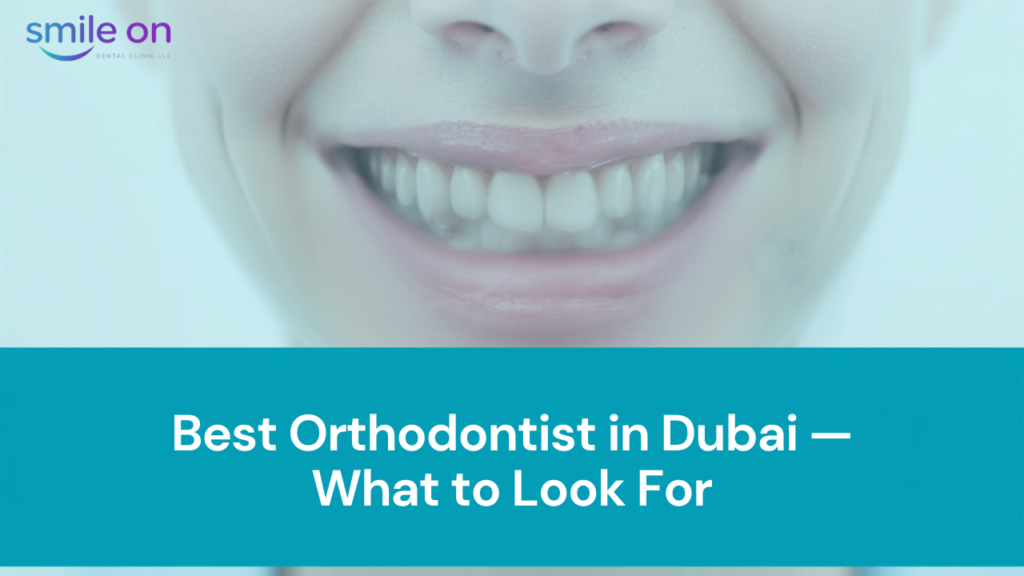
Best Orthodontist in Dubai: What to Look For
9 min read Share: The best orthodontist in Dubai for your case is a DHA-registered Specialist Orthodontist, not a general dentist who also offers braces, with documented experience treating cases like yours and a treatment plan you can actually understand before you commit to it. That’s the short answer. The longer answer is that “best” isn’t a single ranking, it depends on what you actually need treated, and Dubai has a wide range of providers, from general dentists offering basic aligner packages to specialist orthodontists in Dubai handling complex surgical cases. Knowing the difference before you book a consultation saves you time, money, and in some cases, a treatment plan that doesn’t hold. The Single Most Important Check: DHA Specialist Registration In Dubai, both general dentists and specialist orthodontists can legally place braces and clear aligners. The training behind them is not the same. A Specialist Orthodontist has completed an additional 2 to 3 years of full-time postgraduate residency in orthodontics after dental school, and their Dubai Health Authority registration will explicitly say “Specialist Orthodontist,” not “General Dentist.” You can verify this directly at dha.gov.ae before you book, or simply ask at the consultation. This single check filters out most of the ambiguity in “who’s actually qualified” searches. A general dentist with a weekend aligner certification can competently manage very simple cases, but complex bite corrections, impacted teeth, or surgical-orthodontic cases genuinely need specialist-level training. Common Cases That Genuinely Need a Specialist Not every case requires the same level of expertise, and knowing where your situation falls helps set expectations. Mild spacing or minor crowding in an otherwise healthy bite is something many trained general dentists manage competently with aligner systems. Where a specialist becomes necessary is anything involving jaw discrepancy, such as an overbite or underbite significant enough to affect chewing or facial profile, impacted teeth that haven’t erupted properly, severe crowding requiring extraction planning, or cases where growth modification is being considered in a child or teenager. Adults returning for a second round of treatment after a previous orthodontic relapse also benefit from specialist assessment, since the underlying cause of the relapse, whether retainer compliance or a bite issue that was never fully corrected, needs proper diagnosis before starting again. If your case falls into any of these categories and you’re currently only being offered a straightforward aligner package without deeper discussion of your bite, that’s worth a second opinion from Invisalign before committing. What Else Separates a Strong Orthodontist From an Average One Documented case experience, not just years in practice. Ask specifically how many cases similar to yours the orthodontist has treated. Years of practice matters less than volume of relevant experience. A dentist who’s been practicing for a decade but rarely handles adult crowding isn’t necessarily better positioned than someone with focused recent experience in exactly your case type. Diagnostic depth beyond “which appliance.” A strong consultation reviews your bite, jaw relationship, root position, and long-term stability, not just whether you want metal braces or Invisalign. If a consultation jumps straight to appliance selection without assessing your bite and facial structure, that’s a sign the diagnosis is being rushed. Technology that actually changes outcomes. 3D CBCT scans and digital intraoral scanners aren’t just marketing, they let an orthodontist plan tooth movement more precisely and catch problems a 2D X-ray would miss. It’s reasonable to ask what diagnostic tools are used before treatment starts. Transparent, itemized pricing before treatment begins. A trustworthy quote breaks down what’s included, appliance cost, adjustment visits, retainers, and what would trigger an additional charge. Vague, all-in numbers without a breakdown are a common source of disputes later. International training and affiliations, as a secondary signal. Membership in bodies like the Royal College of Surgeons or additional postgraduate qualifications, some orthodontists in the UAE hold a second Master’s specifically in aligner orthodontics, indicate depth beyond the DHA baseline. Useful context, but not a substitute for the specialist registration check. What a Fair Cost Quote Actually Looks Like Orthodontic treatment in Dubai is a genuine investment, and cost comparisons between clinics can be misleading if you’re not comparing like for like. A fair, itemized quote should specify the appliance type and material, the number of adjustment visits included across the full treatment timeline, whether retainers are included at the end of treatment or billed separately, and what happens if your case takes longer than initially estimated, since orthodontic timelines can shift based on how your teeth actually respond. Be cautious of quotes that seem significantly lower than others you’ve received without a clear explanation. This sometimes reflects a shorter initial treatment plan that doesn’t account for the full case complexity, with additional costs appearing later once treatment is already underway. Asking directly what could increase the quoted price before you commit avoids this surprise. Questions Worth Asking at Your First Consultation Are you a DHA-registered Specialist Orthodontist, and can I see the registration? How many cases like mine have you treated, and can I see relevant before-and-after examples? What does the diagnostic workup include, X-rays, scans, photographs? What’s the full itemized cost, including retainers and adjustment visits? What happens if my case turns out to be more complex than the initial assessment? If an orthodontist or their team can answer all five clearly and without hesitation, that’s a strong sign you’re in the right place. A Word on Reviews and Before-and-After Photos They’re useful, but treat them as supporting evidence, not the primary decision factor. Curated before-and-after photos naturally show the best outcomes a clinic has produced, not the average case. Independent reviews on Google Maps tend to be more reliable than testimonials on a clinic’s own website, since they’re harder to selectively curate. Location and Practical Considerations Orthodontic treatment isn’t a single visit, it’s a series of adjustment appointments over months or years. A clinic that’s genuinely convenient to reach matters more than it might seem upfront. Al Satwa’s central Dubai location makes it accessible from Jumeirah, Bur Dubai, Downtown, and