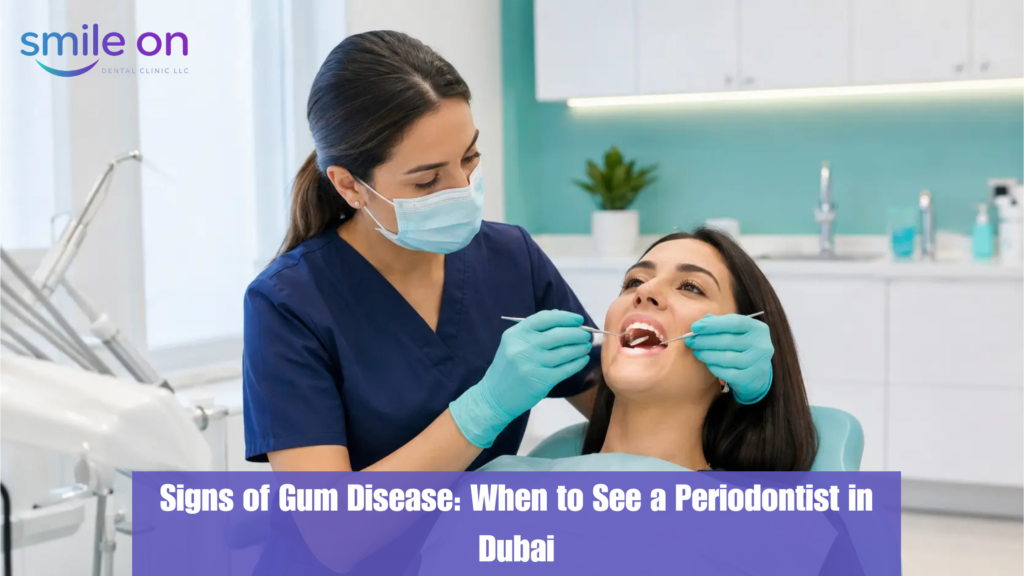
Signs of Gum Disease: When to See a Periodontist in Dubai
12 min read Share: Gum disease starts quietly. There is no sharp pain, no dramatic swelling, nothing that screams emergency. For most people, the first sign is blood on the toothbrush or a faint metallic taste after flossing. Easy to dismiss. Easy to ignore. And that is exactly why gum disease remains one of the most common and most underdiagnosed dental conditions in Dubai. Nearly half of all adults over the age of 30 have some form of periodontal disease, according to data published by the World Health Organization. In the UAE, where lifestyle factors like high coffee consumption, irregular dental visits, and summer dehydration accelerate oral bacterial growth, the numbers track even higher among working-age adults. The good news: gum disease is treatable at every stage. The earlier you catch it, the simpler and cheaper the fix. This guide walks you through what gum disease actually looks like, what causes it, how a periodontist in Dubai treats it, what it costs, and the specific point where home care is no longer enough and specialist intervention becomes necessary. What Is Gum Disease and Why Does It Matter? Gum disease, clinically known as periodontal disease, is a bacterial infection of the tissues surrounding and supporting the teeth. It begins when dental plaque, a sticky biofilm of bacteria, accumulates along the gumline. If that plaque is not removed through daily brushing, flossing, and regular professional cleaning, it mineralises into tartar (calculus). Tartar cannot be removed at home. It irritates the gum tissue and triggers a chronic inflammatory response. There are two distinct stages. Gingivitis is the early, reversible stage where the gums become inflamed but no permanent tissue or bone damage has occurred. Periodontitis is the advanced stage where the infection extends below the gumline, destroying the connective tissue and alveolar bone that anchor teeth in place. Once bone is lost, it does not grow back on its own. This matters beyond your mouth. Peer-reviewed research published in the Journal of Periodontology and The Lancet has established links between chronic periodontal disease and increased risk of cardiovascular disease, poorly controlled Type 2 diabetes, adverse pregnancy outcomes, and respiratory infections. The chronic low-grade inflammation caused by untreated gum disease contributes to systemic inflammatory burden throughout the body. How to Spot Gum Disease Before It Gets Serious Most patients who walk into a periodontal consultation in Dubai are surprised to learn their gum disease has been developing for months or even years. The condition is rarely painful in its early stages, which is precisely what makes it dangerous. Here is what to watch for at each stage. Gingivitis: The Warning Phase Gums that bleed when you brush or floss are the single most reliable early warning sign. Healthy gums do not bleed. If you see pink on your toothbrush or in the sink, that is active inflammation, not “aggressive brushing.” Other early indicators include gums that appear redder than their usual coral-pink colour (particularly along the margin where gum meets tooth), mild puffiness or tenderness when pressing on the gum tissue, and persistent bad breath that returns within hours of brushing. Halitosis that does not respond to mouthwash or improved brushing is frequently a sign of bacterial accumulation below the gumline rather than a surface-level hygiene issue. Periodontitis: The Damage Phase If gingivitis is left untreated, it progresses. The signs become more visible. Gum recession is often the first thing patients notice. Teeth appear longer because the gum tissue is pulling away from the tooth surface, exposing root structure that was previously covered. You may notice increased sensitivity to hot and cold foods in areas where recession has occurred. Periodontal pockets form as the gum detaches from the tooth. These pockets trap food, bacteria, and debris in spaces that are impossible to clean with a toothbrush. You may notice a persistent bad taste, visible pus between teeth and gums, or a dull ache around specific teeth. Tooth mobility develops as bone loss progresses. Teeth may feel slightly loose. Your bite may feel different when you chew. Teeth may shift position over weeks or months, creating new gaps or overlapping. If you recognise any of these signs in your own mouth, the condition is treatable. But the window for simple, non-surgical treatment narrows as the disease progresses. The single most important action is getting a professional periodontal assessment rather than waiting for symptoms to resolve on their own. They will not. What Causes Gum Disease? The Risk Factors That Matter in Dubai Inadequate oral hygiene is the primary driver, but it is not the only one. Several factors increase susceptibility, and many of them are particularly prevalent among Dubai’s resident population. Smoking and tobacco use. This is the single largest modifiable risk factor. Smokers are up to six times more likely to develop periodontitis than non-smokers, and tobacco use significantly impairs healing after periodontal treatment. Shisha smoking, common in the UAE, carries similar oral health risks to cigarette use. Diabetes. The relationship between diabetes and gum disease runs both ways. Elevated blood glucose levels increase vulnerability to oral infections. At the same time, active periodontal disease makes glycaemic control harder to maintain. The UAE has one of the highest diabetes prevalence rates in the world (approximately 16.3% of adults according to the International Diabetes Federation), making this a particularly relevant risk factor locally. Dehydration and reduced saliva flow. Dubai’s extreme summer heat, outdoor lifestyle, and Ramadan fasting all contribute to periods of dehydration. Saliva is one of the mouth’s primary natural defences against bacterial overgrowth. When saliva production drops, plaque accumulation accelerates and gum inflammation risk increases. Hormonal fluctuations. Pregnancy gingivitis is a well-documented condition where hormonal shifts make gum tissue more reactive to bacterial plaque. Women going through menopause also experience increased gum sensitivity. These are not cosmetic concerns. Without management, pregnancy gingivitis can progress to periodontitis. Medications. Certain drugs commonly prescribed in the UAE, including some blood pressure medications (calcium channel blockers), immunosuppressants, and antiepileptics, can cause gum tissue overgrowth (gingival hyperplasia)