Introduction: (The Importance of Paediatric Dentistry) In the journey of raising happy and healthy children, ensuring their oral health is...
Jaw pain that will not go away, a clicking or popping sound every time you open your mouth, headaches that seem to start near your temples or ears, difficulty opening your mouth fully in the morning: these are among the most common and most frequently misdiagnosed symptoms in dentistry. They are also among the most debilitating when left unaddressed, because the temporomandibular joint is in use every time you eat, speak, or swallow.
Temporomandibular joint disorder, known as TMJ disorder or TMD, is a condition affecting the joint that connects the lower jaw to the skull. It encompasses a range of problems involving the joint itself, the muscles that control jaw movement, and the structures within the joint including the articular disc. The symptoms are variable, the causes are often multiple, and the treatment requires a clinician who understands the biomechanics of the jaw in detail.
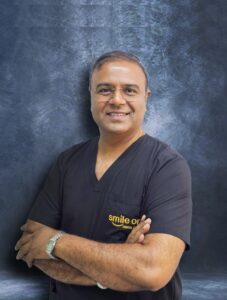
At Smile On Dental Clinic in Al Satwa, Dubai, TMJ treatment is managed by Dr. Amit Gupta, a DHA-licensed specialist in oral and maxillofacial surgery. This page explains what TMJ disorder is, what causes it, how it is diagnosed, which treatments are available at the clinic, and what patients in Dubai can realistically expect from the treatment process.
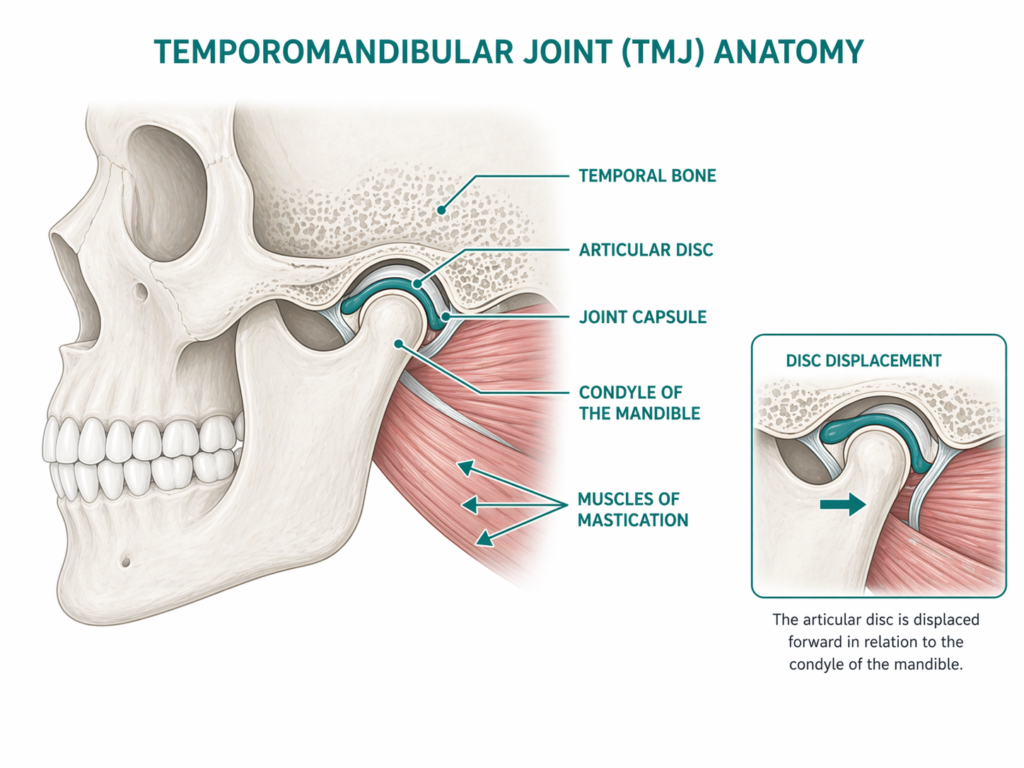
The temporomandibular joint, commonly referred to as the TMJ, is the hinge joint that connects the lower jaw to the temporal bone of the skull, just in front of each ear. It is one of the most complex joints in the body because it performs two types of movement simultaneously: a hinge action and a sliding action, allowing the jaw to open, close, move forward, backward, and side to side.
Inside the joint, a small disc of cartilage called the articular disc sits between the two bony surfaces and acts as a cushion, allowing the joint to move smoothly without bone-on-bone friction. The joint is also surrounded by muscles, ligaments, and a capsule of connective tissue that control its movement and stability.
TMJ disorder occurs when any component of this system is disrupted. The disruption can originate in several places:
In many patients, TMJ disorder involves more than one of these mechanisms simultaneously, which is why a thorough assessment is needed before treatment is planned. Treating the muscles alone when the disc is displaced, or treating the disc when the primary problem is muscle tension, produces incomplete results.
TMJ disorder rarely has a single identifiable cause. In most patients, several contributing factors are present simultaneously, and understanding which ones are driving the symptoms is an important part of planning effective treatment.
The most commonly identified causes and risk factors include:
Bruxism and clenching Grinding the teeth during sleep, called bruxism, and clenching the jaw during the day are the single most common contributors to TMJ disorder. Both activities place extreme and repetitive compressive forces on the joint and its surrounding muscles that the joint was not designed to sustain over extended periods. Many patients are unaware they grind or clench until a dentist identifies the characteristic wear patterns on their teeth or they develop the associated symptoms.
Bite problems An incorrect relationship between the upper and lower teeth, whether caused by missing teeth, poorly fitted restorations, or natural malocclusion, can force the jaw into an abnormal position to achieve tooth contact during chewing. This abnormal position places uneven stress on one or both TMJs and the associated muscles over time.
Stress and muscle tension Psychological stress causes many people to clench their jaw muscles even without tooth-to-tooth contact. This sustained muscle tension, particularly in the masseter and temporalis muscles, leads to muscle fatigue, trigger points, and referred pain patterns that can mimic TMJ pain even when the joint itself is not structurally affected.
Trauma A direct blow to the jaw, a whiplash injury, or an unusually prolonged dental appointment with the mouth held wide open can strain the TMJ and surrounding structures acutely. Trauma-related TMJ disorder sometimes presents immediately after the injury and sometimes develops more gradually over the following months.
Disc displacement The articular disc can shift out of its correct position due to chronic overload, trauma, or anatomical variation. When the disc displaces forward, the characteristic clicking or popping sound occurs as the condyle moves over the displaced disc edge during opening. In more advanced cases the disc does not reduce back to its correct position on closing and the jaw becomes locked.
Degenerative joint disease In older patients or those with a history of sustained joint overload, osteoarthritic changes in the bony surfaces of the TMJ can cause pain, crepitus, and progressive loss of jaw function similar to arthritis in other joints.
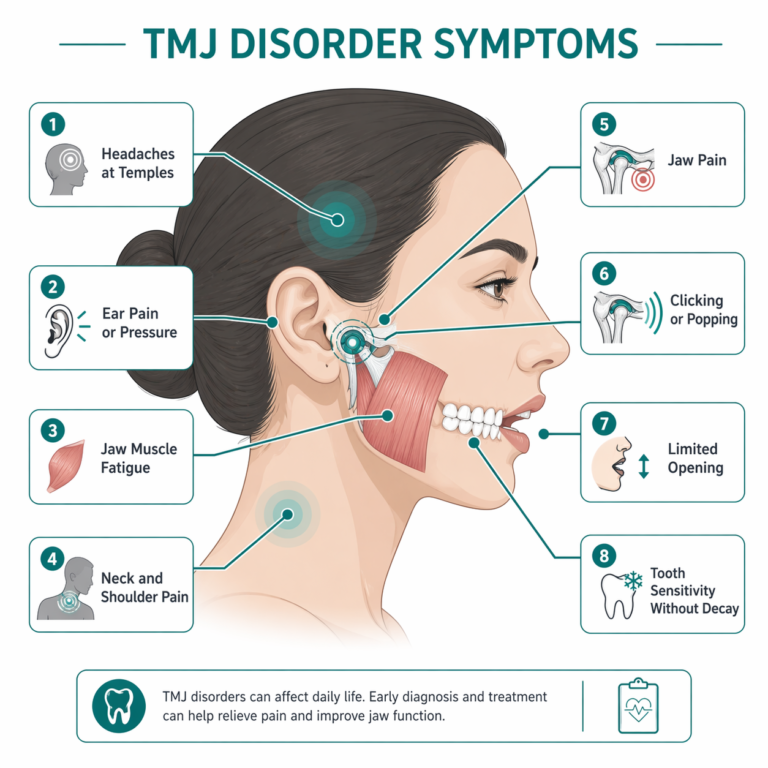
TMJ disorder produces a wide range of symptoms that vary significantly between patients. The variability is one reason it is frequently misdiagnosed or attributed to other conditions including ear problems, migraines, and cervical spine issues.
Common symptoms of TMJ disorder include:
It is important to note that not all of these symptoms are present in every patient, and some patients with significant TMJ disorder have surprisingly few symptoms while others have severe functional limitation from relatively mild joint changes. A clinical assessment at Smile On Dental Clinic is the appropriate starting point for any patient with persistent jaw-related symptoms.
An accurate diagnosis is the foundation of effective TMJ treatment. At Smile On Dental Clinic, Dr. Amit Gupta carries out a structured assessment that evaluates all of the potential contributors to the patient’s symptoms before any treatment is recommended.
The diagnostic process includes:
Clinical examination Dr. Gupta palpates the jaw muscles and joint to identify areas of tenderness and assess the range and quality of jaw movement. He measures maximum mouth opening, checks for deviation of the jaw on opening, and listens and feels for clicking, crepitus, or locking. The teeth are examined for wear patterns consistent with bruxism and for bite discrepancies that may be contributing to joint loading.
Dental X-rays and imaging A panoramic X-ray provides an overview of the jaw joints, teeth, and surrounding bone. For patients where joint structural changes or disc position need to be assessed more precisely, a CBCT scan provides a three-dimensional view of the bony joint components. In some cases, magnetic resonance imaging of the TMJ provides the clearest assessment of the soft tissue disc position, and Dr. Gupta will refer for MRI where this level of investigation is clinically indicated.
Occlusal analysis The relationship between the upper and lower teeth and the position of the jaw at rest and during biting are assessed to identify whether a bite problem is contributing to abnormal joint loading.
Patient history The timing, character, and progression of symptoms, along with any identifiable triggers such as stress, a recent dental procedure, or trauma, are discussed in detail. Many patients with TMJ disorder have been managing symptoms for months or years before seeking specialist assessment, and a thorough history helps identify the primary drivers.
TMJ treatment at Smile On Dental Clinic is matched to the findings of the assessment. The approach follows a principle of starting with the most conservative and reversible treatments before considering more invasive interventions. Most patients achieve significant symptom improvement with conservative management.
Custom Occlusal Splint An occlusal splint, also called a night guard or TMJ splint, is a custom-made hard acrylic appliance that fits over the upper or lower teeth and is worn during sleep. It works in two ways: it prevents the tooth surfaces from making direct contact during grinding, eliminating the wear and the dental consequences of bruxism; and it repositions the jaw in a more favourable position that reduces the compressive loading on the TMJ and its surrounding muscles.
The splint at Smile On Dental Clinic is custom-fabricated from an impression of the patient’s teeth and carefully adjusted so the bite on the splint is even and balanced. A generic over-the-counter night guard is not a substitute for a properly adjusted custom splint because it cannot achieve the precise occlusal balance that is needed to offload the joint effectively.
Physiotherapy and Jaw Exercises For patients whose primary problem is muscle tension and spasm rather than structural joint changes, a course of physiotherapy targeting the jaw and neck muscles combined with a structured home exercise programme is frequently the most effective treatment. Gentle stretching exercises, postural correction, and techniques to reduce habitual clenching during the day produce significant improvement in many patients without any dental appliance or medication.
Occlusal Adjustment Where a specific bite discrepancy is identified as a driver of abnormal jaw loading, selective adjustment of the tooth surfaces to create a more balanced bite can reduce the forces on the joint. This is a conservative and reversible procedure involving minimal removal of tooth structure.
Dental Restoration to Correct the Bite In patients where tooth loss, worn teeth, or failed restorations have created a bite collapse that is loading the TMJ abnormally, restoring the teeth with crowns, implants, or other restorations as part of a broader prosthodontic plan can resolve the underlying cause of the TMJ problem rather than just managing the symptoms. Dr. Amit Gupta works directly with Dr. Rahul Patel for these cases.
Pharmacological Management Anti-inflammatory medications, muscle relaxants, and in some cases low-dose tricyclic antidepressants prescribed by the patient’s physician are used as adjuncts to the dental and physical treatments above. Botulinum toxin injections into the masseter and temporalis muscles are available for patients with severe bruxism-related muscle hypertrophy and pain that does not respond adequately to splint therapy. These injections reduce the intensity of muscle contraction during grinding and provide significant pain relief in selected patients.
Arthrocentesis For patients with a locked disc or significant joint inflammation that has not responded to conservative management, arthrocentesis is a minimally invasive joint lavage procedure performed under local anaesthesia. Two small needles are inserted into the joint space and sterile fluid is used to wash out inflammatory mediators and free up a disc that has become adherent. It is a day procedure that produces significant improvement in joint mobility and pain in a high proportion of patients for whom it is indicated.
Specialist Oral and Maxillofacial Surgeon TMJ disorder management at Smile On Dental Clinic is led by Dr. Amit Gupta, a DHA-licensed specialist in oral and maxillofacial surgery. The TMJ sits within the scope of oral and maxillofacial surgery specifically because the joint is a surgical structure as well as a dental one. Patients who have previously been managed unsuccessfully for TMJ disorder by general dentists frequently find that specialist assessment identifies components of their condition that were either missed or inadequately addressed. Dr. Gupta’s training covers the full diagnostic and treatment spectrum for TMJ disorders including conservative management, splint therapy, injection techniques, and surgical interventions.
Thorough Diagnostic Assessment Many patients presenting with TMJ disorder have seen multiple clinicians without a clear diagnosis. At Smile On Dental Clinic, the assessment process covers clinical examination, imaging, occlusal analysis, and a thorough patient history before any treatment recommendation is made. Treatment begins only once the primary drivers of the condition have been identified, which is what determines whether it is likely to work.
Conservative-First Approach The vast majority of TMJ disorder cases respond to conservative management with a custom splint, physiotherapy, and occlusal adjustment where indicated. Dr. Gupta recommends the most conservative treatment appropriate to the severity and cause of the condition rather than defaulting to more complex interventions. More invasive approaches are reserved for cases that have not responded to conservative care, which is the appropriate clinical standard.
Coordination With the Prosthodontic Team For patients whose TMJ disorder is driven by bite problems related to missing or worn teeth, Dr. Amit Gupta works directly with Dr. Rahul Patel to address the underlying occlusal cause through prosthodontic restoration. This coordination within the same clinic ensures the TMJ treatment and the dental restoration work toward the same clinical goal rather than being managed separately.
Accessible Location in Dubai Smile On Dental Clinic is located in Al Satwa, easily accessible from Jumeirah, Downtown Dubai, Sheikh Zayed Road, and DIFC. For patients attending multiple appointments across a TMJ treatment programme, the central location and appointment flexibility make the process as manageable as possible.
The cost of TMJ treatment in Dubai depends on the type of treatment required, the severity of the condition, and the number of appointments involved across the treatment programme.
Here is what typically contributes to the overall cost:
As a general market reference in Dubai, a custom TMJ occlusal splint ranges from AED 800 to AED 1,500 depending on the type of splint and the complexity of the bite adjustment required. Botulinum toxin injections for masseter hypertrophy and bruxism are priced per session. The complete cost breakdown for each patient’s treatment plan is presented at Smile On Dental Clinic after the diagnostic assessment before any treatment begins.
Smile On Dental Clinic accepts major insurance plans, and the diagnostic consultation and some treatment components may be covered depending on your policy.
Dr. Amit Gupta is the specialist oral and maxillofacial surgeon at Smile On Dental Clinic in Al Satwa, Dubai. His clinical scope covers the full range of TMJ disorder management from conservative splint therapy and occlusal adjustment through to injection treatments and minimally invasive joint interventions for patients whose condition has not responded to conservative care.
Dr. Gupta approaches TMJ disorder as a multifactorial condition that requires a thorough diagnostic assessment before treatment is planned, not a condition that is managed with a default prescription of a night guard regardless of the underlying cause. He works closely with Dr. Rahul Patel where the bite and dental restorations are part of the clinical picture, and refers to physiotherapy and other allied health providers where muscle rehabilitation is an important component of recovery.
Oral and Maxillofacial Surgery Dubai: The full oral and maxillofacial surgery hub page at Smile On Dental Clinic covering the complete range of surgical procedures managed by Dr. Amit Gupta, including wisdom tooth surgery, implant surgery, and bone augmentation.
Dental Crowns and Bridges Dubai: For patients whose TMJ disorder is partially driven by a bite problem caused by missing or worn teeth, restoring the bite with crowns is often part of the long-term management plan. This page explains the crown and bridge options available at Smile On Dental Clinic.
Full Mouth Rehabilitation Dubai: Patients with severe tooth wear from long-term bruxism often need comprehensive prosthodontic rehabilitation of the entire dentition alongside TMJ management. This page covers the full mouth rehabilitation programme at Smile On Dental Clinic.
Posted on Ahamed FahimTrustindex verifies that the original source of the review is Google. Undoubtedly the best clinic in Dubai...I visited the clinic with severe tooth ache..Dr Arun was a thorough professional in his approach..He explained the full treatment plan and did the root canal in a very gentle manner..highly recommend..Posted on Aydah-Aidell NabayraTrustindex verifies that the original source of the review is Google. I had an excellent experience at Smile On Dental Clinic! The staff were friendly, professional, and made me feel completely at ease. A special thank you to Dr. Arun for the exceptional care and attention—truly top-notch service. Highly recommend this clinic to anyone looking for quality dental care!Posted on Suneera HussainTrustindex verifies that the original source of the review is Google. I got my root canal treatment done by Dr Arun . I highly recommend this clinic and staff..Posted on vincy abhilashTrustindex verifies that the original source of the review is Google. The technology used here is top notch. I felt that the diagnosis was accurate and the treatment plan and charges was fully explained. Dr Arun was truly professional. Pre and post xrays was shown..thanks smile onPosted on ardo barkadTrustindex verifies that the original source of the review is Google. I would like to sincerely thank Dr.Vineetha for the excellent work she did on my gums. I am usually very anxious and scared of dentists, but she made me feel completely at ease with her calm, gentle, and professional approach. Her patience and kindness truly made a huge difference. I highly recommend her to anyone looking for a caring and skilled dentist.Posted on Deepak ChohanTrustindex verifies that the original source of the review is Google. Best Dental experience ever. Dr Arun explained the whole procedure before the treatment started. was scared of dentist before. The post care was excellent, dr himself following up with me. The clinic overall was very clean. going back for further treatment..Posted on Md RahmatTrustindex verifies that the original source of the review is Google. Highly recommend dr Arun , I have lots of anxiety about going to dentist. They made me feel comfortable and I believe the treatment plan is actionable and has m best interest in mind..my wisdom teeth was removed without any pain... thanksPosted on Manal AnsariTrustindex verifies that the original source of the review is Google. I am shocked to see how amazing Dr Amit & Dr Arun worked on my father’s tooth! Within a few minutes the procedure was done! And he experienced no pain Thank you so much! Already booked in my appointmentPosted on Tufail HussainTrustindex verifies that the original source of the review is Google. Excellent excellent experience, Dr. Marwa Thank you so much, Dr. Marwa. I feel very good very comfort Dr. Marwa very good to excellent.love you all teemsPosted on Farah ElmawieTrustindex verifies that the original source of the review is Google. Dr hashmit is the best! My sons adore her!! She makes the dentist visit an exciting one!Showing our latest reviewsVerified by TrustindexTrustindex verified badge is the Universal Symbol of Trust. Only the greatest companies can get the verified badge who has a review score above 4.5, based on customer reviews over the past 12 months. Read more
Introduction: (The Importance of Paediatric Dentistry) In the journey of raising happy and healthy children, ensuring their oral health is...
TMJ disorder, also called TMD, is a condition affecting the temporomandibular joint, which is the joint connecting the lower jaw to the skull just in front of each ear. It causes jaw pain, clicking or popping sounds, restricted jaw movement, headaches, and ear pain. The most common causes are bruxism and clenching, which overload the joint and surrounding muscles over time, followed by disc displacement inside the joint, bite problems that force the jaw into an abnormal position, stress-related muscle tension, and trauma. Most patients with TMJ disorder have more than one contributing factor, which is why specialist assessment at Smile On Dental Clinic is important before treatment is planned.
For many patients, yes. TMJ disorder caused primarily by muscle tension and bruxism often resolves significantly or completely with a well-fitted custom splint, physiotherapy, and behaviour modification. For patients with disc displacement, the disc position may not be fully restored to normal but the symptoms can be managed very effectively to the point where jaw function is restored and pain is minimal or absent. For patients with degenerative joint changes, the condition can be stabilised and symptoms managed but the underlying bony changes are not reversed. The prognosis depends on the type and severity of the disorder, which is determined at the diagnostic assessment.
A custom TMJ splint from Smile On Dental Clinic is fabricated from a precise impression of the patient’s teeth and carefully adjusted so the bite on the splint is balanced and even, offloading the joint correctly. An over-the-counter night guard is a generic softfit device that cushions the teeth but does not achieve the precise occlusal balance needed to reduce TMJ loading effectively. In some patients, a poorly fitting generic guard can actually worsen symptoms by creating an unstable bite position. For patients with TMJ disorder, a properly designed and adjusted custom splint is the clinically appropriate choice.
Many patients notice a meaningful reduction in jaw muscle pain and morning stiffness within two to four weeks of starting a custom splint. Full symptomatic improvement from splint therapy combined with physiotherapy typically takes two to three months of consistent use. More complex cases involving disc displacement or degenerative changes take longer to stabilise. Dr. Amit Gupta gives each patient a realistic expected timeline at the initial assessment, and follow-up appointments are used to monitor progress and adjust the treatment approach if needed.
Yes, significantly so. Psychological stress is one of the most consistent contributors to TMJ disorder in clinical practice. Stress causes many people to clench their jaw muscles during the day without realising it, and to grind their teeth during sleep. Both behaviours overload the TMJ and its surrounding muscles over time. Managing stress through relaxation techniques, exercise, and psychological support is often an important part of the overall treatment plan alongside the dental interventions. Patients who address the stress component alongside the dental treatment tend to have better long-term outcomes than those who rely on the splint alone.
Yes, in most cases. Jaw clicking caused by disc displacement is treated with a repositioning splint that holds the jaw in a position where the condyle sits correctly on the disc during function, allowing the disc position to stabilise over time. In cases where the clicking is painless and not associated with restricted movement, the disc displacement is monitored rather than treated aggressively, as many patients with clicking have stable, non-progressive disc displacement that does not cause significant functional problems. Dr. Amit Gupta assesses the nature and significance of the clicking at the consultation and advises on whether treatment is warranted.
The cost depends on the treatment approach. A custom occlusal splint at Smile On Dental Clinic ranges from AED 800 to AED 1,500 including fitting and adjustment appointments. Where botulinum toxin injections are indicated for bruxism-related muscle hypertrophy, these are priced per session separately. If restorative treatment to correct a bite problem is part of the plan, the prosthodontic costs are additional and significant. The complete cost breakdown for each patient’s treatment programme is presented after the diagnostic assessment before any treatment begins.
Coverage for TMJ treatment varies between insurance policies. Some plans cover the diagnostic assessment and the custom splint as a restorative dental procedure, while others exclude TMJ treatment. Botulinum toxin injections and physiotherapy are typically covered by medical rather than dental insurance. Smile On Dental Clinic accepts major insurance plans and the team can advise on what your specific policy is likely to cover for TMJ treatment at the time of consultation.
Copyright ©2022 Smileondc. All Rights Reserved . LICENCE NO: CCB9Y0LC-251225