Best Porcelain Veneers in Dubai: Natural-Looking Results That Last

Premium Dental Veneers Crafted for Your Face, Your Shade and Your Smile Goals at Smile On, Al Satwa

Porcelain veneers correct what bothers you about your smile in two clinical appointments and last over a decade with proper care. Whether you have chipped teeth, deep staining that whitening cannot fix, gaps, uneven sizing, or simply a smile that has never looked the way you wanted, veneers address multiple concerns in one coordinated treatment. At Smile On Dental Clinic in Al Satwa, Dubai, every veneer case begins with a digital smile preview so you see the planned result before a single tooth is prepared.

This field is for validation purposes and should be left unchanged.
What Are Porcelain Veneers​

What Are Porcelain Veneers?

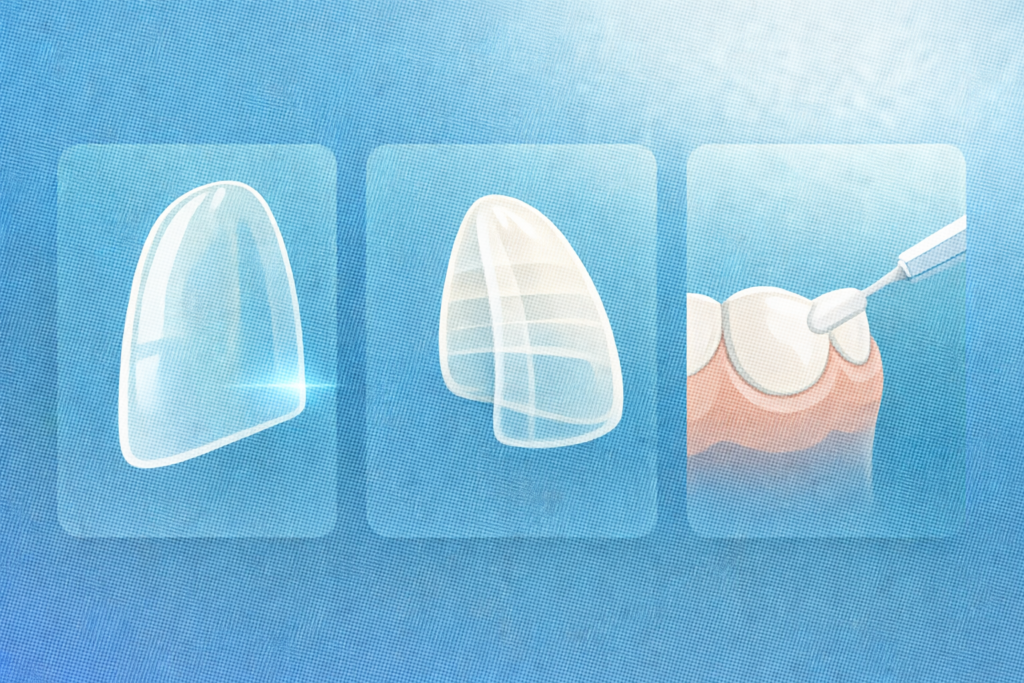
Porcelain veneers are thin, custom-made ceramic shells bonded permanently to the front surfaces of the teeth to improve their shade, shape, length, and overall appearance. Each veneer is individually crafted to match the patient’s desired outcome and facial proportions, then bonded using a strong dental adhesive that creates a lasting, stable result. Porcelain is the material of choice for most veneer cases because it closely mimics the translucency and light-reflecting properties of natural tooth enamel. It is also highly stain-resistant compared to natural enamel and composite resin. With proper care, high-quality porcelain veneers last between 10 and 20 years before replacement is considered. They are among the most durable and aesthetically predictable cosmetic dental restorations available.

What Problems Do Porcelain Veneers Fix?

Porcelain veneers are a versatile cosmetic solution used to address a wide range of dental concerns:

  • Deep or intrinsic tooth staining that teeth whitening cannot resolve, including discolouration from ageing, past medications, or enamel defects
  • Chipped, cracked, or fractured teeth where the structural damage is cosmetically visible but the tooth itself is otherwise sound
  • Gaps between teeth, particularly in the upper front area, that are too minor for orthodontic treatment but visibly affect the smile
  • Teeth that are noticeably uneven in length, size, or shape compared to surrounding teeth
  • Worn enamel that has left teeth looking shorter or flatter than desired
  • Minor misalignment or crowding where the primary concern is aesthetic rather than functional

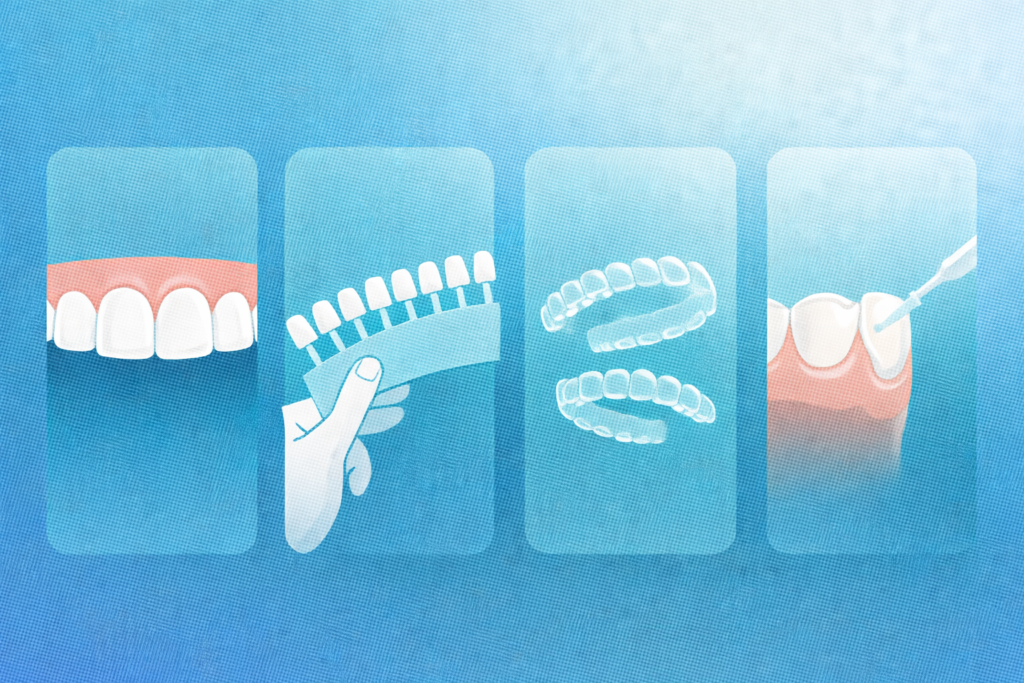
Porcelain Veneers vs Other Options

Patients often compare veneers to other cosmetic treatments before deciding. Here is a clear, honest comparison:

Veneers vs Teeth Whitening Whitening is the right choice if discolouration is the only concern and the teeth are structurally sound. It is less expensive, non-invasive, and fully reversible. However, whitening does not change tooth shape or size and cannot fix chips, gaps, or intrinsic staining. Veneers address all of these simultaneously.

Veneers vs Composite Bonding Composite bonding uses tooth-coloured resin applied directly to the tooth to correct chips, gaps, or shape irregularities. It is faster, less expensive, and does not require any enamel removal. The trade-off is durability. Composite bonding typically lasts five to seven years before showing wear, staining, or chipping. Porcelain veneers last two to three times longer and are significantly more stain-resistant.

Veneers vs Orthodontics Orthodontic treatment straightens teeth by repositioning them over time and is the correct choice when misalignment, bite problems, or spacing are the primary issue. Veneers improve the appearance of individual teeth without moving them and are better suited to cosmetic concerns such as shade, shape, and minor gaps. Some patients benefit from orthodontics first, followed by veneers to refine the final aesthetic result.

Veneers vs Crowns A crown covers the entire tooth and is used when there is significant structural damage or decay. A veneer covers only the front surface and is appropriate when the underlying tooth structure is largely intact. Veneers are the more conservative option because they require less tooth reduction.

Porcelain Veneers vs Other Options

Understanding Tooth Preparation for Veneers

This is the question most patients have but rarely ask directly. It deserves a straightforward answer.

Porcelain veneers require a small amount of enamel to be removed from the front surface of the tooth before the veneer is bonded. The amount removed is typically between 0.3 and 0.7 millimetres, roughly the same thickness as a contact lens. This preparation creates space for the veneer to sit flush with the natural tooth surface rather than bulking out the bite. Because enamel does not regenerate, this makes veneers a permanent commitment. Once the tooth is prepared, it will always need to be covered by a veneer or crown.

This is not a reason to avoid veneers. It is a reason to make the decision carefully, with a dentist who respects the importance of conservative preparation. At Smile On, the preparation approach is planned using Digital Smile Design before any enamel is touched, so the amount removed is the minimum required for the specific veneer design rather than a standardised amount applied to every patient.

For patients who want to avoid enamel removal entirely, composite veneers or ultra-thin no-prep porcelain veneers may be appropriate depending on the case. Your dentist will advise at the assessment stage.

Types of Dental Veneers Available at Smile On

Types of Dental Veneers Available at Smile On Dental Clinic

Porcelain Veneers (E-max Lithium Disilicate) E-max veneers are the most widely used premium veneer material in cosmetic dentistry. They are fabricated from lithium disilicate ceramic, which combines exceptional strength with a high level of translucency that mimics natural enamel more closely than any other veneer material. E-max veneers are the best choice for patients who want the most natural-looking, durable, and stain-resistant result. They are suitable for both front and back teeth and are the standard material used for full smile makeovers at Smile On.

Porcelain Veneers (Feldspathic / Layered Porcelain) Hand-layered feldspathic porcelain veneers allow the highest level of customisation in shade, depth, and translucency. Each veneer is built up layer by layer by a skilled laboratory technician, making it possible to create a result that is virtually indistinguishable from natural enamel. This option suits patients with very specific aesthetic requirements and those correcting complex colour or shape irregularities.

Composite Veneers Composite veneers are applied directly to the tooth surface by the dentist using tooth-coloured resin material, shaped and polished in a single appointment. There is no laboratory fabrication involved, which reduces cost and treatment time. Composite veneers are suitable for patients with minor cosmetic concerns, those seeking a reversible option, or those who want to trial a shape change before committing to permanent porcelain.

Your veneer specialist at Smile On will recommend the most appropriate material based on your clinical assessment, desired outcome, and budget during your consultation.

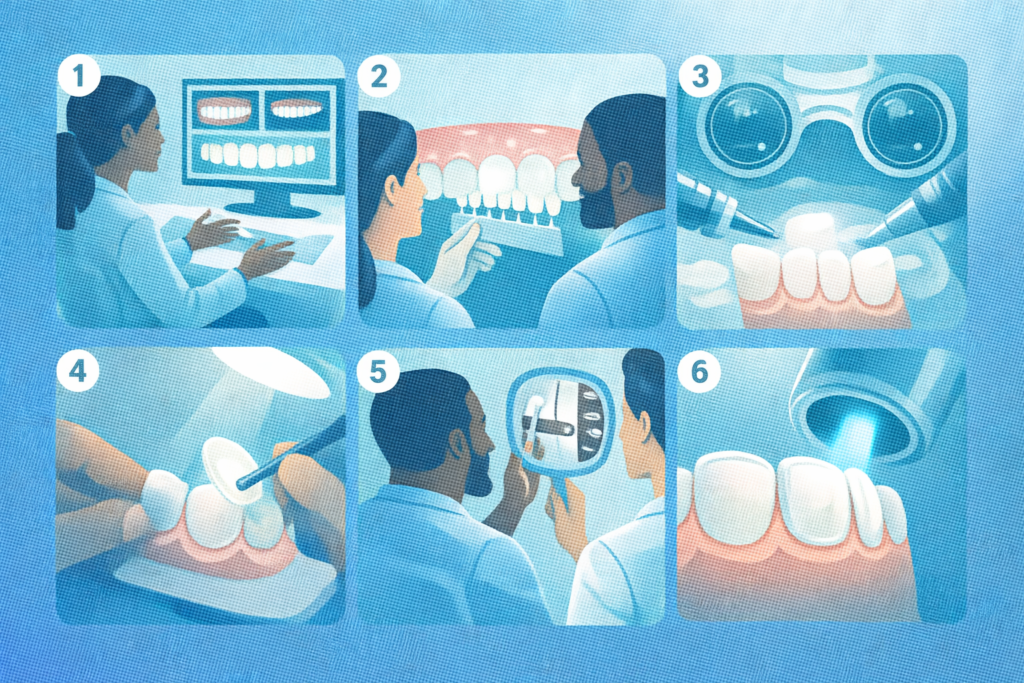
How Your Porcelain Veneer Treatment Works at Smile On Dental Clinic, Step by Step

  • Consultation and Smile Assessment

    Your veneer specialist examines your teeth and gums to confirm you are a suitable candidate. The discussion covers what you dislike about your current smile, your desired outcome, the number of teeth to be treated, and your material preference. Any existing dental issues are identified and discussed before cosmetic planning begins.

  • Digital Smile Design Preview

    Photographs and intraoral scans are taken and analysed using Digital Smile Design software. Your proposed new smile is mapped onto your actual face so you can see the planned shape, shade, and proportion before any clinical work starts. Adjustments are made until you are satisfied with the design.

  • Tooth Preparation

    Under local anaesthetic, a thin layer of enamel is removed from the front surface of each tooth receiving a veneer. Temporary veneers are placed to protect the prepared teeth and to give you an experience of the planned proportions while your permanent veneers are being fabricated.

  • Laboratory Fabrication

    Precise impressions or digital scans of the prepared teeth are sent to the dental laboratory. Skilled technicians craft each veneer individually to the approved design, shade, and specifications. This stage typically takes seven to fourteen days.

  • Trial Fitting and Approval

    Your permanent veneers are tried in without bonding first. You and your dentist review the shade, shape, and fit. Minor adjustments can be made at this stage before permanent bonding proceeds. Your approval is required before anything is permanently cemented.

  • Final Bonding and Polish

    Each veneer is bonded to the prepared tooth surface using a strong dental adhesive and light-cured to lock it in place. The bite is checked and adjusted as needed. Each veneer is polished to a smooth, natural finish. You leave with your completed smile.
Benefits of Porcelain Veneers

The benefits of porcelain veneers extend well beyond cosmetic appearance:

Porcelain veneers are highly stain-resistant. The glazed ceramic surface resists discolouration from coffee, tea, and food far more effectively than natural enamel, meaning the shade you choose at the outset remains stable over many years with normal care.

Veneers address multiple concerns in a single treatment. A patient with stained, chipped, and slightly uneven teeth can correct all three issues with one coordinated veneer plan rather than separate whitening, bonding, and alignment treatments.

The results are long-lasting. High-quality porcelain veneers last between 10 and 20 years, making the investment significantly more durable than composite bonding or repeat whitening treatments.

The procedure is minimally invasive relative to the result achieved. The amount of enamel removed for a veneer is small, and the impact on the underlying tooth structure is far less than a crown while achieving a comparable aesthetic improvement in most cosmetic cases.

Why Choose Smile On Dental Clinic for Porcelain Veneers in Dubai

Best veneers in Dubai, centrally located. Smile On Dental Clinic is based in Al Satwa, central Dubai, making it accessible from across the city without the premium pricing attached to clinics in Dubai Marina, DIFC, or Downtown. Patients from Abu Dhabi also visit Smile On for veneer consultations.

You see your smile before preparation begins. The Digital Smile Design process at Smile On maps your proposed veneer result onto your actual face before any enamel is touched. There are no mid-treatment surprises and no permanent decisions made before you have given explicit approval.

Veneer specialist available. Porcelain veneer cases at Smile On are handled by an experienced cosmetic dental specialist with a documented track record in smile makeover and veneer treatment. This is not general dentistry work delegated to a junior clinician.

Premium laboratory materials. The veneers fabricated for Smile On patients use high-quality E-max lithium disilicate and feldspathic porcelain sourced from certified dental laboratories. The quality of the material and laboratory directly determines how natural the final result looks.

Full cosmetic and restorative care under one roof. If your veneer plan involves teeth whitening, gum contouring, orthodontic preparation, or any restorative work, every required treatment is available within the same clinic.

What Affects Porcelain Veneers Price in Dubai?

The cost of porcelain veneers varies significantly based on several factors:

Material choice. E-max lithium disilicate and hand-layered feldspathic porcelain are premium materials that produce the most natural results and command higher prices than generic ceramic or zirconia alternatives. The material is the single biggest driver of both quality and cost.

Number of teeth treated. Veneer cost is quoted per tooth. A four-veneer upper front correction and a ten-veneer full smile makeover differ substantially in total investment. Your dentist will recommend the minimum number of teeth needed to achieve the desired result.

Laboratory quality. The dental laboratory that fabricates your veneers directly determines the aesthetic outcome. Clinics partnering with high-quality certified labs charge more, and the difference in the final result is visible.

Complexity of the case. Straightforward shade and shape corrections are priced differently from cases requiring gum contouring, bite adjustment, orthodontic preparation, or replacement of existing dental work within the smile zone.

Whether Digital Smile Design is included. Some clinics charge separately for the digital smile design consultation and planning process. At Smile On this is discussed transparently before any commitment is made.

Book a consultation at Smile On Dental Clinic for a detailed, itemised porcelain veneers price before your treatment begins.

What Our Patients Have to Say

Our Latest Blogs

No Posts Found!

Book your porcelain veneers consultation at Smile On Dental Clinic, Al Satwa, Dubai!

Frequently Asked Questions About Porcelain Veneers in Dubai

Porcelain veneers are thin ceramic shells permanently bonded to the front surfaces of teeth to improve their shade, shape, length, and appearance. They are used to correct deep staining that whitening cannot resolve, chipped or cracked teeth, gaps between teeth, uneven tooth sizing, and worn enamel. They are among the most versatile cosmetic dental treatments because they address multiple concerns simultaneously in two clinical appointments.

Porcelain veneers price in Dubai varies depending on the material used, the number of teeth treated, the complexity of the case, and the clinic. Porcelain veneers in Dubai typically range from AED 1,200 to AED 3,500 per tooth. E-max and hand-layered feldspathic porcelain veneers sit at the higher end of this range due to the premium material and laboratory work involved. Composite veneers are less expensive but offer lower durability and stain resistance. Contact Smile On Dental Clinic for a personalised quote following your consultation.

High-quality porcelain veneers last between 10 and 20 years with proper care. The longevity depends on the material used, the quality of the bonding technique, your oral hygiene routine, whether you grind your teeth, and how consistently you attend routine dental checkups. Patients who wear a nightguard if they grind, brush twice daily with a non-abrasive toothpaste, and attend regular professional cleanings consistently maintain their veneers at the long end of this range.

The commitment to veneers is permanent because a thin layer of enamel is removed from the tooth surface as part of the preparation process. Enamel does not regenerate, so the treated tooth will always need to be covered by a veneer or crown going forward. This is why the design and material decisions made before preparation are so important. For patients who are not ready for a permanent commitment, composite veneers applied without enamel preparation may be an appropriate alternative to trial the shape change first.

Yes, when designed correctly around your facial proportions and crafted from high-quality ceramic. The natural appearance of porcelain veneers depends on three factors: the shade selected relative to your skin tone and surrounding teeth, the shape and proportion designed to suit your face, and the quality of the porcelain used. E-max and hand-layered feldspathic porcelain transmit light in a way that closely mimics natural enamel. A result that looks artificial is almost always the product of a poorly selected shade, incorrect proportions, or lower-quality opaque porcelain.

Whitening gel does not change the shade of porcelain veneers. If you want your veneers and surrounding natural teeth to be a brighter shade, whitening should be completed before the veneers are made, so the veneers can be fabricated to match the whitened shade. Whitening after veneers are in place will only lighten the natural teeth around them, potentially creating a visible mismatch. Your dentist will discuss the correct sequencing at your consultation.