Most patients who walk into a cosmetic dental consultation in Dubai are already thinking about veneers. They have seen the results on social media, they have a budget in mind, and they have mentally committed. But for a significant number of those patients, composite bonding would give them the same result in one appointment, at a fraction of the cost, and without removing any healthy tooth structure.
Composite bonding is genuinely one of the most undersold treatments in Dubai’s cosmetic dentistry scene. It does not have the brand recognition of Invisalign or the Instagram appeal of a Hollywood Smile, but for the right patient, the outcome is indistinguishable from far more expensive options.
This is an honest breakdown of what it is, what it actually fixes, what it costs in Dubai, and when you should choose it over veneers. And when you should not.
What Is Composite Bonding?
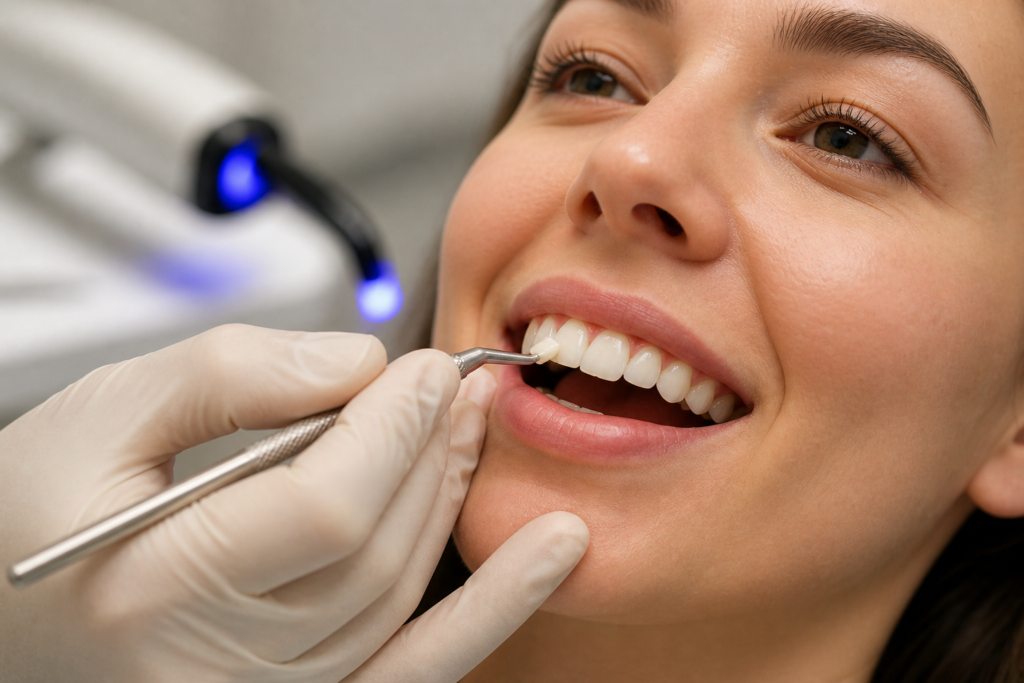
Composite bonding is a cosmetic dental procedure where a tooth-coloured resin material is applied directly to the surface of your teeth, sculpted by hand, hardened with a UV curing light, and polished to match natural tooth enamel.
There is no drilling in most cases. No removal of tooth structure. No temporary crowns and no waiting weeks for a lab result. In the majority of straightforward cases, the entire procedure takes one to two hours per session, and you leave with the finished result the same day.
The material used, composite resin, is the same used for white dental fillings. In cosmetic bonding, however, it is applied in layers, shaped, and colour-matched with considerably more precision and artistry. The quality of the result depends almost entirely on the skill of the dentist doing the work. This is why choosing the right cosmetic dentistry clinic in Dubai matters more than the treatment type itself.
What Problems Does Composite Bonding Fix?
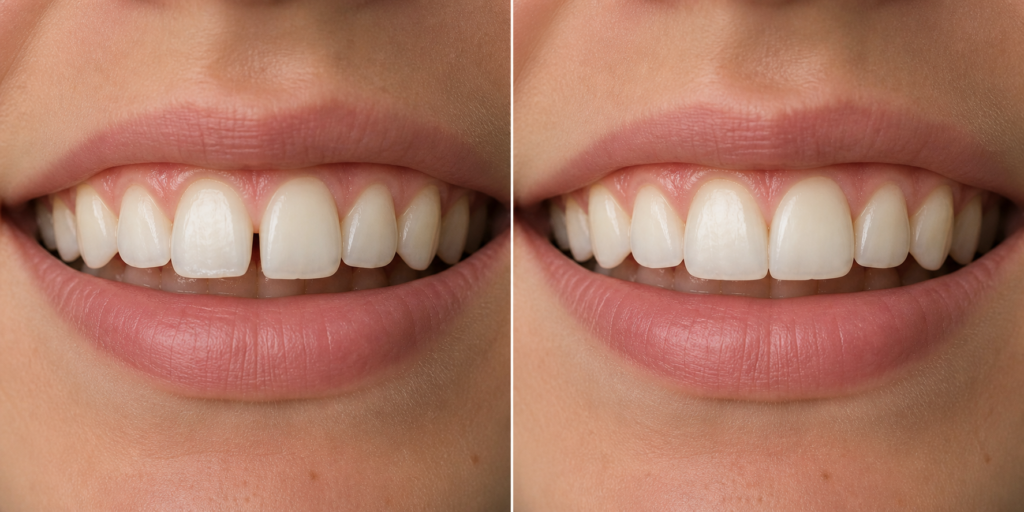
Composite bonding is genuinely versatile. It works well for the following.
Chipped or cracked teeth. A small chip on a front tooth, the kind that catches your tongue or makes you self-conscious in photos, can usually be repaired in a single appointment. The resin is built up to restore the natural shape of the tooth.
Gaps between teeth (diastema). If you have a gap between your two front teeth that you do not want to correct with orthodontics, composite bonding can close or reduce it by widening each tooth slightly on the inner edge. This is one of the most common uses in Dubai, where patients want a cosmetic fix without committing to months of aligner treatment.
Discolouration that does not respond to whitening. Tetracycline staining, fluorosis, or intrinsic discolouration (staining inside the tooth rather than on the surface) does not respond to teeth whitening. Composite bonding covers the discolouration entirely rather than trying to bleach it away.
Slightly uneven or short teeth. If one tooth is noticeably shorter than its neighbour, or the edges of your front teeth are uneven in a way that bothers you, bonding can add length and reshape the edge.
Minor misalignment. Bonding can make a mildly crooked or rotated tooth appear more aligned by adjusting its shape. It does not move the tooth. It changes the visual impression of its position. For significant misalignment, orthodontics remains the appropriate route.
What composite bonding is not suitable for: severe crowding, large structural damage, heavily stained teeth across the full arch, or patients who grind their teeth heavily without a protective bite guard. In these cases, the resin will chip or discolour too quickly to justify the investment.
Before and After: What Realistic Results Look Like
Composite bonding results vary depending on what is being treated, how much surface area is involved, and the skill of the dentist doing the work.
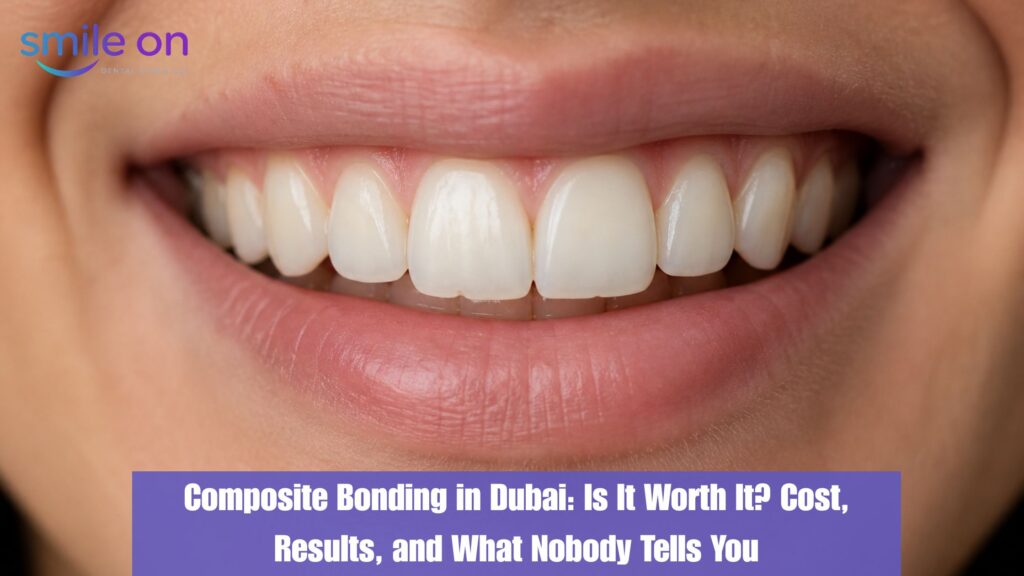
For single-tooth repairs, such as a chip, a small gap, or a discoloured edge, the result is typically seamless. Done well, no one outside of a dental clinic will know which tooth was treated.
For more extensive work, reshaping multiple front teeth, closing a wide gap, or adding length across four to six upper teeth, the result can be transformative. It requires a dentist who understands how to sculpt composite in a way that reflects light naturally. Composite that looks beautiful in the clinic can look flat or grey in certain lighting if the layering is not done correctly.
This is why before and after photos matter. When you consult at any clinic offering composite bonding in Dubai, ask to see real patient cases, not stock images, where the original problem is similar to yours. If the clinic cannot provide these, that is useful information in itself.
At Smile On Dental Clinic, our cosmetic consultations include a full assessment of whether composite bonding, porcelain veneers in Dubai, or a combination approach will give you the most durable and natural-looking outcome for your specific teeth.
Composite Bonding vs Porcelain Veneers: When Each One Makes Sense
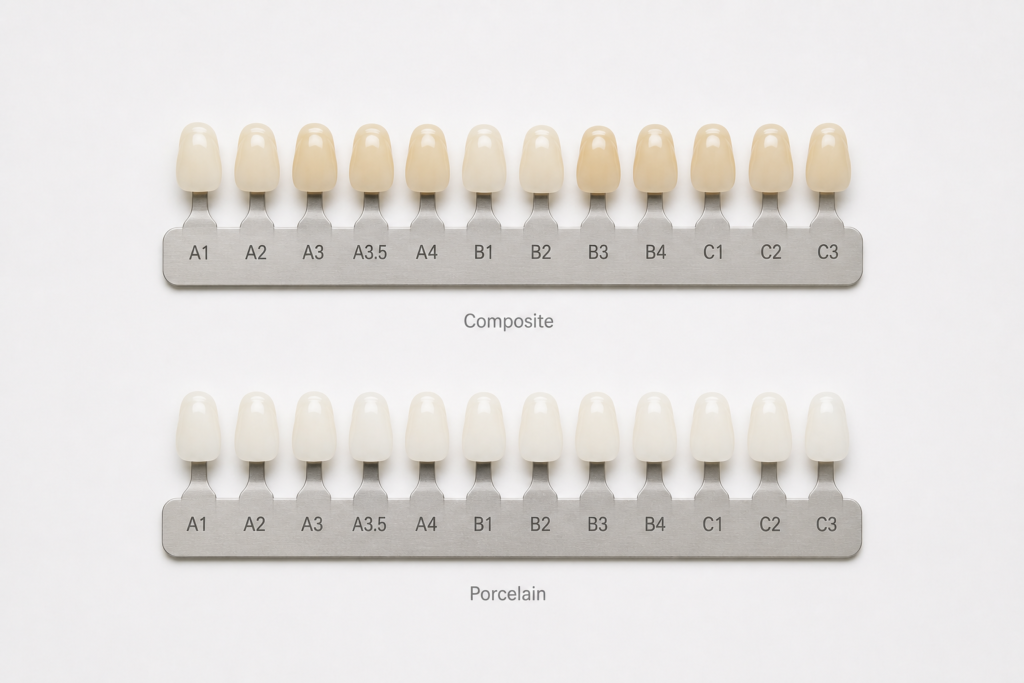
This is the comparison most patients eventually land on. It is worth being direct about the trade-offs rather than positioning one as universally better.
Choose composite bonding when:
The issue is isolated, covering one or two teeth, a chip, or a gap. You want a reversible option, since composite can be removed or adjusted later without permanent consequences to the natural tooth. Budget is a consideration, as composite is significantly cheaper per tooth than porcelain. You want same-day results without lab delays. You are younger and want to preserve healthy tooth enamel until a more permanent solution makes sense.
Choose porcelain veneers when:
You are treating six to ten teeth and want uniformity across the full smile. You need a dramatic colour change that composite cannot achieve long-term, since composite can stain over the years. You want a result that lasts 15 or more years rather than five to seven. The structural issue is significant enough to warrant the additional preparation involved. You have already discussed and committed to a Hollywood Smile makeover or full smile redesign.
The honest version: composite bonding is not a lesser treatment. It is a different treatment. For the right case, it outperforms veneers on every metric that matters, including speed, cost, reversibility, and preservation of natural tooth structure. For the wrong case, it will disappoint in ways veneers would not. A good cosmetic dentist will tell you which applies to you.
Ready to find out which is right for your teeth?
Book a cosmetic consultation at Smile On Dental Clinic in Al Satwa. We assess your teeth properly and give you a written recommendation with rationale before you decide anything.
How Long Does Composite Bonding Last, and How Do You Maintain It?
Composite bonding typically lasts between four and seven years before needing touch-ups or replacement. With careful maintenance, some patients get longer. With heavy coffee consumption, smoking, or nail-biting habits, it may need attention sooner.
What shortens the lifespan:
Biting directly into hard foods with the bonded teeth, such as crusty bread, ice, or hard nuts. Grinding teeth at night without a protective night guard. Staining drinks, including coffee, red wine, and tea, consumed frequently without rinsing. Poor brushing around the bonded edges, which can allow staining to creep in at the margins.
What extends it:
Using a non-abrasive toothpaste, since harsh whitening toothpastes can dull the composite surface over time. A custom night guard if you grind. Annual polishing at a hygiene appointment to refresh the surface and check the margins. Avoiding habits that put direct shear force on the front teeth.
One thing worth knowing: composite bonding can be repaired. If a small chip develops at the edge years later, it does not necessarily mean replacing the entire bonded tooth. In many cases it is a quick repair in the same appointment. This is not true of porcelain veneers, which cannot be patched. A damaged veneer requires full replacement.
Composite Bonding Cost in Dubai: What to Expect in 2026
Composite bonding teeth cost in Dubai is priced per tooth. The typical range is AED 600 to AED 1,800 per tooth, depending on:
- The extent of work per tooth (a small chip repair sits at the lower end; a full-surface reshape is at the higher end)
- The clinic’s location and overhead (clinics in DIFC and Downtown Dubai typically charge more than those in Al Satwa or Jumeirah)
- The experience and specialisation of the dentist performing the work
For a treatment covering six upper front teeth, patients in Dubai typically budget between AED 4,500 and AED 10,000 depending on the above. This compares to porcelain veneers, which typically run AED 2,000 to AED 4,500 per tooth for the same coverage.
Patients researching composite bonding in Abu Dhabi will find similar market pricing across the UAE. Dubai clinics with specialist cosmetic teams tend to sit at the upper end of the range regardless of geography, because the skill required for full-arch composite work is considerably higher than a single-tooth repair.
A consultation is required to give you an accurate number, because the cost is directly tied to how many teeth are involved and how much resin work each one requires. At Smile On Dental Clinic in Al Satwa, consultations include a clinical assessment and a written treatment plan before any commitment.
Frequently Asked Questions About Composite Bonding in Dubai
Does composite bonding damage your natural teeth?
In most cases, no. Unlike porcelain veneers, composite bonding typically requires little to no removal of existing tooth enamel. The resin is applied on top of the natural tooth surface. This makes it one of the most conservative cosmetic treatments available.
Is composite bonding painful?
The procedure itself is usually painless and requires no anaesthetic for cosmetic applications where no drilling is involved. Patients with sensitive teeth may experience mild sensitivity for a day or two after treatment, but this typically resolves on its own.
Can composite bonding be whitened later?
No. Composite resin does not respond to teeth whitening treatments. If you are planning to whiten your teeth, do it before composite bonding. The resin will then be colour-matched to your newly whitened teeth. Whitening after bonding will lighten your natural teeth but leave the composite at its original shade, creating an uneven result.
How is composite bonding different from dental fillings?
Both use composite resin, but the application is very different. Fillings repair decay inside a tooth. Cosmetic bonding reshapes and refines the external surface of healthy or slightly damaged teeth. The material is similar; the technique, artistry, and outcome are entirely different.
Can I get composite bonding on all my teeth?
Technically yes, but for full-arch cosmetic treatment, porcelain veneers are often the more durable and aesthetically consistent option over time. Your dentist will assess your bite, the condition of your teeth, and your goals to recommend the right approach.
Is composite bonding available in Abu Dhabi?
Yes. Composite bonding is available at cosmetic dental clinics throughout the UAE, including Abu Dhabi. Patients travelling from Abu Dhabi to Dubai for treatment at a specialist cosmetic clinic is common, particularly where the case requires a higher level of aesthetic expertise.
Ready to Find Out If Composite Bonding Is Right for You?
The fastest way to know whether bonding, veneers, or whitening is the right starting point for your smile is a proper consultation, one where the dentist looks at your actual teeth, not just a photo.
At Smile On Dental Clinic in Al Satwa, Dubai, we offer cosmetic dentistry consultations that include a full clinical assessment, a treatment recommendation with genuine rationale, and a written cost plan before you decide anything.
Book a Cosmetic Dental Consultation
Al Satwa, Dubai