Myobrace in Dubai: Early Orthodontic Treatment for Children Without Braces

Address the Causes of Crooked Teeth Early With Myobrace at Smile On Dental Clinic, Al Satwa

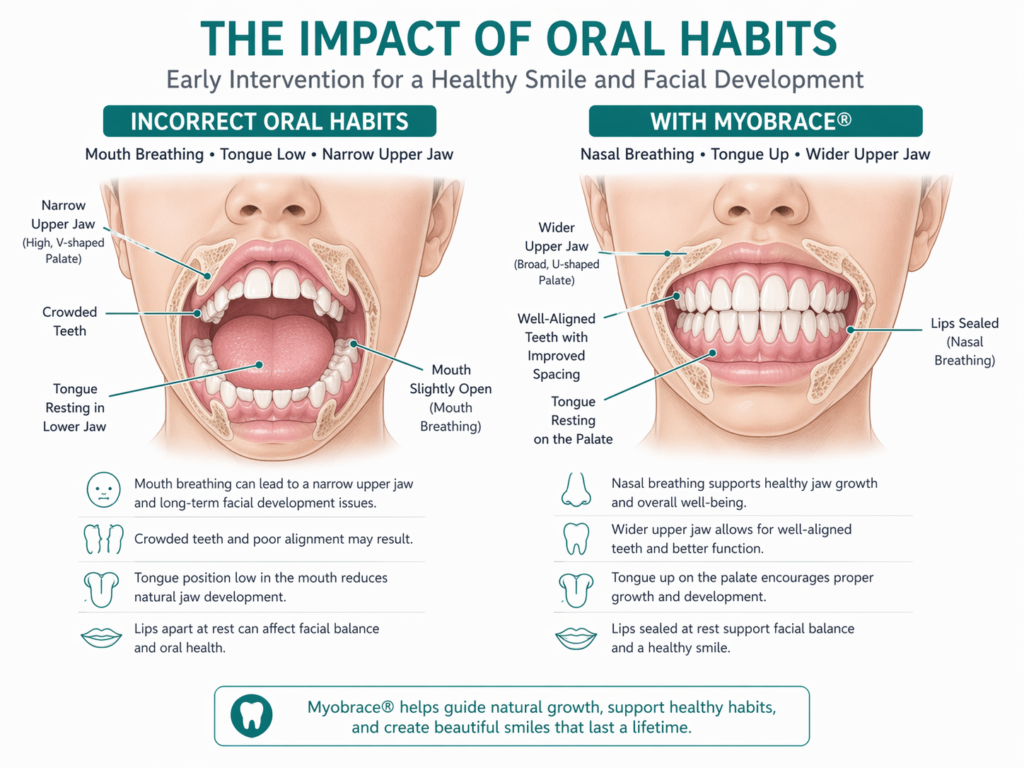
Most parents assume that crooked teeth in children are simply a genetic inevitability, something to be corrected with braces in the teenage years and accepted as an unavoidable part of growing up. The reality is more nuanced. While genetics does play a role in dental development, a significant proportion of the crowding, misalignment, and jaw development problems that lead to orthodontic treatment are caused or worsened by incorrect oral habits that develop in early childhood: mouth breathing instead of nasal breathing, incorrect tongue posture, reverse swallowing patterns, and thumb sucking.

Myobrace is an early interceptive orthodontic system that targets these habits during the years when the jaw is still actively developing, giving the teeth and jaw the best possible environment to grow into their correct positions naturally. At Smile On Dental Clinic in Al Satwa, Dubai, Myobrace treatment is available for children aged six to ten and is managed by Dr. Hashmit Kaur, the clinic’s DHA-licensed specialist in pediatric dentistry

This field is for validation purposes and should be left unchanged.
Oral habits and their impact on development

What Is Myobrace and How Does It Work?

Myobrace is a series of removable oral appliances worn by children for one to two hours during the day and overnight during sleep. The appliances are soft, flexible, and designed to be comfortable for children to wear. They work on two levels simultaneously.

First, the appliance physically positions the tongue correctly against the roof of the mouth, encourages nasal breathing, and trains the lips to seal correctly. These are the foundational oral habits that the jaw and face need to develop properly. When a child breathes through their mouth habitually, the tongue rests in the lower jaw rather than against the palate, removing the natural pressure that guides the upper jaw to widen correctly. The narrow upper jaw that results is one of the most common causes of crowding in the permanent teeth.

Second, Myobrace treatment includes a structured activity programme called Myobrace Activities, which are short daily exercises that retrain the muscles of the jaw, tongue, lips, and cheeks to function correctly. The physical appliance and the muscle retraining work together to correct the underlying causes of misalignment rather than just managing the symptoms after they are fully established.

The Myobrace system is divided into a series of appliance stages. As the child progresses through treatment and their habits improve, the appliances are upgraded to the next stage, progressively guiding the jaw development in the correct direction. Treatment duration varies between patients but typically runs for twelve to twenty-four months.

The Myobrace Treatment Process at Smile On Dental Clinic

  • Step 1: Assessment and Records

    The process begins with a full assessment by Dr. Hashmit Kaur. This includes a clinical examination of the teeth, jaw, and oral habits, photographs, dental impressions or a digital scan, and in some cases a panoramic X-ray. These records are used to confirm suitability for Myobrace and to document the baseline from which progress will be measured.

  • Step 2: First Appliance and Activity Training

    The first Myobrace appliance is fitted and the child and parent are taught how to use it correctly, including the daily wearing schedule and the Myobrace Activities programme. The activities take approximately ten minutes per day and are designed to be simple enough for children to complete independently with parent supervision.

  • Step 3: Regular Review Appointments

    Review appointments are scheduled every six to eight weeks. At each visit Dr. Kaur assesses the child's progress, checks the fit and condition of the appliance, reviews the activity programme, and upgrades to the next appliance stage when appropriate.

  • Step 4: Progression Through the Appliance Series

    As oral habits improve and jaw development responds to the treatment, the appliances are progressed through the Myobrace series. The change in appliance reflects the improvement in the child's muscle function and jaw position and continues to guide further development.

  • Step 5: Review of Outcome and Further Planning

    At the completion of Myobrace treatment, the outcome is assessed against the baseline records. For many children, the result is a significantly improved jaw width, better tooth alignment, and corrected oral habits that provide a healthier foundation for the permanent dentition. Where further orthodontic treatment is still needed after Myobrace, having corrected the underlying habits first means any subsequent brace treatment is more stable because the forces that caused the original problem are no longer present.
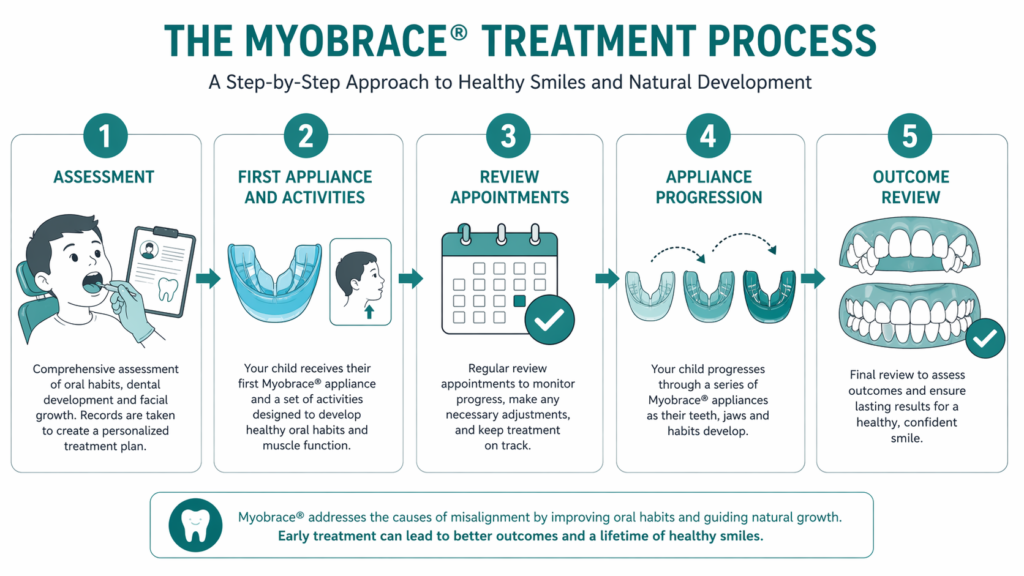
The Myobrace® treatment process explained

Myobrace Before and After: What Results Can Parents Expect?

Myobrace treatment outcomes vary depending on the child’s age at the start of treatment, the severity of the oral habits being corrected, and how consistently the appliance is worn and the activities completed. Compliance is the single most important factor in the outcome. A child who wears the appliance for the full recommended daily hours and completes the activity programme consistently will progress significantly faster and achieve better results than one who wears it sporadically.

In children who respond well to Myobrace treatment, the observable changes over twelve to twenty-four months typically include:

  • Improved nasal breathing with the mouth closed at rest and during sleep
  • A wider upper jaw arch with more space for the permanent teeth to erupt
  • Improved facial symmetry as the jaw develops more evenly
  • Better tooth alignment in the milk teeth stage that carries forward into the permanent dentition
  • Reduced severity of crowding in the permanent teeth, which in many cases reduces or eliminates the need for extraction-based orthodontic treatment later

Myobrace is not a substitute for fixed orthodontic treatment in every case. Some children will still need braces or Invisalign after completing Myobrace, but starting with Myobrace means the orthodontic treatment they do need is working with a jaw and musculature that have already been optimised, making the result more stable and sustainable long term.

Why Choose Smile On Dental Clinic for Myobrace in Dubai?

Specialist Pediatric Dentist Managing Treatment Myobrace treatment at Smile On Dental Clinic is managed by Dr. Hashmit Kaur, a DHA-licensed specialist in pediatric dentistry. Her training in child development and jaw growth means she can accurately assess whether Myobrace is the right intervention for a child’s specific situation, set realistic expectations for the family, and monitor progress with the clinical knowledge to identify when the treatment is working as expected and when adjustments are needed.

Integrated With Orthodontic Care Smile On Dental Clinic has both a pediatric dentist and a specialist orthodontist on the team. Dr. Jeffrey Manuel, the clinic’s specialist orthodontist, is available for cases that need more complex orthodontic input either alongside Myobrace or following its completion. This means a child’s dental development can be guided by specialist care across both the early interceptive stage and the comprehensive orthodontic stage without attending multiple practices.

Parent Education and Involvement Myobrace treatment works best when parents understand the programme and actively support their child’s compliance at home. At Smile On Dental Clinic, parents are involved in the initial training appointment and kept informed at every review visit about how the treatment is progressing and what they can do to support the activity programme at home.

Accessible Location in Central Dubai Smile On Dental Clinic is located in Al Satwa, accessible from Jumeirah, Downtown Dubai, Sheikh Zayed Road, and DIFC. For families attending regular Myobrace review appointments over a treatment period of one to two years, the clinic’s central location and appointment flexibility make consistent attendance manageable.

Myobrace Treatment Cost in Dubai

The cost of Myobrace treatment in Dubai depends on the duration of treatment, the number of appliance stages the child progresses through, and the frequency of review appointments required.

The main cost components include:

  • Initial assessment and records: Impressions or digital scan, photographs, and clinical assessment at the first appointment
  • Appliance costs: Each Myobrace appliance stage involves a new appliance. The number of stages a child progresses through depends on their response to treatment
  • Review appointments: Six to eight weekly review appointments across the treatment period make up a significant portion of the overall cost
  • Replacement appliances: If an appliance is lost or damaged, replacement costs apply

As a general reference, Myobrace treatment programmes in Dubai range from AED 3,000 to AED 6,000 or more depending on the treatment duration and number of appliance stages. The exact cost for each child is provided after the initial assessment at Smile On Dental Clinic. Dental insurance plans in the UAE do not typically cover Myobrace as it is classified as an orthodontic or preventive appliance, but this should be confirmed with your specific insurer.

Meet the Myobrace Specialist at Smile On Dental Clinic

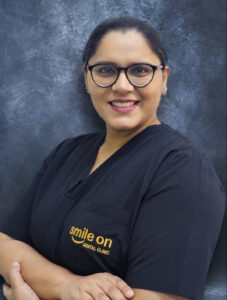
Dr. Hashmit Kaur is the specialist pediatric dentist at Smile On Dental Clinic in Al Satwa, Dubai. She manages Myobrace treatment for children at the clinic alongside the full range of pediatric dental services. Her specialist training in child development and jaw growth directly informs her assessment of which children will respond well to Myobrace and at what stage in their development to begin. She works closely with Dr. Jeffrey Manuel, the clinic’s specialist orthodontist, for children whose treatment requires input from both pediatric dentistry and orthodontics across different stages of development.

Other Dental Services You May Be Interested In

Pediatric Dentistry Dubai: The full pediatric dentistry hub page at Smile On Dental Clinic covering all children’s dental services available under Dr. Hashmit Kaur’s specialist care, from routine checkups and preventive treatments through to restorative procedures and emergency dental care.

Orthodontist Dubai: For children and teenagers who need comprehensive orthodontic treatment after completing Myobrace, or who require braces or Invisalign as their primary treatment, Dr. Jeffrey Manuel provides the full range of specialist orthodontic options at Smile On Dental Clinic.

Invisalign First Dubai: Invisalign First is an early orthodontic treatment using clear aligners for children aged six to ten, an alternative to Myobrace for children who are suitable for aligner-based treatment. This page covers how Invisalign First works and who it suits.

What Our Patients Have to Say

Our Latest Blogs

  • All Posts
  • Dental
  • Dental Implants
  • Invisalign
  • PROSTHODONTICS
Load More

End of Content.

Book your child's Myobrace assessment with Dr. Hashmit Kaur at Smile On Dental Clinic, Al Satwa, Dubai, and find out whether early interceptive treatment is the right step for their dental development

Myobrace Dubai FAQs: What Parents Ask Most

Myobrace is a removable appliance system for children aged six to ten that addresses the oral habits causing crooked teeth, specifically mouth breathing, incorrect tongue posture, and incorrect swallowing, while the jaw is still developing. Braces are fixed orthodontic devices applied to the teeth to move them into a straighter position after the permanent teeth have erupted. The key difference is that Myobrace works on the causes of misalignment during development, while braces correct the result of misalignment after it has occurred. Many children who complete Myobrace treatment still benefit from some orthodontic treatment afterward, but addressing the habits first tends to produce more stable long-term results.

The ideal age range for starting Myobrace is between six and ten years old. This is the period when the jaw is most responsive to the guidance of functional appliances because the bone is still soft and actively growing. Starting earlier within this range, around age six or seven, generally produces the best outcomes because there is more of the jaw development phase remaining to influence. Treatment can be started up to age ten with meaningful benefit in most cases. After the jaw has matured in the mid-teenage years, the window for functional appliance treatment has largely closed and fixed orthodontic treatment becomes the primary approach.

The recommended wearing schedule for Myobrace is one to two hours during the day, typically during a quiet period such as reading or screen time, plus overnight during sleep. The total daily wearing time adds up to approximately eight to ten hours in most children. Compliance with this schedule is the most important factor determining the outcome of Myobrace treatment. Children who wear the appliance consistently progress significantly faster than those who do not, and Dr. Hashmit Kaur discusses strategies for building the wearing routine at the initial training appointment.

Myobrace appliances are soft and flexible and should not cause pain when fitted correctly. Some children experience mild discomfort or increased saliva for the first few days while they adjust to wearing the appliance, which is normal and settles quickly. If a child is experiencing persistent discomfort or the appliance is causing sore spots on the gum tissue, this should be reported to Dr. Hashmit Kaur at Smile On Dental Clinic so the fit can be assessed and adjusted.

Many children who complete Myobrace treatment achieve significantly improved jaw development and tooth alignment that reduces or eliminates the need for fixed orthodontic treatment afterward. However, Myobrace is not a guaranteed alternative to braces in every case. Children with more complex orthodontic needs, significant crowding, or skeletal discrepancies may still need braces or Invisalign after Myobrace. The advantage is that completing Myobrace first means any subsequent orthodontic treatment is working with corrected oral habits and a better-developed jaw, which tends to produce more stable and lasting results.

Myobrace treatment costs in Dubai typically range from AED 3,000 to AED 6,000 or more depending on the duration of treatment, the number of appliance stages the child progresses through, and the frequency of review appointments. The exact cost for your child is provided after the initial assessment appointment at Smile On Dental Clinic, where Dr. Hashmit Kaur assesses the specific situation and outlines a treatment plan with a clear cost breakdown before any commitment is made.

 Yes. Smile On Dental Clinic in Al Satwa, Dubai, offers Myobrace treatment for children managed by Dr. Hashmit Kaur, a specialist pediatric dentist. The clinic is located centrally in Al Satwa, accessible from Jumeirah, Downtown Dubai, Sheikh Zayed Road, and DIFC. Contact the clinic to book an initial Myobrace assessment and find out whether your child is a suitable candidate for early interceptive orthodontic treatment.