Best Endodontist in Dubai for Specialist Root Canal Care

Expert Endodontic Treatment to Save Your Natural Teeth at Smile On Dental Clinic

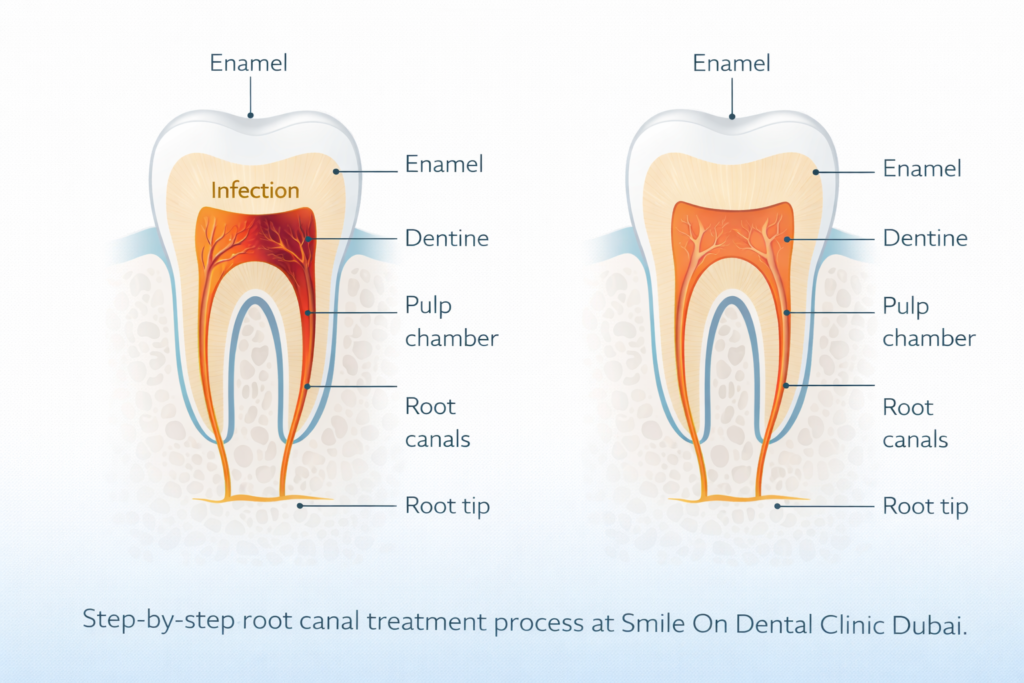
Most people visit a dentist when a tooth hurts. But when the problem is inside the tooth, in the pulp, the root canals, or the surrounding bone, that is when you need an endodontist. At Smile On Dental Clinic in Al Satwa, Dubai, our endodontic specialist focuses on diagnosing and treating conditions that affect the inner structures of the tooth, with the primary goal of saving it rather than removing it.

This page covers what endodontics involves, when to see an endodontist instead of a general dentist, what treatments are available at the clinic, and what patients in Dubai and Jumeirah can expect from the process.

This field is for validation purposes and should be left unchanged.
What Is Endodontics and What Does an Endodontist Do?

What Is a Gummy Smile?

Endodontics is the branch of dentistry that deals with the dental pulp and the tissues surrounding the roots of a tooth. An endodontist is a dental specialist who has completed additional years of postgraduate training specifically in diagnosing tooth pain and performing procedures that treat the inside of the tooth.

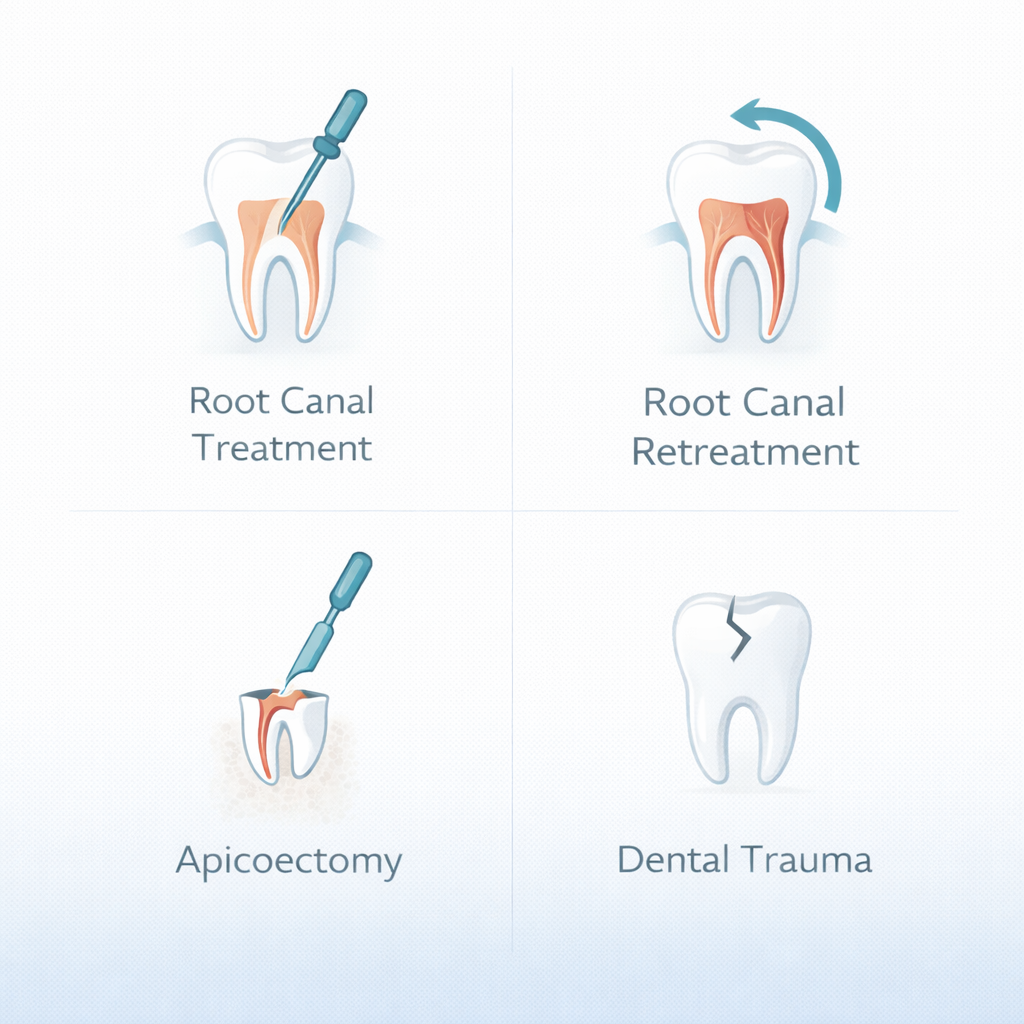
The scope of endodontics covers more than just root canal treatment. It includes:

  • Root canal treatment: Removing infected or damaged pulp tissue, cleaning the canals, and sealing the tooth permanently to prevent reinfection
  • Root canal retreatment: Going back into a previously treated tooth where the original treatment has failed or reinfection has occurred
  • Apicoectomy: A minor surgical procedure that removes the tip of the root and surrounding infected tissue when infection persists after root canal treatment
  • Dental trauma management: Assessing and treating teeth that have been cracked, fractured, or knocked out, where the pulp may be damaged

The key difference between seeing an endodontist and a general dentist for a root canal is specialisation. General dentists can perform straightforward root canals, but cases involving complex anatomy, calcified canals, multiple previous treatments, or persistent infection are better handled by a specialist who performs these procedures every day.

When Should You See an Endodontist in Dubai?

You should see an endodontist rather than a general dentist when the problem involves the inner tooth and requires a higher level of diagnostic precision or technical skill. Common situations that call for an endodontic specialist include:

  • A tooth that remains painful after a previous root canal treatment
  • A deep infection that has spread to the bone around the root tip, visible on an X-ray
  • A tooth with unusually complex or curved root anatomy that is difficult to treat with standard instruments
  • A cracked tooth where the fracture has reached the pulp chamber
  • A dental abscess that has not resolved with antibiotics alone
  • A referral from your general dentist for specialist endodontic assessment

If a general dentist has advised you to see a specialist, that referral is worth taking seriously. Complex endodontic cases that are not managed correctly the first time become significantly harder and more expensive to treat later. Patients in Dubai and Jumeirah who are experiencing persistent tooth pain, recurring infection, or have been told a tooth may need to be extracted should book an endodontic assessment before making any final decision.

Endodontic Treatments Available at Smile On Dental Clinic, Al Satwa

Endodontic Treatments Available at Smile On Dental Clinic, Al Satwa

Smile On Dental Clinic offers a focused range of endodontic treatments managed by Dr. Arun Devarajan, the clinic’s endodontic specialist in Al Satwa, Dubai. Here is what is available:

Root Canal Treatment: The core endodontic procedure at the clinic. Infected or damaged pulp tissue is removed from inside the tooth, the root canals are cleaned and shaped using rotary instruments, and the tooth is sealed permanently with gutta-percha and dental cement. Most cases are completed in one to two visits depending on the complexity of the infection and the anatomy of the tooth. Full details are available on the Root Canal Treatment Dubai page.

Root Canal Retreatment. For patients whose previous root canal has failed, either because the original treatment was incomplete, the tooth became reinfected over time, or new decay has compromised the seal. Retreatment involves removing the existing filling material, re-cleaning the canals thoroughly, and resealing the tooth.

Apicoectomy: When infection persists at the tip of the root despite root canal treatment, an apicoectomy removes the root tip and the surrounding infected tissue under local anaesthesia. The end of the root is then sealed directly. This is a minor surgical procedure and is typically completed in a single appointment. [VERIFY: confirm apicoectomy is performed in-house at Smile On Dental Clinic]

Dental Trauma Management: If a tooth has been knocked out, cracked, or fractured in a way that has damaged the pulp, an endodontic specialist assesses whether the tooth can be saved and what treatment pathway is appropriate. Time is critical in dental trauma cases. If you or someone you know has suffered a dental injury in Dubai, contact the clinic as soon as possible.

Why Choose Smile On Dental Clinic for Endodontic Treatment in Dubai?

Dedicated Endodontic Specialist: Root canal treatment and all endodontic procedures at Smile On Dental Clinic are handled by Dr. Arun Devarajan, a specialist with postgraduate endodontic training. This means your case is assessed and treated by someone whose clinical focus is specifically the inner tooth, not a generalist performing occasional root canals between other procedures.

Advanced Rotary Instrumentation: The clinic uses motorised rotary nickel-titanium files for canal shaping. These are more precise, more consistent, and significantly faster than traditional hand-filing techniques. The result is a cleaner canal, a better seal, and a meaningfully lower risk of reinfection compared to older methods.

Digital Imaging and CBCT Scanning: Every endodontic case begins with a digital periapical X-ray. Where root anatomy is complex or the extent of infection is unclear, CBCT scanning provides a three-dimensional view of the tooth and surrounding bone before treatment begins. This imaging directly improves treatment accuracy and outcomes.

Accessible Location for Dubai and Jumeirah Patients: Smile On Dental Clinic is located in Al Satwa, one of the most centrally accessible areas in Dubai. Patients from Jumeirah, Downtown Dubai, Sheikh Zayed Road, and DIFC can reach the clinic within a short drive. For patients dealing with acute dental pain or infection, same-day appointments are accommodated where possible.

Clear Pricing Before Treatment Starts: After the diagnostic X-ray and case assessment, you receive a full cost breakdown before any treatment begins. There are no hidden fees added after the procedure. If a crown is needed after root canal treatment, that cost is discussed and agreed upfront as part of the overall treatment plan.

Endodontic Treatment Cost in Dubai

The cost of endodontic treatment in Dubai depends on the type of procedure, the tooth involved, and the complexity of the case. Here is a general breakdown of the factors that affect pricing:

  • Number of root canals: A front incisor typically has one canal. A molar can have three or four. More canals means more time and a higher fee
  • First-time treatment vs retreatment: Retreatment cases are technically more demanding and carry a higher cost than first-time root canal treatment
  • Surgical procedures: An apicoectomy involves additional clinical steps and is priced separately from standard root canal treatment
  • Restoration required: A crown placed after root canal treatment is priced separately from the endodontic procedure itself

As a general market reference in Dubai, root canal treatment fees range from AED 800 to AED 1,200 for a front tooth with one canal, and from AED 1,500 to AED 2,500 or more for a molar with three or four canals. Retreatment and surgical cases vary further depending on complexity.

Smile On Dental Clinic accepts major insurance plans and can confirm your coverage at the time of consultation. Instalment payment options may also be available.

Meet the Endodontic Specialist at Smile On Dental Clinic

Dr. Arun Devarajan is the endodontic specialist at Smile On Dental Clinic in Al Satwa, Dubai. His clinical focus is on saving teeth that are at risk of extraction due to infection, trauma, or failed previous treatment. He manages the full range of endodontic cases, from routine root canals to complex retreatment situations involving calcified or severely curved canals.

Dr. Devarajan works directly with the clinic’s restorative team to ensure that every tooth treated endodontically is followed through to an appropriate final restoration, whether that is a filling or a crown, so the tooth is both preserved and protected for the long term.

Other Dental Services You May Be Interested In

Root Canal Treatment Dubai: The most common endodontic procedure at Smile On Dental Clinic. This page covers the full step-by-step process, what to expect during and after treatment, recovery, and the cost of root canal treatment in Dubai.

Dental Crowns and Bridges Dubai: Most teeth that have undergone root canal treatment need a crown placed afterward to protect them from fracturing under biting force. This page explains the crown types available at the clinic and what the placement process involves.

Dental Implants Dubai: When a tooth cannot be saved even with specialist endodontic care, a dental implant is the closest functional and aesthetic replacement. This page covers the implant options available at Smile On Dental Clinic and who is a suitable candidate.

What Our Patients Have to Say

Our Latest Blogs

No Posts Found!

Book your endodontic consultation at Smile On Dental Clinic, Al Satwa, Dubai, and get a specialist assessment before making any decision about your tooth.

Endodontist Dubai FAQs: What Patients Ask Most

An endodontist is a dental specialist who has completed additional postgraduate training, typically two or more years beyond dental school, focused entirely on diagnosing tooth pain and treating the inner structures of the tooth. A general dentist provides broad dental care including routine root canals, but refers more complex cases to an endodontist. If your case involves a failed previous root canal, difficult root anatomy, persistent infection, or dental trauma, seeing a specialist gives you a significantly better chance of saving the tooth compared to a general practitioner.

If your tooth pain is straightforward and decay has not yet reached the pulp, a general dentist is appropriate. You should see an endodontist if you have a tooth that remains painful after a previous root canal, a deep infection visible near the root tip on an X-ray, a cracked tooth where the fracture may have reached the inner pulp, or if your general dentist has already referred you to a specialist. When in doubt, an endodontic consultation at Smile On Dental Clinic is the fastest way to get an accurate diagnosis and a clear treatment recommendation.

In many cases, yes. Teeth are sometimes recommended for extraction when a second opinion from an endodontic specialist would reveal a viable path to saving them, particularly when the problem is infection or a failed root canal rather than the structural loss of the tooth itself. Dr. Arun Devarajan at Smile On Dental Clinic assesses these situations specifically to determine whether retreatment or surgical intervention can preserve the tooth. Extraction should be a last resort, not the first response to infection.

Endodontic retreatment is needed when a tooth that previously had root canal treatment becomes painful or infected again. This can happen if the original canals were not fully cleaned, if the seal has broken down over time, or if new decay has allowed bacteria back into the tooth. Retreatment involves removing the existing filling material, thoroughly re-cleaning all canals, and resealing the tooth. It is technically more demanding than first-time root canal treatment and is best performed by an endodontic specialist. Dr. Arun Devarajan at Smile On Dental Clinic manages retreatment cases including complex situations involving calcified canals.

The number of visits depends on the procedure and the complexity of the case. A straightforward root canal is often completed in one visit. Cases involving severe infection, complex root anatomy, or retreatment of a previously treated tooth may require two visits to ensure the canals are fully clean and infection-free before the tooth is sealed. Dr. Devarajan will give you a clear treatment timeline at the initial consultation so you know exactly what to expect.

Endodontic procedures are performed under local anaesthesia and should not be painful during treatment. The soreness most people associate with root canals is the pre-existing pain from the infection itself, not the procedure. Most patients experience mild tenderness in the treated area for two to five days after the appointment, which is normal and manageable with standard over-the-counter pain relief such as ibuprofen. Patients with dental anxiety can discuss sedation options when booking.

Smile On Dental Clinic is located in Al Satwa, Dubai, directly accessible from Jumeirah and surrounding areas including Sheikh Zayed Road, Downtown Dubai, and DIFC. Dr. Arun Devarajan, the clinic’s endodontic specialist, sees patients for consultations and treatment at the Al Satwa clinic. Same-day appointments are available for urgent cases where possible.

After root canal treatment, the tooth needs to be restored with either a filling or a crown depending on how much tooth structure remains and which tooth was treated. Back teeth, specifically molars and premolars, almost always require a crown because they bear significant biting force and the treated tooth becomes more brittle over time without a blood supply. At Smile On Dental Clinic, the endodontic and restorative teams work together so the full process from root canal to final crown is coordinated in one place.