Frenectomy Dental in
Dubai

Lip Tie and Tongue Tie Correction for Infants, Children and Adults

A tight or misplaced frenum is a small tissue problem that creates real, daily difficulties. For an infant it can mean painful breastfeeding. For a child it can mean delayed speech. For an adult it can affect gum health, orthodontic results, or dental hygiene. A frenectomy dental procedure at Smile On Dental Clinic in Al Satwa, Dubai corrects the problem simply, safely, and in a single appointment. Recovery is fast and the results are lasting.

What Is a Frenectomy?

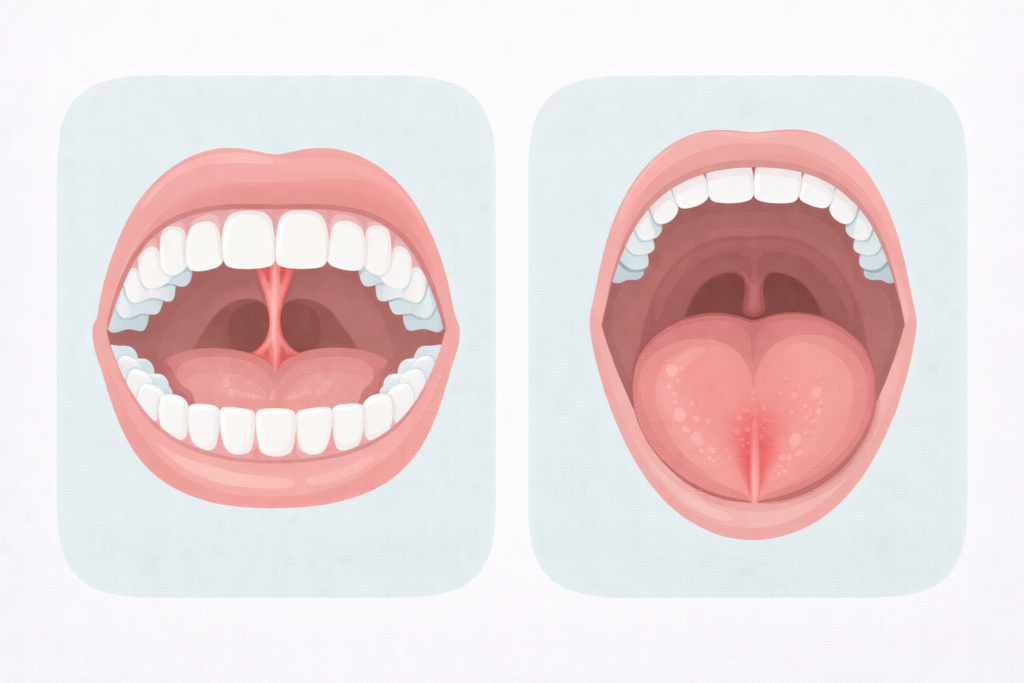
A frenectomy is a minor dental procedure that removes or releases the frenum, a small fold of connective tissue in the mouth that can restrict movement when it is too thick, too tight, or positioned incorrectly. There are two types of frenectomy in dentistry: a labial frenectomy, which addresses the tissue connecting the upper or lower lip to the gums, and a lingual frenectomy, which releases the tissue connecting the underside of the tongue to the floor of the mouth. When the frenum is too restrictive it is classified as a lip tie or tongue tie. Both conditions are treatable with a straightforward frenectomy surgery that typically takes 15 to 30 minutes under local anaesthetic.

This field is for validation purposes and should be left unchanged.

Labial Frenectomy vs Lingual Frenectomy: What Is the Difference?

Understanding which type of frenectomy applies to your situation helps you have a clearer conversation with your dentist.

Labial Frenectomy (Lip Tie Correction) The labial frenum runs from the inside of the upper or lower lip down to the gum tissue. When it attaches too close to the gum line or pulls too tightly, it can cause a visible gap between the two upper front teeth, gum recession around the front teeth, difficulty breastfeeding in infants whose upper lip cannot flange outward, and complications with denture fit in adults. A labial frenectomy releases or removes this tissue, allowing the lip to move freely and the gum tissue to remain stable.

Lingual Frenectomy (Tongue Tie Correction) The lingual frenum connects the underside of the tongue to the floor of the mouth. When it is too short or too tight, it restricts the tongue’s full range of motion. This is known as ankyloglossia, or tongue tie. It can affect breastfeeding in newborns, articulation of certain speech sounds in children, the ability to clear food from the teeth, oral hygiene access, and in adults, can contribute to gum recession on the lower front teeth and interfere with orthodontic or implant treatment outcomes. A lingual frenectomy releases the restriction and restores full tongue movement.

What Is a Frenectomy

Who Needs a Frenectomy? Signs at Every Life Stage

Frenectomy dental treatment is relevant across all ages. The signs and reasons differ depending on when the problem is identified.

In infants:

  • Difficulty latching during breastfeeding despite positioning adjustments
  • A clicking sound during feeding or repeated unlatching
  • Poor weight gain in a newborn where no other cause is identified
  • Visible heart-shaped notch at the tip of the tongue when the infant cries or extends the tongue

In children:

  • A noticeable gap between the two upper front teeth that persists after adult teeth have come through
  • Speech difficulties, particularly with sounds that require the tongue tip to contact the roof of the mouth such as t, d, l, n, r, and th
  • Orthodontic treatment that cannot achieve full closure of a midline gap due to frenum attachment
  • Difficulty cleaning around the gum line of the lower front teeth

In adults:

  • Gum recession on the lower front teeth linked to frenum pull
  • Persistent midline gap that closes with orthodontic treatment but reopens afterward
  • Denture instability caused by frenum attachment interfering with the fit
  • General restriction of tongue movement that affects oral hygiene, comfort, or specific dental procedures
Who Needs a Frenectomy Signs at Every Life Stage​

How Your Frenectomy Procedure Works at Smile On, Step by Step

  • Clinical Assessment

    Your dentist examines the frenum in question and assesses its attachment, thickness, and degree of restriction. For infants this assessment is quick and non-invasive. For older patients it may involve checking gum levels, tooth spacing, and reviewing any relevant orthodontic records or X-rays.

  • Treatment Planning and Discussion

    Your dentist explains the findings, confirms whether a frenectomy is the right course of action, and walks you through what the procedure involves. For children and infants, parents are included in every part of this conversation. Questions are welcomed at this stage.

  • Local Anaesthetic

    A local anaesthetic is applied to completely numb the treatment area. For infants, a topical numbing gel is used and the procedure is performed quickly to minimise distress. For older children and adults, an injectable anaesthetic ensures the procedure is fully comfortable throughout.

  • Frenectomy Procedure

    The frenum is carefully released or removed using a precise surgical technique. The procedure takes between 15 and 30 minutes in most cases. Minimal tissue is disturbed, and sutures are only required when the incision area warrants it. In many straightforward cases no sutures are needed at all.

  • Immediate Post-Procedure Check

    Once the procedure is complete, the dentist confirms the range of movement has been restored and that the treated area looks clean and well-sealed. Any immediate questions are answered before the patient leaves the chair.

  • Aftercare Instructions and Follow-Up

    Written aftercare instructions are provided before discharge. Your dentist explains what to expect during healing, what to avoid, and when to return for a follow-up review. For tongue tie corrections in infants, feeding guidance is provided and a follow-up appointment is scheduled to confirm the outcome.

Aftercare: What to Expect After a Frenectomy

Recovery from a frenectomy dental procedure is typically straightforward. Most patients experience minimal discomfort for one to two days, which is manageable with over-the-counter pain relief if needed.

Soft foods are recommended for the first 24 to 48 hours. Avoid anything hard, crunchy, or requiring significant chewing while the treated area heals. Warm salt water rinses help keep the area clean without irritating the tissue.

For lingual frenectomies, tongue stretching exercises may be recommended by your dentist in the days following the procedure. These simple movements help prevent the tissue from reattaching in the same restricted position and support long-term freedom of movement.

For infants, breastfeeding can typically resume immediately after the procedure. Some improvement in latch is noticed right away, though it may take a few days of adjustment as the infant learns to use the greater range of movement.

If your child’s frenectomy is related to a speech or orthodontic concern, follow-up with a speech therapist or orthodontist may be recommended alongside the dental procedure for the best overall outcome.

How Your Frenectomy Procedure Works at Smile On, Step by Step​

Why Choose Smile On for Your Frenectomy in Dubai

Frenectomy near me, centrally located. Smile On Dental Clinic is based in Al Satwa, a central and accessible part of Dubai. Patients searching for a frenectomy specialist near them in the city can reach the clinic easily without travelling to higher-cost areas.

Treatment for all ages. Smile On treats infants, children, and adults for both labial and lingual frenectomy. Each age group is approached with a protocol appropriate to their age, size, and level of cooperation.

Full dental care available in one clinic. If your frenectomy is part of a broader treatment plan involving orthodontics, gum treatment, or restorative work, Smile On has the specialists to manage that care without sending you elsewhere.

Clear, straightforward process. You will know exactly what the procedure involves, what recovery looks like, and what follow-up is needed before any treatment begins. There are no surprises and no unexplained steps.

Insurance accepted. Smile On works with most major UAE health insurance providers. Depending on your plan, a medically indicated frenectomy may be covered in full or in part.

What Affects the Cost of Frenectomy Surgery in Dubai?

The cost of a frenectomy dental procedure in Dubai varies based on a few key factors:

Type of frenectomy. A labial frenectomy and a lingual frenectomy differ in complexity and time. Your dentist will confirm which is needed and quote accordingly.

Patient age. Infant procedures are typically shorter but require a specific clinical approach. Adult procedures may involve a more involved assessment and follow-up depending on the associated dental concerns.

Whether sutures are required. Some frenectomies heal well without sutures. Others require a small number of dissolvable sutures, which adds minimal time but may affect the overall fee.

Associated treatment needs. If the frenectomy is part of a broader orthodontic or gum treatment plan, the costs of those treatments are quoted separately. The frenectomy itself is a distinct procedure with its own fee.

Insurance coverage. A medically indicated frenectomy, particularly for infants with breastfeeding difficulties or children with speech impact, may be covered under your UAE health insurance plan. Check your policy or speak with the Smile On team before booking.

Book a consultation at Smile On Dental Clinic for a clear quote before your appointment.

What Our Patients Have to Say

Our Latest Blogs

  • All Posts
  • Dental
  • Dental Implants
  • Invisalign
  • PROSTHODONTICS
Load More

End of Content.

Book your frenectomy dental consultation at Smile On Dental Clinic, Al Satwa, Dubai.

Frequently Asked Questions About Frenectomy Dental Treatment in Dubai

Frenectomy dental treatment is a minor procedure that removes or releases the frenum, a small band of connective tissue in the mouth that is causing a functional problem. A labial frenectomy addresses the tissue between the lip and gum. A lingual frenectomy addresses the tissue under the tongue. Both are performed under local anaesthetic and are completed in a single appointment in most cases.

The procedure itself is not painful because local anaesthetic is used throughout. Most patients describe feeling only pressure or mild vibration. After the anaesthetic wears off, some soreness is normal for one to two days and is usually well managed with standard over-the-counter pain relief. For infants the procedure is very brief and discomfort is minimal.

Most frenectomy procedures take between 15 and 30 minutes from the time the anaesthetic is applied to the end of the procedure. The assessment and discussion before treatment adds additional time. Most patients are in and out of the clinic within an hour for a straightforward case.

A frenectomy can be performed at any age including in newborns. Infant tongue tie and lip tie corrections are sometimes recommended in the first weeks of life when breastfeeding is significantly affected. For dental and orthodontic indications in children, the timing is usually coordinated with tooth development. Adults can have the procedure at any time.

This depends on the child’s age and the extent of any speech difficulty. For children who already have established speech patterns with compensatory articulation, speech therapy alongside or after the frenectomy helps them retrain the correct movements with their newly released tongue. Your dentist will discuss this with you at the assessment stage and can refer appropriately if needed.

Yes, in a positive way. A labial frenum that is attached too close to the gum line between the upper front teeth can prevent orthodontic treatment from closing a midline gap fully, or cause the gap to reopen after treatment ends. A frenectomy performed at the right stage of orthodontic treatment removes this barrier and helps maintain the final result.