Dental Filling Dubai

Treat Cavities Early, Save Your Tooth and Skip the Bigger Bill Later

A cavity left untreated does not stay small. It grows deeper, reaches the nerve, and turns a straightforward filling into a root canal. Dental fillings at Smile On Dental Clinic in Al Satwa, Dubai stop decay in its tracks and restore your tooth’s full function in a single appointment. The procedure is quick, comfortable, and far less involved than most patients expect. If you have been putting it off, this is the right time to book.

What Is a Dental Filling?

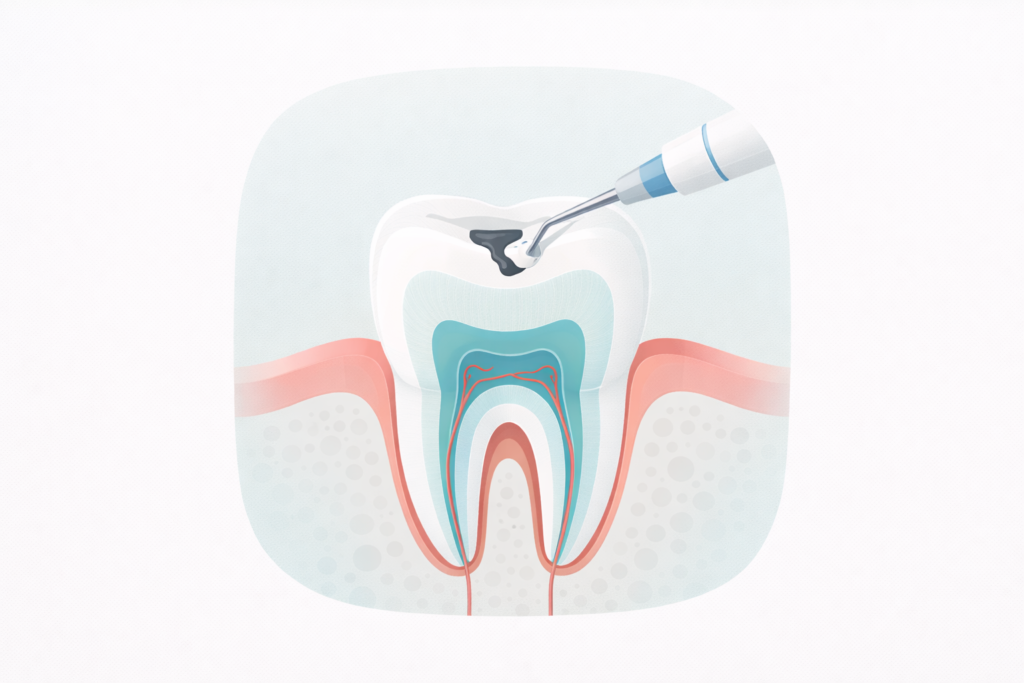
A dental filling is a restorative procedure where a dentist removes decayed or damaged tooth material and fills the cavity with a durable material to restore the tooth’s shape, strength, and function. Teeth filling in Dubai is one of the most commonly performed dental treatments. It is used to treat cavities caused by decay, repair chipped or cracked teeth, and replace old or broken fillings. Left untreated, a cavity continues to grow and can eventually destroy enough tooth structure to require a crown, root canal, or extraction. A filling is the simplest and most conservative way to protect the tooth while the damage is still manageable.

This field is for validation purposes and should be left unchanged.
What Is a Dental Filling

Signs You May Need a Dental Filling

Cavities rarely announce themselves loudly at first. These are the signs to watch for:

  • You feel sharp or lingering sensitivity when eating something hot, cold, or sweet.
  • You notice a visible hole, dark spot, or rough patch on the surface of a tooth.
  • Food gets consistently stuck in the same spot between or on top of a tooth.
  • You have a toothache that comes and goes, even without an obvious trigger.
  • Your dentist has identified early decay on an X-ray before it became visible or painful.
  • An old filling feels loose, cracked, or rough when you run your tongue over it.
  • You have chipped a tooth and exposed the inner layer of enamel or dentine.

Types of Dental Fillings Available at Smile On

Choosing the right filling material matters. Your dentist will recommend the best option based on where the cavity is, how large it is, and your preferences. Here is what is available:

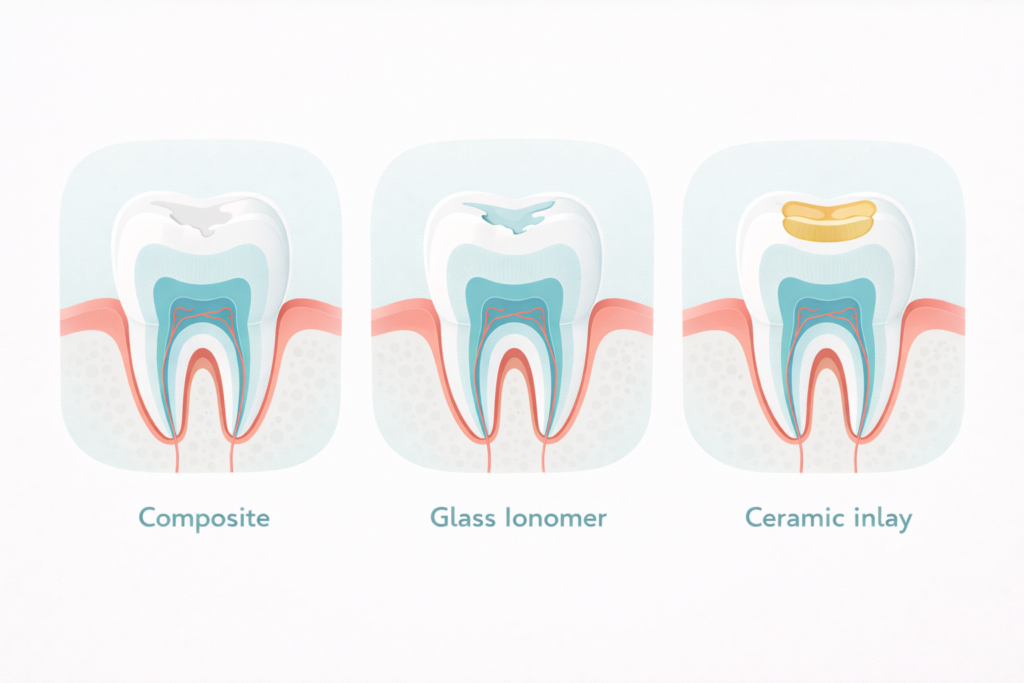
Composite (Tooth-Coloured) Fillings are the most widely used filling today. They are made from a blend of resin and glass particles, colour-matched to your natural tooth, and bond directly to the tooth surface. Composite fillings are suitable for both front and back teeth, preserve more of the natural tooth structure than older materials, and look completely natural. They typically last 7 to 10 years with good oral hygiene.

Glass Ionomer Fillings are a fluoride-releasing material often used for smaller cavities, particularly in children or in areas just below the gum line. They offer chemical bonding to the tooth and help protect against further decay but are less durable than composite for heavy chewing surfaces.

Ceramic Fillings (Inlays and Onlays) are lab-fabricated porcelain restorations used when a cavity is too large for a direct filling but not severe enough to need a full crown. They are highly durable, stain-resistant, and indistinguishable from natural enamel. They require two appointments and are priced higher than direct filling materials.

Your dentist will discuss the right material for your situation at your consultation. At Smile On Dental Clinic, composite fillings are the standard for most cavity treatments in Dubai.

Types of Fillings

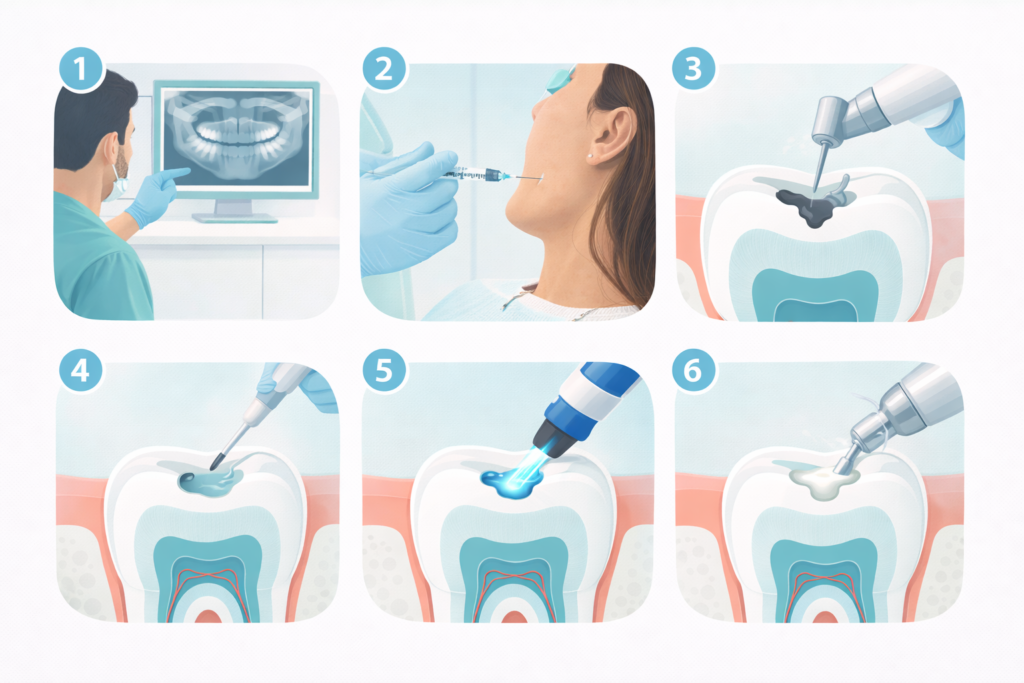
How Your Dental Filling Procedure Works at Smile On, Step by Step

  • Examination and X-Ray

    Your dentist examines the affected tooth and takes a digital X-ray to assess how deep the decay has gone and whether a filling is the right treatment. This step ensures nothing is missed and the correct approach is planned before any work begins.

  • Local Anaesthetic

    A local anaesthetic is applied to completely numb the tooth and surrounding tissue. You will feel pressure during the procedure but no pain. The team at Smile On checks that you are fully comfortable before moving to the next step.

  • Decay Removal

    Using a dental drill or laser, the dentist carefully removes all decayed tooth material from the cavity. Only the damaged portion is removed. The goal is to preserve as much healthy tooth structure as possible.

  • Tooth Preparation and Cleaning

    The cavity is thoroughly cleaned to remove any remaining bacteria or debris. A conditioning agent is applied to help the filling material bond properly to the tooth surface, creating a secure and lasting seal.

  • Filling Placement

    The composite material is applied in thin layers, each hardened using a curing light. This layering technique builds the filling precisely to the correct shape and ensures a strong bond throughout the restored area.

  • Shaping, Polishing and Bite Check

    Once the filling is set, your dentist shapes and polishes it to match the natural contour of your tooth. Your bite is checked to confirm the filling sits comfortably and evenly. Any minor adjustments are made before you leave.
Why Choose Smile On for Your Dental Filling in Duba

Cavity treatment near me, centrally located. Smile On Dental Clinic is based in Al Satwa, one of the most accessible parts of central Dubai. Whether you are a resident of nearby neighbourhoods or commuting from elsewhere in the city, we are easy to reach without travelling to high-cost areas.

Tooth-coloured fillings as standard. Smile On uses composite resin for direct fillings as the default, giving you a natural-looking result that blends with your existing teeth. There are no visible silver or metal fillings unless a clinical situation specifically requires otherwise.

All treatment in one clinic. If your examination reveals that the decay has progressed beyond what a filling can address, the relevant specialist is available within the same clinic. You will not be sent to another location for a root canal or crown.

Fair and transparent teeth filling charges. Dental filling cost in Dubai is confirmed before treatment begins. There are no surprise charges added after the appointment.

Insurance accepted. Smile On works with most major UAE health insurance providers. Many plans cover cavity treatment and basic restorations, which may reduce or eliminate your out-of-pocket cost.

How Your Dental Filling Procedure Works at Smile On, Step by Step

What Affects Dental Filling Cost in Dubai?

The dental cavity filling cost varies from patient to patient. These are the main factors:

Type of filling material. Composite is the most common and sits in the mid-range for cost. Ceramic inlays and onlays are more expensive because they are custom-fabricated in a dental lab.

Number of tooth surfaces affected. A cavity that affects one surface of a tooth costs less than one that has spread across two or three surfaces. Your dentist determines this from the X-ray before quoting.

Size and depth of the decay. A small, shallow cavity is quicker to restore than a large one that requires more material and technique. Deeper cavities close to the nerve may also need a protective liner before the filling is placed.

Insurance coverage. Many UAE dental insurance plans cover basic restorations fully or partially. Smile On works with most major providers. Check your policy or call your insurer before booking.

Whether X-rays are needed. If you arrive without recent X-rays, the diagnostic imaging is an additional step that affects the total appointment cost.

Book a consultation at Smile On Dental Clinic for a transparent, itemised quote before treatment begins.

What Our Patients Have to Say

Our Latest Blogs

  • All Posts
  • Dental
  • Dental Implants
  • Invisalign
  • PROSTHODONTICS
Load More

End of Content.

Book your dental filling in Dubai at Smile On Dental Clinic, Al Satwa.

Frequently Asked Questions About Dental Fillings in Dubai

Dental filling cost in Dubai varies depending on the type of material used, the size of the cavity, the number of surfaces affected, and whether your insurance covers restorations. Composite fillings in Dubai typically range from AED 250 to AED 600 per tooth. Ceramic inlays and onlays are priced higher due to the lab fabrication involved. Contact Smile On Dental Clinic for a clear, upfront teeth filling charge before your appointment.

No. The area is numbed with a local anaesthetic before any work begins, so you will feel nothing beyond light pressure or vibration. Most patients are surprised by how straightforward the procedure is. Any sensitivity after the appointment typically settles within a day or two. If discomfort persists beyond that, contact the clinic so your dentist can check the bite.

Composite fillings last approximately 7 to 10 years on average with good oral hygiene and regular checkups. Ceramic inlays and onlays can last 15 years or more. A filling’s lifespan depends on where it sits in the mouth, how large it is, your bite, and how well you maintain it. Your dentist will monitor your fillings at routine checkups and recommend replacement when needed.

After a composite filling, you can eat as soon as the local anaesthetic has worn off, usually within one to two hours. Avoid very hard, crunchy, or sticky foods for the first 24 hours while the filling fully settles. After that, there are no permanent dietary restrictions.

A cavity does not heal or stay the same size. It continues to grow deeper into the tooth, eventually reaching the pulp where the nerve sits. At that point the tooth requires root canal treatment or, in severe cases, extraction. A dental filling in Dubai performed at an early stage is significantly simpler, faster, and more affordable than any of those alternatives.

Affordability and quality are not mutually exclusive, but unusually low prices sometimes reflect shortcuts in materials or time. It is worth asking what material is being used, whether the decay is fully removed before filling, and what the clinic’s follow-up process is. At Smile On, the teeth filling charges reflect proper diagnostic procedures, quality composite material, and a thorough finish, not a rushed appointment.