Missing a tooth affects more than just your smile. It changes how you eat, how you speak, and often how you feel about yourself. If you’re researching tooth replacement options in Dubai, you’ve probably come across dental implants and wondered: are they really worth it? When do they actually make sense?
This guide will help you understand when dental implants are the smart choice, when they might not be, and how to make the decision that’s right for your situation.
What Are Dental Implants?
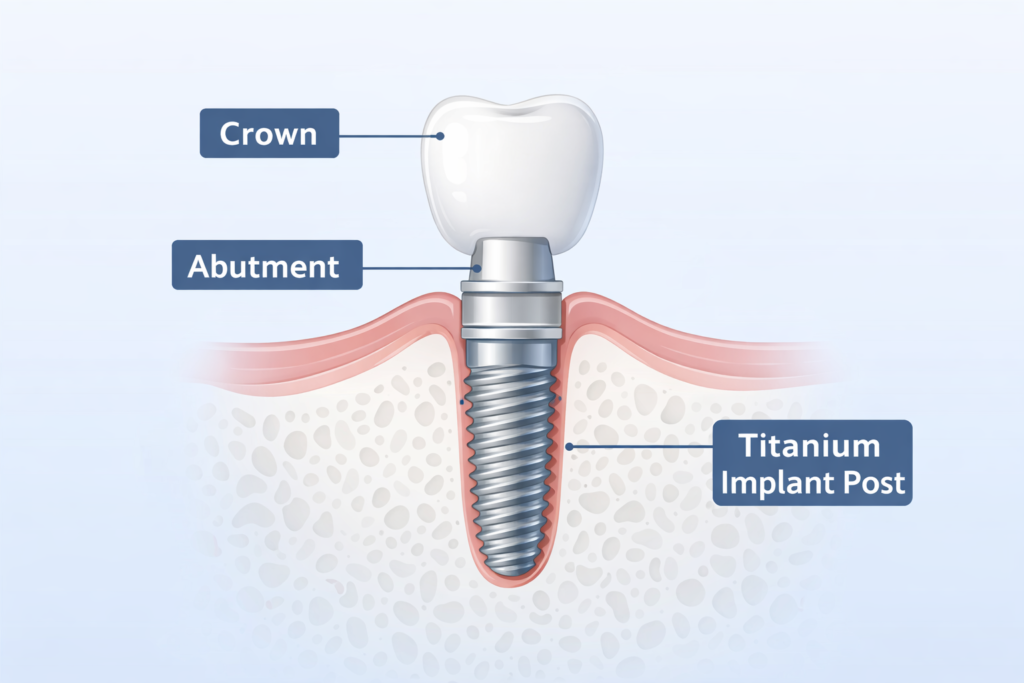
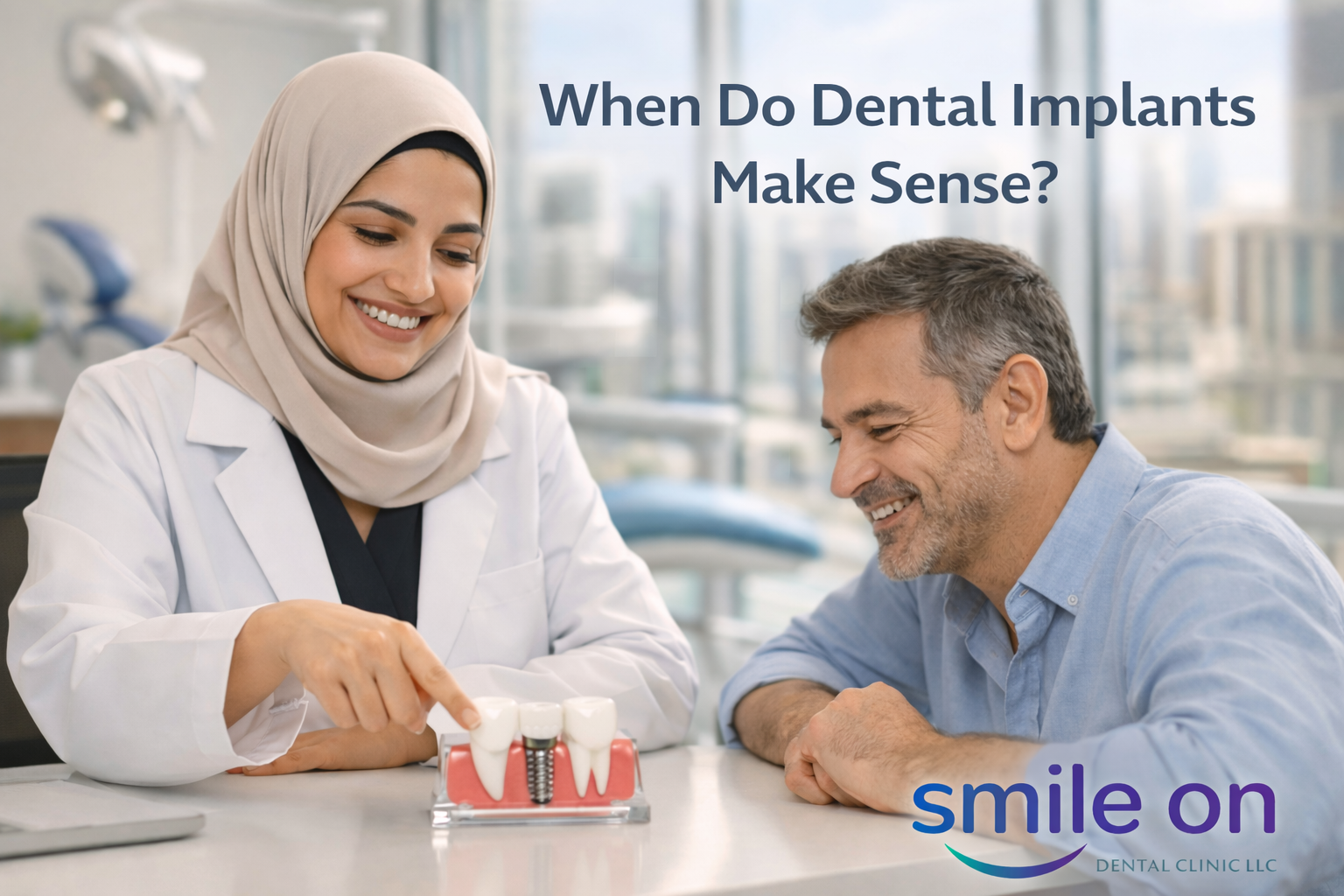
Dental implants are titanium posts surgically placed into your jawbone that act as artificial tooth roots. Unlike bridges or dentures that sit on top of your gums, implants anchor directly into the bone. Once the implant fuses with your jawbone (a process called osseointegration), a custom crown is attached to complete your new tooth.
The result looks, feels, and functions like a natural tooth. Most people won’t even notice you have an implant.
When Do Dental Implants Make the Most Sense?
1. You’ve Lost One or More Permanent Teeth
The most obvious scenario is when you’re missing teeth due to:
- Tooth decay that couldn’t be saved
- Gum disease that caused tooth loss
- Injury or accident
- Failed root canal
- Congenital absence (never developed certain teeth)
If you have a gap in your smile that’s affecting your daily life, implants are often the gold standard solution.
2. You Want to Protect Your Jawbone
Here’s something many people don’t realize: when you lose a tooth, the bone underneath starts to deteriorate. Without the stimulation that comes from chewing, your body begins to reabsorb that bone tissue.
Over time, this leads to:
- A sunken facial appearance
- Difficulty fitting dentures properly
- Shifting of remaining teeth
- Weakening of jaw structure
Dental implants stimulate the jawbone just like natural teeth do. This prevents bone loss and maintains your facial structure. If preserving your bone health is important to you, implants are the only tooth replacement option that does this.
3. You Don’t Want to Damage Healthy Teeth
Traditional dental bridges require grinding down the healthy teeth on either side of the gap. These supporting teeth are filed down to accommodate crowns, which permanently alters them.
Implants stand alone. They don’t rely on neighboring teeth for support, which means your other teeth remain untouched. If you want to preserve as much natural tooth structure as possible, implants make sense.
4. You’re Looking for a Long-Term Solution
If you want something that lasts, implants are hard to beat. With proper care, dental implants can last 20+ years, often a lifetime. The crown on top may need replacement after 10-15 years, but the implant itself typically stays put.
Compare this to:
- Dentures: Need replacement every 5-7 years
- Bridges: Last 7-15 years on average
When you factor in replacement costs over time, implants often become the most cost-effective option despite higher upfront costs.
5. You Want to Eat Normally Again
Dental implants restore about 80-90% of your natural chewing power. This means you can eat steak, apples, nuts, and other foods that might be difficult with dentures.
If you miss eating your favorite foods or find yourself avoiding social situations because of dietary restrictions, implants can bring that freedom back.
6. Your Dentures Don’t Fit Well Anymore
Many people who’ve worn dentures for years experience problems:
- Slipping and clicking when talking or eating
- Sore spots from friction
- Difficulty speaking clearly
- Embarrassment in social situations
Implant-supported dentures or individual implants can provide the stability dentures lack. If you’re frustrated with traditional dentures, switching to implants often makes sense.
7. You’re Tired of Daily Denture Maintenance
Removable dentures require:
- Taking them out every night
- Soaking in cleaning solution
- Dealing with adhesives
- Regular adjustments as your jaw changes
Implants are permanent. You brush and floss them just like natural teeth. If convenience matters to you, implants simplify your oral care routine significantly.
8. You Want the Most Natural-Looking Result
Modern dental implants are virtually indistinguishable from natural teeth. The crowns are custom-made to match the shape, size, and color of your existing teeth.
For front teeth or visible areas, implants typically provide the most aesthetically pleasing result. If appearance is a priority, implants usually deliver better outcomes than bridges or partial dentures.
When Might Implants NOT Make Sense?
Being realistic about when implants aren’t the best choice is just as important.
1. You Don’t Have Enough Jawbone
Dental implants need adequate bone to anchor properly. If you’ve had significant bone loss, you might need bone grafting first, which adds time and cost to the process.
In some cases where bone loss is severe, dentures or bridges might be more practical solutions.
2. You Have Certain Medical Conditions
Some health issues can affect implant success:
- Uncontrolled diabetes (impacts healing)
- Active cancer treatment
- Severe osteoporosis
- Autoimmune disorders affecting healing
- Heavy smoking (significantly reduces success rates)
This doesn’t mean implants are impossible, but you’ll need careful evaluation by your dentist. In some cases, addressing these conditions first or choosing alternative treatments makes more sense.
3. Budget Is a Major Constraint Right Now
Dental implants are an investment. In Dubai, a single implant typically ranges from AED 6,000 to AED 15,000, depending on the complexity and materials used.
If the upfront cost is prohibitive and financing isn’t an option, bridges or dentures might be more accessible starting points. Keep in mind that while cheaper initially, these options need replacement more frequently.
4. You’re Not Ready for Surgery
Dental implant placement is a surgical procedure. While typically straightforward with modern techniques, it does require:
- Local anesthesia or sedation
- Recovery time (usually a few days of discomfort)
- Multiple appointments over several months
- Willingness to follow post-op instructions
If the idea of surgery makes you very anxious or you can’t commit to the healing process, non-surgical options like bridges might suit you better.
5. You Need Immediate Results
The complete implant process takes 3-6 months on average. While same-day implants exist for certain cases, the standard timeline includes:
- Initial consultation and planning
- Implant placement surgery
- 3-4 months for osseointegration
- Crown placement
If you need a tooth replaced immediately for an upcoming event and can’t wait, a temporary bridge or denture might be more appropriate.
6. You’re Still Growing (Under 18-21)
Dental implants are generally not recommended for teenagers because their jaws are still developing. Placing an implant while bone growth is ongoing can lead to complications.
If you’re young and missing a tooth, your dentist might recommend waiting until your jaw is fully mature or using a temporary solution in the meantime.
How Do Implants Compare to Other Options?
Here’s a quick comparison to help you understand how implants stack up against bridges and dentures.
Dental Implants vs. Bridges
Implants Win When:
- You want to preserve adjacent healthy teeth
- Long-term value matters (implants last longer)
- Bone preservation is important
- You’re replacing one or two non-consecutive teeth
Bridges Win When:
- The teeth next to the gap already need crowns
- You want faster results (2-3 weeks vs. 3-6 months)
- Lower upfront cost is crucial
- You’re replacing 2-3 consecutive teeth
Dental Implants vs. Dentures
Implants Win When:
- You want something permanent and stable
- Natural chewing ability is important
- You’re replacing several individual teeth in different areas
- Daily removal and maintenance sounds unappealing
Dentures Win When:
- You’ve lost most or all teeth in an arch
- Budget is very limited
- You prefer non-surgical options
- You have significant bone loss that makes implants impractical
Implant-Supported Dentures: The Middle Ground
For people missing all teeth in an arch, implant-supported dentures offer a hybrid solution. A few implants (typically 4-6) anchor a denture securely in place. This provides:
- Stability dentures alone can’t match
- Lower cost than individual implants for every tooth
- No daily removal needed
- Better chewing function than traditional dentures
If you’re facing full-arch replacement, this option often makes sense as a balance between performance and cost.
How to Decide: A Simple Framework
Ask yourself these questions:
1. What’s my primary concern?
- Appearance → Implants usually best
- Cost → Compare long-term value
- Speed → Bridges/dentures faster initially
- Function → Implants perform most like natural teeth
2. What’s my health status?
- Good health, non-smoker → Implants likely suitable
- Health conditions or heavy smoker → Need careful evaluation
3. What’s my timeline?
- Can wait 3-6 months → Implants feasible
- Need immediate solution → Temporary bridge or denture first
4. What’s my budget?
- Can invest upfront → Implants often best long-term value
- Limited now → Bridges or dentures, possibly with plans to upgrade later
5. What’s my comfort with surgery?
- Comfortable with minor surgery → Implants fine
- Surgery anxiety → Non-surgical alternatives worth considering
What Does the Implant Process Look Like?
Understanding what’s involved helps you decide if it makes sense for your life right now.
Step 1: Initial Consultation (Week 1)
Your dentist examines your mouth, takes X-rays or 3D scans, and reviews your medical history. You’ll discuss your goals and get a personalized treatment plan.
Step 2: Implant Placement (Week 2-4)
Under local anesthesia, the titanium post is placed in your jawbone. Most patients report minimal discomfort, manageable with over-the-counter pain medication. You might receive a temporary tooth while healing.
Step 3: Healing Period (Months 2-4)
The implant fuses with your bone. You’ll have check-ups to monitor progress, but this phase requires little from you except patience and good oral hygiene.
Step 4: Abutment and Crown Placement (Month 4-6)
Once healing is complete, an abutment (connecting piece) is attached to the implant. Your dentist takes impressions for a custom crown, which is then placed in a final appointment.
Step 5: Follow-Up Care
Regular dental check-ups and good home care keep your implant healthy for decades.
Cost Considerations in Dubai
Dental implant costs in Dubai vary based on several factors:
Pricing Ranges:
- Single tooth implant: AED 6,000 – 15,000
- Implant-supported crown: Additional AED 2,000 – 5,000
- Full arch (All-on-4): AED 35,000 – 70,000
What Affects the Price:
- Implant brand and quality (European/American brands cost more)
- Need for bone grafting or sinus lifts
- Complexity of your case
- Dentist’s experience and specialization
- Clinic location and amenities
- Materials used for the crown
Many Dubai dental clinics offer payment plans. Ask about financing options during your consultation.
Common Questions About Dental Implants
Are dental implants painful?
The procedure itself isn’t painful thanks to anesthesia. Most people describe post-surgery discomfort as similar to a tooth extraction – manageable with normal painkillers for a few days.
What’s the success rate?
Dental implants have a success rate above 95% when placed by experienced dentists in suitable candidates. Proper oral hygiene and regular check-ups keep success rates high.
Can I get an implant years after losing a tooth?
Often yes, but bone loss over time might require grafting first. The sooner you replace a missing tooth, the simpler the process typically is.
Do implants feel like real teeth?
After the initial adjustment period, most people forget they have an implant. They function and feel like natural teeth.
What if my implant fails?
While rare, failures do happen (usually in the first year). Most dentists will replace a failed implant at no additional cost if it fails during the healing phase.
Can I eat normally with implants?
Yes. Once fully healed, you can eat virtually anything you could eat with natural teeth.
How do I care for dental implants?
Brush twice daily, floss daily, and see your dentist regularly. It’s the same care routine as natural teeth. Implants can’t get cavities, but the gum tissue around them needs to stay healthy.
Making Your Decision
Dental implants make sense for many people, but not everyone. The best choice depends on your specific situation – your health, budget, timeline, and what matters most to you in a tooth replacement.
If you’re seriously considering implants:
- Get a professional evaluation from an experienced implant dentist
- Ask specific questions about your candidacy and any potential challenges
- Request a detailed treatment plan with costs
- Consider getting a second opinion for complex cases
- Think about your priorities – is it appearance, function, longevity, or cost?
If you’re still unsure:
It’s okay to take time with this decision. Start with a consultation. A good dentist will give you honest advice about whether implants make sense for you, even if the answer is “not right now” or “another option might suit you better.”
At Smile On DC, we believe in helping you make informed decisions. Whether implants are right for you or another solution makes more sense, our goal is to give you back your confidence and quality of life.
Schedule Your Consultation
Ready to find out if dental implants are the right choice for your situation? Book a consultation with our experienced team at Smile On DC in Satwa, Dubai.
We’ll evaluate your specific case, discuss all your options, and create a personalized plan that fits your needs and budget.
Contact Smile On DC:
- Phone: 04 3472102
- Location: Satwa, Dubai
- Book Online: https://smileondc.com/make-appointment/
Your smile matters. Let’s find the solution that works for you.
About Smile On DC
This guide was created by the dental team at Smile On DC, a patient-focused dental practice in Satwa, Dubai. We specialize in cosmetic, preventive, and restorative dentistry, including dental implants.
Our mission is to provide honest, patient-centered care that helps you make informed decisions about your oral health. We believe in transparency, education, and treating every patient with the respect and attention they deserve.