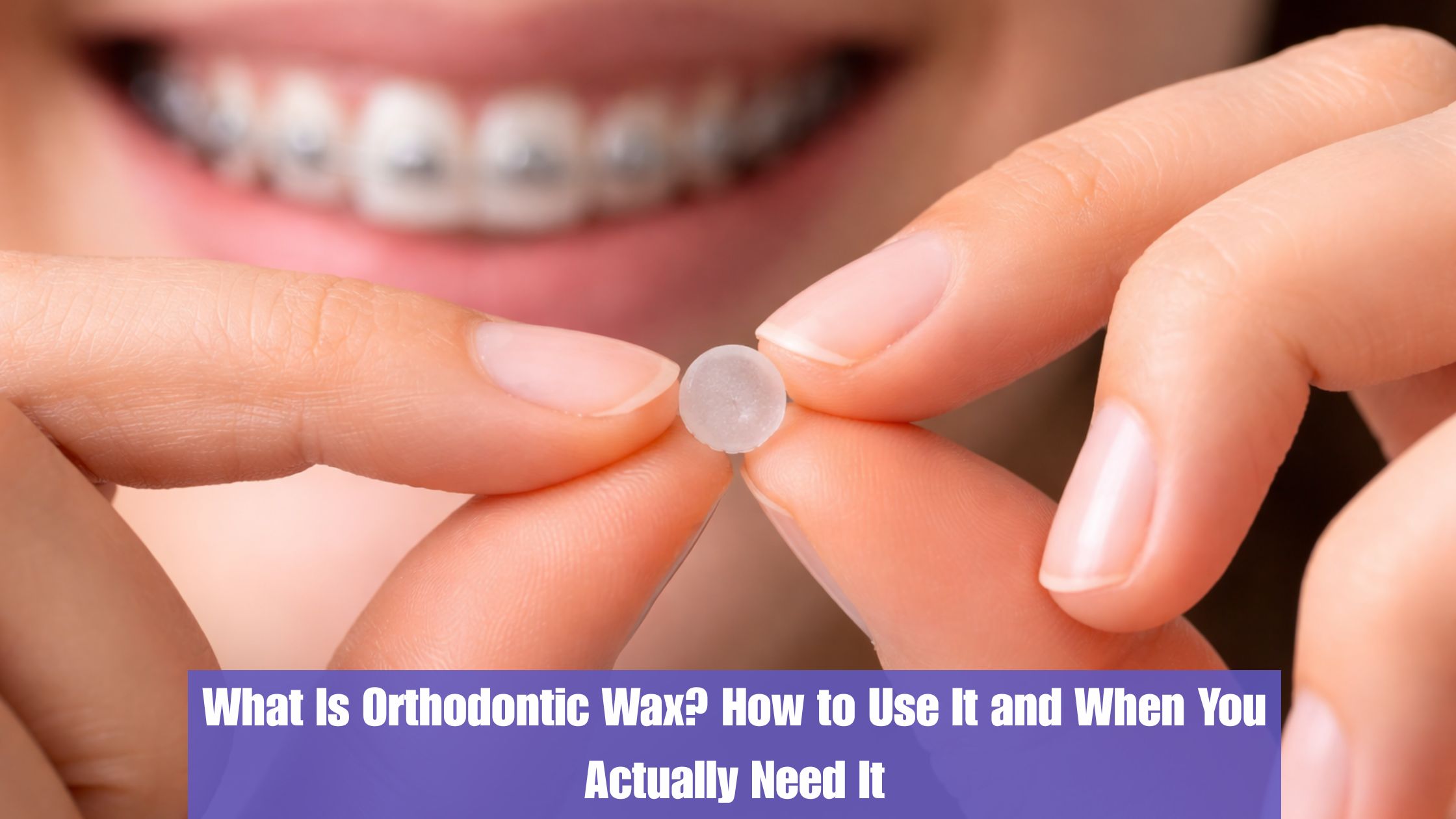
If you just got braces and your cheeks are already paying the price, orthodontic wax is probably the first thing your orthodontist handed you on the way out. But most patients leave the clinic unsure of exactly what it is, when to use it, and whether they are applying it correctly.
This guide answers all of it. You will learn what orthodontic wax is made from, how to apply it properly, when it genuinely helps, and just as importantly, when the wax is not the solution, and you need to call your orthodontist instead.
What Is Orthodontic Wax?
Orthodontic wax, also called braces wax or dental wax, is a soft, non-toxic material designed to create a smooth barrier between your braces and the soft tissue inside your mouth. It covers the brackets, wires, or any protruding parts that are rubbing against your cheeks, lips, or gums and causing irritation.
The wax is solid at room temperature but softens quickly from the warmth of your fingers, making it easy to mould and press into place. Once applied, it sits over the problem area like a small cushion, stopping the friction that causes soreness and giving any existing cuts or ulcers time to heal without being constantly aggravated.
Most orthodontic waxes are made from one or more of the following materials:
- Beeswax — a natural, traditional option that has been used in dental care for decades
- Carnauba wax — plant-derived, known for good adherence and a slightly firmer texture
- Paraffin wax — petroleum-derived, the most commonly used base in modern orthodontic wax products
- Microcrystalline wax — a refined petroleum derivative that is more flexible and moisture-resistant than standard paraffin
All of these are non-toxic and safe to have in your mouth. If a small piece dislodges while you are sleeping or talking, there is no cause for concern. The Canadian Association of Orthodontists confirms that accidentally swallowing a small amount of orthodontic wax does not pose any health risk.
Some wax products include added flavouring such as mint or cinnamon, which many patients find more pleasant to use. Unflavoured versions are just as effective and are the better choice for anyone with sensitivities.
Why the First Two Weeks of Braces Are the Hardest
Understanding why orthodontic wax is needed most at the start of treatment helps you use it more strategically.
When braces are first placed, the inside of your cheeks and lips has not yet developed any tolerance to the metal brackets and wires. The soft tissue in your mouth is relatively delicate, and anything with a hard edge pressed against it repeatedly causes friction, irritation, and eventually small sores.
Within one to two weeks, most patients find that their mouth adapts naturally. The tissue toughens slightly, your tongue and cheeks learn to position themselves away from the hardware, and the discomfort becomes far less noticeable. Until that happens, orthodontic wax bridges the gap.
The same thing occurs after every tightening appointment. Your orthodontist adjusts the wire tension, which temporarily increases pressure on certain teeth. The surrounding tissue, which had adjusted to the previous wire position, now needs to readjust again. Wax during the 48 to 72 hours after each adjustment appointment is not just useful, it is worth doing proactively rather than waiting for soreness to develop.
How to Apply Orthodontic Wax Correctly
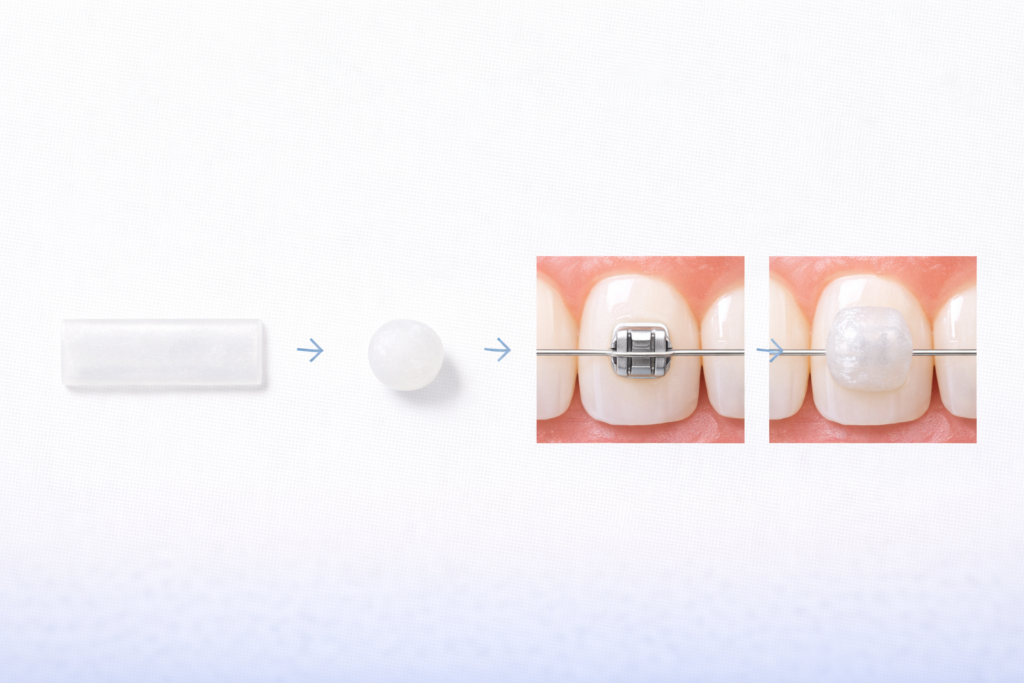
Applying wax incorrectly is the most common reason patients find it does not stay in place or does not provide much relief. Here is the correct process.
Step 1 — Wash your hands. Before touching anything that goes in your mouth, wash your hands thoroughly with soap and water. Braces create hard-to-clean areas where bacteria accumulate. You do not want to introduce more through your fingertips.
Step 2 — Brush your teeth. Clean your braces before applying wax. Food particles trapped between the wax and your brackets create an environment for bacterial growth. A clean surface also helps the wax adhere better.
Step 3 — Dry the problem area. This step is where most patients go wrong. Wax does not stick well to a wet surface. Use a tissue or a small piece of gauze to pat the bracket or wire dry before applying. The drier the surface, the longer the wax will hold.
Step 4 — Pinch off a pea-sized amount. You need less wax than you think. A piece roughly the size of a pea is enough for one bracket. Roll it between your fingers for five seconds to warm it up and make it pliable.
Step 5 — Press it firmly over the problem area. Apply the ball of wax directly over the bracket or wire irritating. Press it down with your finger and smooth the edges so it covers the sharp area completely. You can use your tongue to check that it sits flat and does not have any rough edges sticking up.
Step 6 — Replace it regularly. Do not leave the same piece of wax in place for more than 24 to 48 hours. Old wax traps food and bacteria, which increases the risk of plaque buildup and bad breath. Always remove wax before eating and apply a fresh piece afterwards if needed.
When to Use Orthodontic Wax: The Main Situations
Wax is a reactive tool for most patients, but using it proactively in the right situations makes the whole braces experience more manageable.
After getting braces fitted. The first week is when wax use will be highest. Your mouth is adjusting to a completely new set of hardware, and virtually every bracket is a potential irritation point. Carry wax with you at all times during this period.
After every tightening appointment. Wire adjustments change the tension across your braces. The 48 to 72 hours following an adjustment are typically the most uncomfortable. Apply wax to any areas that feel sharper than usual before the discomfort develops rather than after.
When a wire end is poking. Wires can shift slightly or the end of a wire can start to protrude as teeth move. If a wire end is catching your cheek, apply wax over it immediately as a temporary fix. Then contact your orthodontist to have it trimmed or repositioned. Wax is not a long-term solution here; it is buying you time until the clinic can fix it properly.
For musicians. Patients who play wind instruments often find that braces interfere with embouchure and cause friction against the lips. Wax on the front brackets significantly reduces this, allowing continued practice during treatment. This is a well-documented comfort strategy in orthodontic circles.
Before special events. If you have a presentation, interview, wedding, or any event where comfort and confidence matter, applying wax to the most irritating brackets beforehand is a simple precaution.
For Invisalign patients with attachments. Orthodontic wax is not exclusive to metal brace wearers. Invisalign patients who have attachments, small tooth-coloured composite bumps bonded to teeth to help the aligners grip, can experience irritation from these as well. Wax can be applied to the attachments themselves for relief. Ensure the area is thoroughly dry before application, as the smooth surface of the composite makes adherence harder than on a metal bracket.
Wax vs Silicone Orthodontic Guards: Which Is Better?
Orthodontic wax is the default recommendation because it is inexpensive, widely available, and easy to use. But silicone orthodontic guards, sometimes sold under product names like OrthoDots, are a reusable alternative worth knowing about.
Silicone guards are pre-formed cushions made from medical-grade silicone rather than wax. They adhere through suction rather than adhesion, which means they are easier to remove cleanly and can be rinsed and reused. They tend to last longer in place than wax and leave less residue on brackets. The trade-off is that they cost more, come in fixed sizes that may not suit every bracket configuration, and are less commonly available in pharmacies across Dubai.
For most braces patients, especially in the early weeks of treatment, standard orthodontic wax is the more practical choice. Silicone guards are worth considering for patients who find wax consistently inconvenient or who have persistent irritation from a specific bracket over a long period.
When Wax Is Not Enough: Call Your Orthodontist
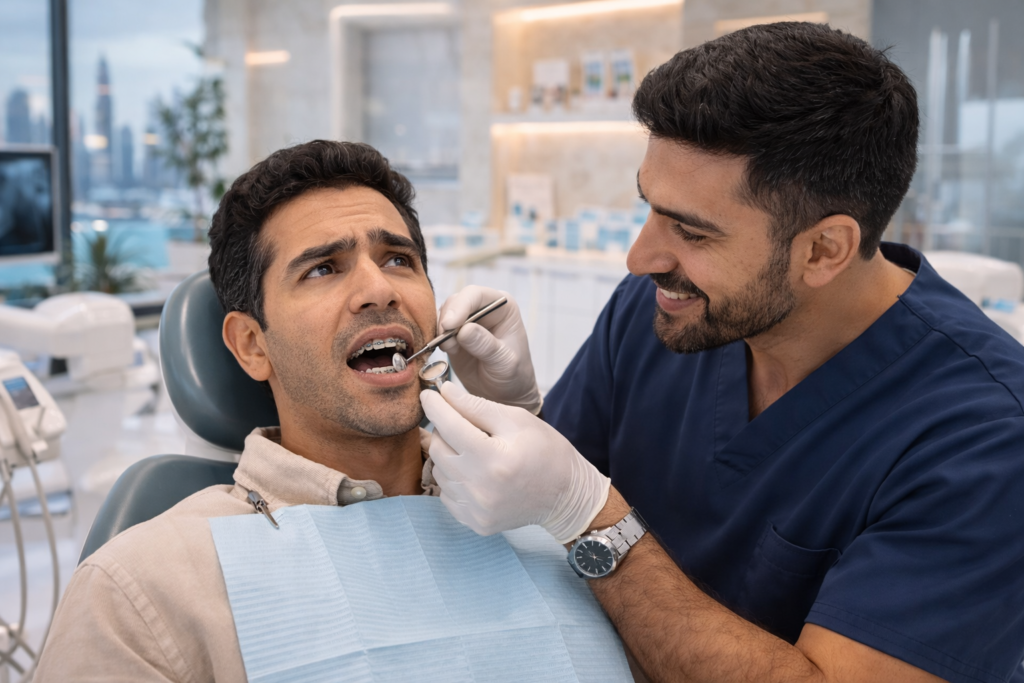
Orthodontic wax is a comfort aid, not a treatment. There are several situations where applying more wax is the wrong response and you need to contact your orthodontist instead.
A wire is visibly poking and cannot be covered comfortably. Wax can cover a protruding wire end temporarily, but if the wire has shifted significantly or snapped, your orthodontist needs to assess and fix it. Trying to bend or cut a wire yourself risks damaging your braces or injuring your mouth.
A bracket has come loose or fallen off. A detached bracket means that tooth is no longer being guided by the treatment. Placing wax over it might reduce the irritation, but it does not keep your treatment on track. Contact the clinic to schedule a repair appointment.
Soreness lasts more than five days after an adjustment. Some discomfort after tightening is normal. If it persists beyond five days or gets worse rather than better, something may need adjusting. Do not assume it will resolve on its own.
Sores are not healing. If an ulcer or cut has been in the same spot for more than a week and wax has not allowed it to heal, there is likely a recurring mechanical cause that the wax alone is not addressing. Your orthodontist can identify whether a wire trim or bracket adjustment will fix it.
At Smile On Dental Clinic in Al Satwa, Dubai, our orthodontic team provides patients with wax and a care guide when braces are fitted, and our team is available for emergency appointments when hardware issues arise during treatment.
Where to Get Orthodontic Wax in Dubai
Most orthodontic clinics in Dubai, including Smile On Dental Clinic, provide patients with a starter supply of wax when braces are first placed. If you run out, you can find orthodontic wax at major pharmacies across Dubai, including Boots, Life Pharmacy, and most hospital pharmacies. It is typically stocked alongside dental care products. Online delivery options through platforms like Noon and Amazon.ae are available for those who prefer to order from home.
Orthodontic wax is inexpensive. A multi-pack is generally available for under AED 25 and will last several weeks with regular use.
Key Takeaways
- Orthodontic wax is a non-toxic, soft material placed over brackets or wires to stop them rubbing against the inside of your mouth.
- It is made from natural or petroleum-derived wax — beeswax, carnauba, and paraffin are the most common types.
- Use it proactively after getting braces fitted and after every tightening appointment, not just once pain has already started.
- Dry the bracket area thoroughly before applying for better adhesion. A pea-sized amount of wax per bracket is sufficient.
- Replace wax every 24 to 48 hours. Remove it before eating. Do not reuse old pieces.
- Invisalign patients with attachments can also use wax for relief on attachment points.
- Wax is a temporary comfort measure. Contact your orthodontist if a bracket is loose, a wire has shifted significantly, or soreness does not improve within five days.
Book an Orthodontic Consultation at Smile On Dental Clinic
If you are considering braces or Invisalign, or if you have recently started orthodontic treatment and are experiencing persistent discomfort that wax is not resolving, our team at Smile On Dental Clinic in Al Satwa, Dubai is here to help. Our DHA-licensed orthodontists treat patients of all ages across Dubai and Jumeirah, with metal braces, ceramic braces, lingual braces, Damon braces, and Invisalign available under one roof. Book a consultation and we will assess your situation, walk you through your options, and make sure your treatment is as comfortable as possible from day one.
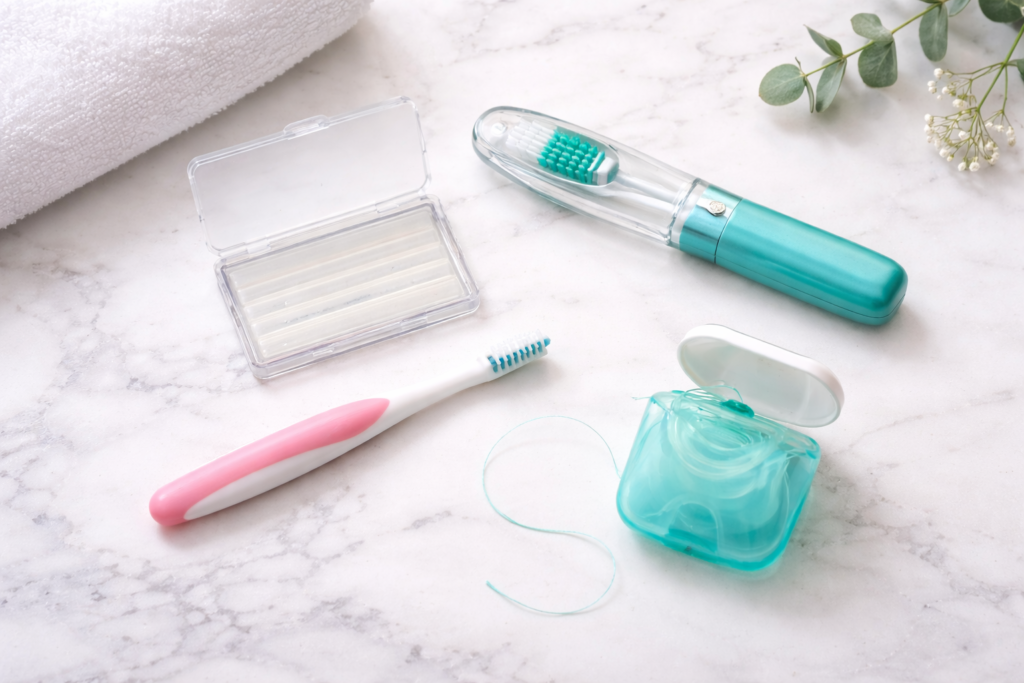
Frequently Asked Questions About Orthodontic Wax
Is orthodontic wax safe to swallow?
Yes. All orthodontic wax products used in dental care are non-toxic and safe if accidentally swallowed in small amounts. The material passes through the digestive system without causing any harm. That said, it is not meant to be eaten deliberately, and you should replace any wax that has been dislodged or chewed.
Can I sleep with orthodontic wax on?
Yes, and for many patients this is when wax is most helpful. Sharp brackets can cause cuts during sleep simply from the way your face rests on a pillow. Apply fresh wax before bed and replace it in the morning after brushing. Make sure the piece is securely pressed on before you sleep so it does not dislodge and become a choking risk.
How long should I keep orthodontic wax on?
Replace it at least once a day, and always remove it before eating. The maximum time you should leave the same piece of wax in place is 48 hours. After that, it will have accumulated enough bacteria and food particles to become counterproductive to your oral hygiene.
Does orthodontic wax work with Invisalign?
Yes, though the application is slightly different. Invisalign aligners themselves are smooth, but the composite attachments bonded to your teeth can cause irritation. Apply a small amount of wax directly to the attachment causing the problem. Ensure the area is dry before applying, as composite surfaces are smoother and less grippy than metal brackets.
My wax keeps falling off — what am I doing wrong?
In almost every case, the issue is moisture. If the bracket area is wet with saliva, the wax will not adhere. Use a tissue to dry the area thoroughly before applying. Also check that you are using enough wax — a piece smaller than a pea often will not cover the bracket fully and is more likely to fall off. Press firmly and smooth the edges when applying.
Is orthodontic wax available in Dubai pharmacies?
Yes. It is widely available at Life Pharmacy, Boots, and most hospital-based pharmacies across Dubai. Your orthodontist will also provide a supply when your braces are first fitted. If you are a patient at Smile On Dental Clinic, ask our team for an extra supply at any of your adjustment appointments and we will be happy to provide it.