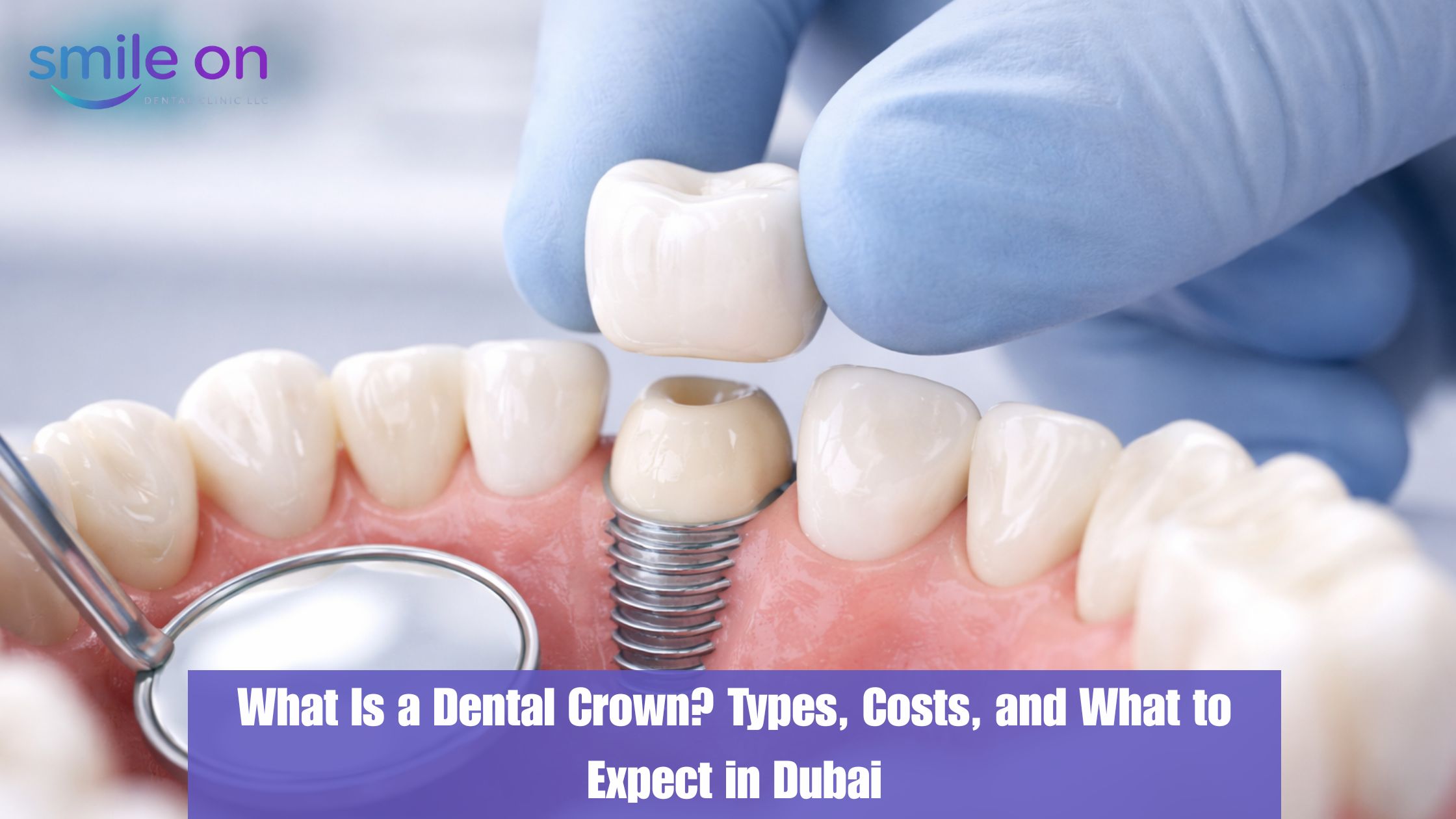
A dental crown is a tooth-shaped cap that fits over a damaged, weakened, or decayed tooth to restore its shape, strength, and appearance. Once cemented in place, it covers the entire visible portion of the tooth above the gum line and functions just like a natural tooth.
If your dentist in Dubai has recommended a crown, or you are trying to understand whether you need one, this guide covers everything. You will learn how crowns work, what types are available, what the procedure involves, how much it costs in the UAE, and how long you can expect one to last
Why Would You Need a Dental Crown?
A crown becomes necessary when a tooth is too damaged for a filling to do the job, but extraction is not yet required. There are several clinical situations where a crown is the right call.
Severely decayed teeth. When a cavity takes up too much of the tooth’s structure, a filling alone cannot restore its integrity. A crown covers and protects what remains.
Cracked or fractured teeth. A cracked tooth is unpredictable. It may feel fine now but split further with normal chewing. A crown holds the tooth together and prevents the crack from spreading.
After root canal treatment. A tooth that has had a root canal becomes brittle over time. A crown placed over it provides the structural protection it needs to survive long-term. Without one, the tooth is at high risk of fracturing.
Worn-down teeth. Teeth grinding (bruxism) or acid erosion can wear teeth down significantly. Crowns rebuild lost tooth structure and restore a proper bite.
Broken cusps. A large piece of tooth breaking off, whether from biting down on something hard or an old failing filling giving way, typically requires a crown rather than a patch repair.
Supporting a dental bridge. Crowns anchor both ends of a dental bridge, which replaces one or more missing teeth. The neighbouring teeth receive crowns to hold the bridge firmly in place.
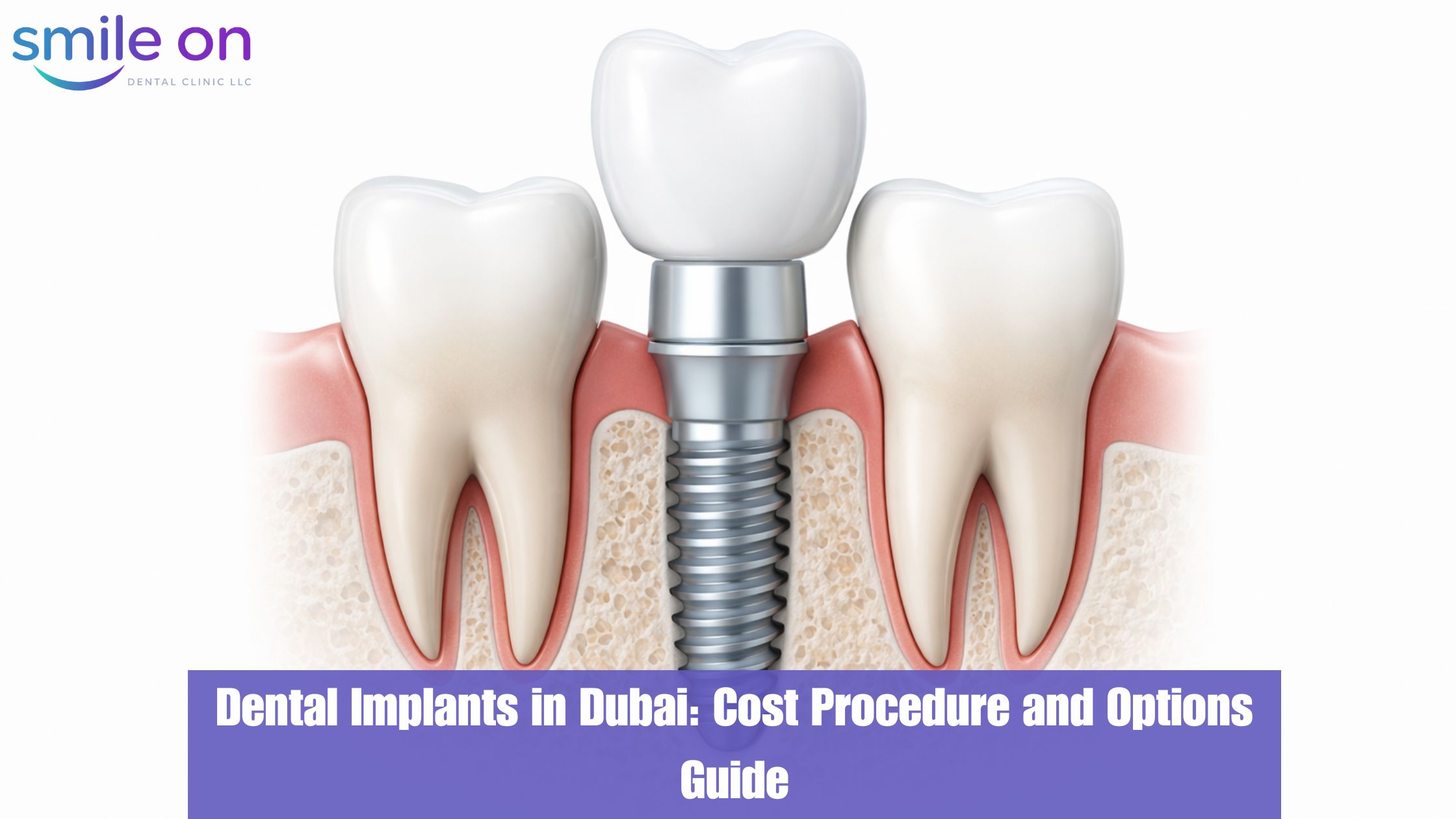
Covering a dental implant. After a dental implant is placed and has integrated with the jawbone, a crown is attached on top to act as the visible, functional tooth.
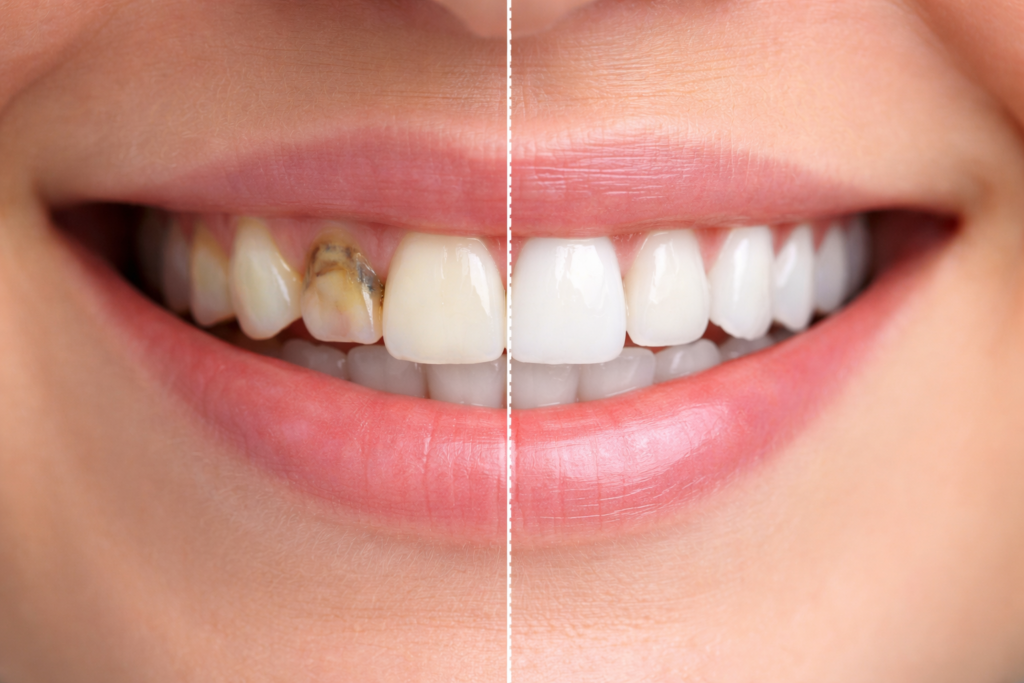
Crowns are also used in cosmetic cases, to reshape a malformed tooth, cover severe discolouration that whitening cannot fix, or as part of a full smile makeover. That said, purely cosmetic use is less common than restorative use.
Types of Dental Crowns
Not all crowns are made from the same material, and the right choice depends on where the tooth sits in your mouth, your aesthetic preferences, and your budget. Here is what is available at dental clinics in Dubai.
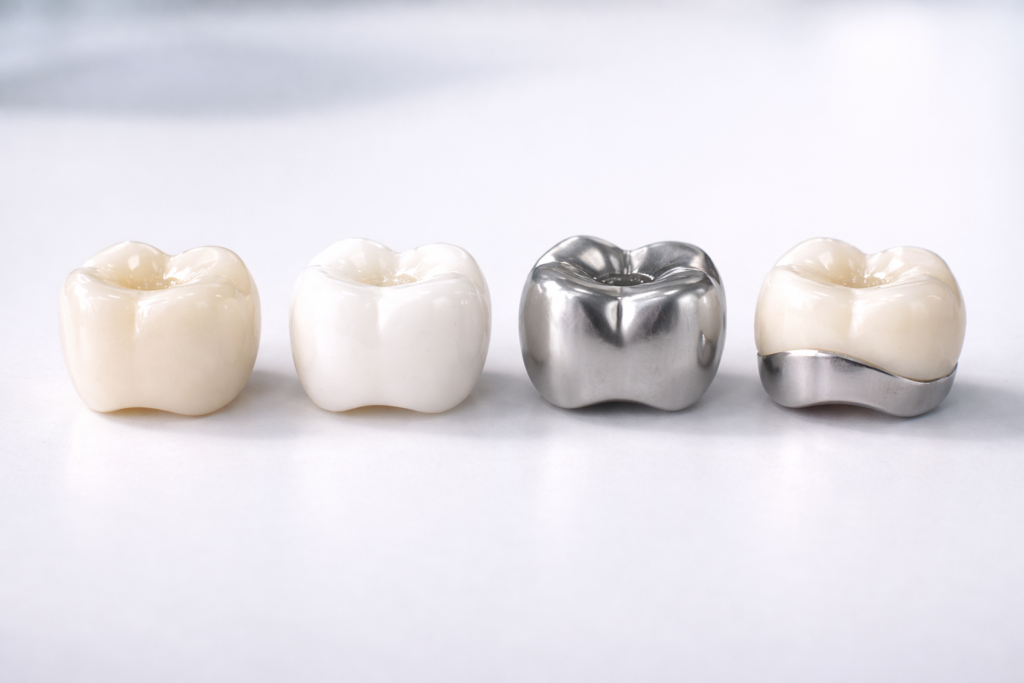
Porcelain crowns (all-ceramic) Porcelain crowns are the most natural-looking option. They match the colour, translucency, and texture of real teeth closely enough that most people cannot tell the difference. They are the standard choice for front teeth where appearance matters most. The trade-off is that they are slightly less durable than metal-based options and can chip if subjected to heavy biting force.
Zirconia crowns Zirconia has become the dominant crown material in modern dentistry, and for good reason. It combines the strength of metal with the aesthetics of ceramic. Zirconia crowns are exceptionally durable, biocompatible, and tooth-coloured. They work well for both front and back teeth. In Dubai, zirconia crowns are the most commonly recommended option for patients who want longevity without compromising on appearance.
Porcelain-fused-to-metal (PFM) crowns PFM crowns have a metal substructure with a porcelain coating on the outside. They were the standard for many years before zirconia became widely available. They are strong and look reasonably natural, but over time the porcelain can chip, and a dark line may appear at the gum line as the gum recedes slightly. They remain a cost-effective option in many cases.
Metal crowns (gold or alloy) Pure metal crowns, typically gold or a base metal alloy, are the most durable option available. They rarely chip, require minimal removal of tooth structure, and last for decades. The obvious drawback is aesthetics. Most patients opt for metal crowns only on back molars where they are not visible during normal conversation or smiling.
E-max (lithium disilicate) crowns E-max crowns are pressed ceramic crowns known for their strength and exceptional aesthetics. They sit between standard porcelain and zirconia in terms of durability and are a popular choice for front teeth restorations where both appearance and strength matter.
The Dental Crown Procedure: Step by Step
Getting a dental crown in Dubai typically takes two appointments, though same-day crowns are possible at clinics with in-house milling technology.
First appointment: preparation and impressions
Your dentist will numb the area with a local anaesthetic. The tooth is then filed down on all sides to create space for the crown to sit over it. How much tooth is removed depends on the crown material. Metal crowns require less reduction than ceramic ones.
Once the tooth is shaped, an impression is taken. This can be a physical mould using dental putty or a digital scan using an intraoral camera. The impression is sent to a dental laboratory where your permanent crown is fabricated. This process typically takes 7 to 14 days.
A temporary crown is fitted to protect the prepared tooth while you wait. Temporary crowns are made from acrylic or composite and are not as strong as the final restoration, so avoid sticky or hard foods during this period.
Second appointment: fitting the permanent crown
When the permanent crown arrives, the temporary is removed. Your dentist will check the fit, the bite, and the shade match before cementing it permanently. Minor adjustments can be made chairside. Once you are both satisfied with the result, the crown is bonded into place with dental cement.
The entire second appointment usually takes 30 to 45 minutes. You may experience some sensitivity for a few days afterwards, particularly to temperature, but this settles as the tooth adjusts.
How Much Does a Dental Crown Cost in Dubai?
Dental crown cost in the UAE varies based on the material used, the complexity of the case, and the clinic. At most dental clinics in Dubai, you can expect the following approximate ranges:
| Crown Type | Approximate Cost (AED) |
|---|---|
| Porcelain / all-ceramic | 1,200 – 2,000 |
| Zirconia | 1,500 – 2,500 |
| Porcelain-fused-to-metal | 900 – 1,600 |
| Metal (gold or alloy) | 1,200 – 2,000 |
| E-max (lithium disilicate) | 1,500 – 2,500 |
These are indicative ranges. The final cost depends on whether a root canal is needed beforehand, how much tooth structure remains, and whether additional procedures such as a core build-up are required before the crown can be placed. A consultation and X-ray at the clinic will give you an accurate quote for your specific situation.
Many dental insurance plans in the UAE cover crowns partially or fully when they are placed for restorative reasons rather than purely cosmetic ones. It is worth checking your policy before your appointment.
How Long Do Dental Crowns Last?
With proper care, a well-made dental crown lasts between 10 and 15 years. Zirconia and metal crowns often exceed this, with many lasting 20 years or more. Porcelain crowns have a slightly shorter lifespan due to their susceptibility to chipping under heavy force.
The factors that most affect crown longevity are:
- Teeth grinding (bruxism). Patients who grind their teeth at night put significantly more stress on crowns. A night guard is strongly recommended if this applies to you.
- Oral hygiene at the crown margin. The junction between the crown and the gum line is vulnerable to decay. Brushing and flossing around the crown properly is essential.
- Biting habits. Chewing ice, opening packaging with your teeth, or biting your nails accelerates wear on any dental restoration.
Key Takeaways
- A dental crown is a cap placed over a damaged tooth to restore its shape, strength, and function.
- Crowns are recommended after root canal treatment, for severely decayed or cracked teeth, and to anchor dental bridges or implant restorations.
- Zirconia and porcelain are the most popular crown materials in Dubai. Zirconia offers superior strength, while porcelain delivers the most natural appearance.
- The procedure takes two appointments and is carried out under local anaesthetic.
- Dental crown cost in the UAE typically ranges from AED 900 to AED 2,500 depending on material and case complexity.
- With good oral hygiene and no teeth grinding, a dental crown can last 10 to 20 years.
Book Your Dental Crown Consultation at Smile On Dental Clinic

If you have a damaged, cracked, or heavily restored tooth, a dental crown could be the most reliable way to protect it long-term. At Smile On Dental Clinic in Al Satwa, Dubai, our team uses high-quality zirconia and ceramic crowns with precision fitting to ensure both durability and a natural appearance.
Our clinic is DHA-licensed, and our team has extensive experience in crown and bridge restorations for patients across Dubai, Jumeirah, and the wider UAE. Book your consultation today and we will assess your tooth, discuss your options, and give you a clear cost estimate before any treatment begins.
Frequently Asked Questions About Dental Crowns
Is getting a dental crown painful?
The procedure itself is not painful. Your dentist will administer a local anaesthetic before any work begins, so you will feel pressure but no pain. After the appointment, some sensitivity to hot and cold is normal for a few days. Over-the-counter pain relief is usually enough to manage any discomfort.
Can a crowned tooth still get a cavity?
The crown itself cannot decay, but the tooth underneath can. Decay typically starts at the margin where the crown meets the gum line. This is why brushing and flossing around the crown is just as important as caring for your natural teeth.
Do I need a crown after every root canal?
Not always, but in most cases, yes. A tooth that has undergone root canal treatment loses moisture over time and becomes brittle. A crown protects it from fracturing under the force of normal chewing. Your dentist will assess the amount of remaining tooth structure and advise whether a crown is necessary.
What is the difference between a dental crown and a dental bridge?
A crown restores a single damaged tooth. A dental bridge replaces a missing tooth by spanning the gap. Crowns are placed on the teeth on either side of the gap, and an artificial tooth called a pontic is suspended between them. If you are missing a tooth and want to understand your options, our team can walk you through crowns, bridges, and implants at your consultation.
How do I know if I need a crown or just a filling?
Generally, if decay or damage affects less than half the tooth’s structure, a filling is sufficient. If more than half the tooth is affected, or if the tooth is cracked, a crown is the more reliable long-term solution. Your dentist will assess this with an examination and X-rays.
Can a dental crown fall off?
It is uncommon, but it can happen, usually because the cement has washed out over time or the tooth underneath has developed decay. If your crown becomes loose or comes off, do not try to recement it yourself. Contact your dentist the same day. The crown can usually be cleaned and rebonded without needing a replacement.