Transparent Braces in Dubai: Types, How They Work, and What to Expect
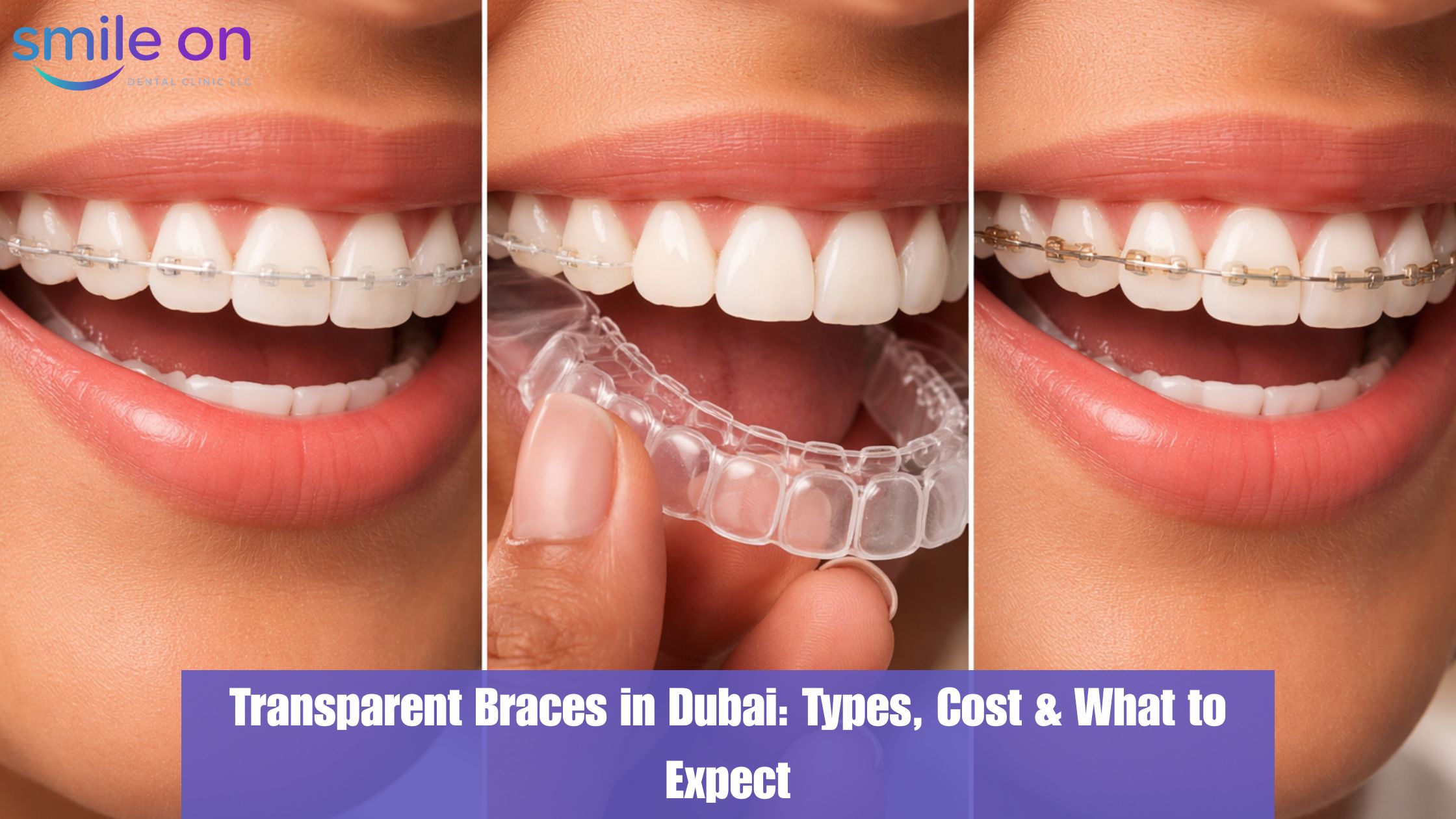
If you have been putting off orthodontic treatment because you do not want a mouth full of metal, you are not alone. Most adults in Dubai who search for transparent braces already know they want straighter teeth. What they are not always clear on is that transparent braces is not a single product. It is a category that includes three genuinely different treatment types, each with distinct advantages, limitations, and price points. Understanding the difference before your consultation saves time and helps you ask better questions. What Are Transparent Braces and What Types Are Available? Transparent braces is a broad term that refers to any orthodontic system designed to be less visible than traditional metal brackets and wires. Within that category, there are three distinct options: Ceramic braces are fixed brackets and wires bonded to the front of the teeth, just like metal braces. The difference is that the brackets are made from tooth-coloured ceramic or clear composite material, making them significantly less noticeable than metal. They are still visible on close inspection but blend with the natural tooth colour from normal conversational distance. Lingual braces are fixed braces in the same mechanical sense, but the brackets and wires are bonded to the inside surfaces of the teeth, facing the tongue. From the outside, they are genuinely invisible. Nobody can see them when you speak, smile, or laugh. Clear aligners are removable, transparent plastic trays worn over the teeth to gradually shift them into alignment. They are classified as transparent braces because they are virtually invisible when worn correctly. Invisalign is the most widely known system in Dubai, though several alternatives including Spark and ClearCorrect are available. Each of these works differently, suits different clinical cases, and involves a different day-to-day experience. The right choice depends on what your teeth need corrected, how important complete invisibility is to you, and what lifestyle commitments you are prepared to make. Ceramic Braces: What They Are and Who They Suit Ceramic braces work exactly the same way as metal braces. Brackets are bonded to the front surfaces of the teeth and connected by an archwire that is periodically adjusted to move the teeth progressively into the correct position. The only material difference is the bracket itself, which is made from tooth-coloured ceramic or clear composite rather than stainless steel. The result is a bracket that blends with the natural enamel and is significantly less noticeable than metal, particularly from normal distances. Most ceramic braces also use white or tooth-coloured wires to reduce visibility further. Under close inspection or in certain lighting, they are visible. On a video call or across a conference table, most people would not notice them. Ceramic braces suit patients who need fixed orthodontic treatment but want a less conspicuous look than metal. They handle the same clinical complexity as metal braces, including moderate to severe crowding, bite correction, and rotation of teeth, which is a broader range than most clear aligner systems manage reliably. The main practical consideration is staining. The ceramic brackets themselves are stain-resistant, but the elastic ligatures holding the wire can pick up colour from coffee, tea, red wine, and certain foods. Regular appointments for adjustments manage this, but patients who consume a lot of staining drinks should be aware of it. At Smile On Dental Clinic, ceramic braces are available as a clear fixed option for patients who need the clinical strength of braces with reduced visual impact. The Damon brace system, which uses self-ligating technology to reduce friction and bracket bulk, is also available and provides a notably lower-profile result than traditional ceramic brackets. Lingual Braces: The Option Nobody Sees at All Lingual braces are the only fixed orthodontic treatment that is genuinely invisible from the outside. The brackets are custom-fabricated to fit the inside surface of each individual tooth, and the archwire runs along the back surfaces, facing the tongue. When you smile, speak, or open your mouth normally, nothing is visible. This makes lingual braces particularly well suited to professionals, public speakers, performers, and anyone for whom visible orthodontic hardware during treatment is not acceptable. They are also the right choice for patients who want the clinical reliability of fixed braces for complex corrections while maintaining complete aesthetic discretion. The trade-off is adjustment. Because the brackets are positioned close to the tongue, there is an initial adaptation period of one to three weeks during which speech may feel slightly different and the tongue needs time to adjust to the new contact points. Most patients move through this phase without lasting difficulty, but it is a genuine experience that ceramic braces and aligners do not create. Lingual braces are more technically demanding to place and adjust than front-surface braces, which means they are typically performed by orthodontists with specific training in the system. They are priced higher than both metal and ceramic braces as a result. Smile On Dental Clinic offers lingual braces as a discreet fixed treatment option. If complete invisibility during treatment is your priority and your case requires the control that only fixed braces can provide, lingual braces are the most appropriate choice. Clear Aligners: When They Count as Transparent Braces Clear aligners qualify as transparent braces because they are nearly invisible when worn. A properly fitted aligner tray sits snugly against the teeth and is visible only on very close inspection under direct light. In normal social, professional, and photographic contexts, most people will not notice them. The defining characteristic that separates aligners from ceramic and lingual braces is removability. Aligners come out for eating, drinking anything other than water, brushing, and flossing. This makes them the most lifestyle-compatible orthodontic option for most adults. There are no food restrictions and oral hygiene is not complicated by brackets and wires. The clinical trade-off is that removability creates a compliance dependency that fixed braces do not have. Aligners must be worn for twenty to twenty-two hours each day for treatment to progress as planned. Patients who remove them frequently, forget
Clear Aligners: How They Work, What They Cost, and Whether They’re Right for You
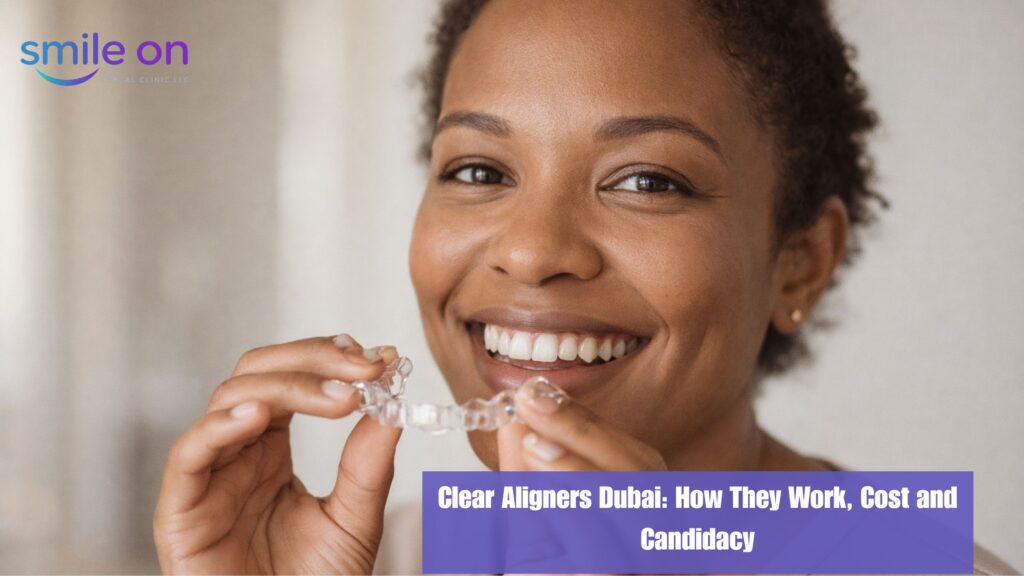
You have probably seen clear aligners advertised everywhere. Transparent trays, no metal, removable for meals, finished in months. The pitch is compelling. But before you book a consultation, it helps to understand what clear aligners actually do, what they genuinely cannot do, and what you are committing to when you say yes to treatment. This guide covers everything you need to make an informed decision. No fluff, no sales pressure. What Are Clear Aligners and How Do They Work? Clear aligners are a series of custom-made, transparent plastic trays worn over the teeth to gradually move them into a corrected position. Each tray is slightly different from the last, applying controlled pressure to specific teeth at specific points in the treatment plan. You wear each tray for one to two weeks before progressing to the next one in the series. The aligners are fabricated from digital scans of your teeth taken at your first appointment. An orthodontist or specialist dentist uses dedicated software to map out every planned tooth movement from your current position to the final result. You can typically see a simulation of the expected outcome before treatment begins. The most widely used clear aligner system is Invisalign, though multiple other systems are available in Dubai including Spark, ClearCorrect, and various branded alternatives. The underlying technology across systems is broadly similar. What differs is the material quality, precision of the treatment planning software, and the level of specialist oversight involved. Clear Aligners vs Traditional Braces: The Real Differences Both treatments move teeth using controlled force over time. The mechanism is the same. The experience is not. Visibility. Clear aligners are nearly invisible when worn correctly. Traditional braces use metal or ceramic brackets bonded to the teeth with visible wires. If aesthetics during treatment matter to you, aligners have a clear advantage. Removability. Aligners come out for meals, brushing, and flossing. This means no food restrictions and easier oral hygiene maintenance throughout treatment. Braces are fixed and require more careful cleaning around brackets and wires. The trade-off is that removability requires discipline. Aligners only work when they are in your mouth. Comfort. Aligners exert pressure on teeth during each tray change, which causes temporary soreness for a day or two. Braces can cause irritation to the cheeks and lips from brackets and wires, particularly in the first few weeks. Neither is pain-free, but the nature of the discomfort is different. Complexity range. Braces are more effective for cases involving significant bite correction, large tooth movements, or rotations of certain teeth. Clear aligners handle mild to moderate alignment cases very well. For complex orthodontic presentations, braces often remain the more reliable choice. Your orthodontist will tell you honestly which option suits your specific case.Treatment time. Mild to moderate aligner cases in Dubai typically run between six and eighteen months. Traditional braces are generally quoted at eighteen to twenty-four months, though complex cases in both categories can take longer. The biggest factor in aligner treatment time is compliance. Patients who wear their trays consistently achieve their results faster. Patients who do not wear them enough extend their treatment, sometimes significantly. Who Is a Good Candidate for Clear Aligners? Clear aligners are well suited to adults and older teenagers with mild to moderate orthodontic concerns. Good candidates typically have: Clear aligners are generally not the best option for patients with severe crowding, significant bite problems affecting jaw function, teeth that require complex rotational movements, or patients who are not confident they can maintain the required wear time. Braces in these cases are not a lesser alternative. They are the clinically correct one. Children under twelve are typically not ideal candidates because their jaws are still developing. Invisalign First, a specific system designed for younger patients with mixed dentition, is an exception and is discussed separately. The only reliable way to determine whether you are a candidate is through a clinical assessment with an orthodontist or specialist dentist who can evaluate your teeth, bite, and jaw relationship properly. How Long Does Clear Aligner Treatment Take? Treatment duration depends primarily on how much tooth movement is needed and how consistently the aligners are worn. For mild cases involving minor crowding or small gaps, treatment commonly completes in six to nine months. For moderate cases, twelve to eighteen months is a typical timeframe. Complex cases can extend to twenty-four months or beyond, at which point traditional braces may be a more predictable choice. The compliance factor is where many patients underestimate the impact of their own behaviour. Clear aligners need to be worn for twenty to twenty-two hours every day. That leaves a window of two to four hours for eating, drinking anything other than water, and cleaning your teeth. When patients wear aligners for fewer hours than prescribed, teeth do not move as planned, and treatment extends. Some patients require additional trays and additional months beyond the original estimate. This is not a reason to avoid aligners. It is a reason to be honest with yourself about whether you will commit to wearing them before you start. What Affects the Cost of Clear Aligners in Dubai? Clear aligner treatment in Dubai typically ranges from AED 7,000 to AED 25,000. That is a wide range, and understanding what drives the variation helps you compare quotes meaningfully rather than choosing on price alone. Case complexity. Mild cases requiring fewer trays and less total movement are less expensive than moderate or complex cases. The number of aligners manufactured determines a significant portion of the overall cost. The aligner system used. Branded systems like Invisalign are priced differently from other clear aligner providers. Within Invisalign, there are tier levels ranging from Invisalign Lite for straightforward cases to Invisalign Comprehensive for full treatment. Each tier carries a different price point. Your orthodontist should explain which tier is appropriate for your case and why. What is included in the quoted price. Some clinics quote only the aligner trays. Others include the 3D digital scan, all monitoring appointments, refinement trays