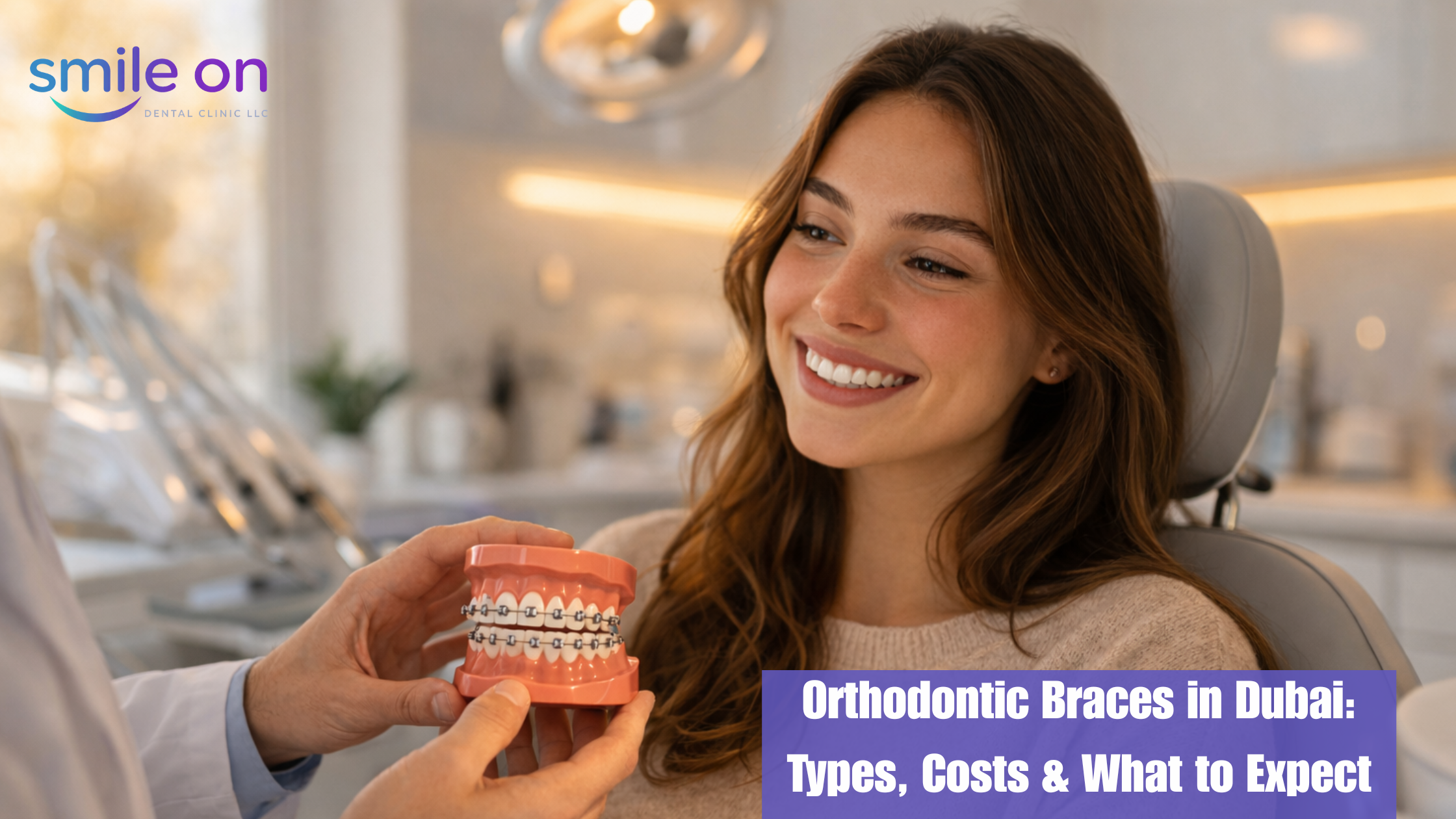
Orthodontic Braces in Dubai: Types, Costs, and Everything You Need to Know
You’ve probably noticed more adults around you wearing braces than you’d expect. At the office, at brunch, on the metro. That’s not a coincidence. Orthodontic braces have changed dramatically, and in Dubai’s image-conscious, professionally driven population, demand for tooth alignment treatment has grown across all age groups. Quick answer: Orthodontic braces are dental appliances that apply gentle, consistent pressure to move teeth and correct bite alignment over time. They treat crowding, spacing, overbites, underbites, and crossbites. In Dubai, treatment typically takes 12 to 24 months and costs between AED 5,000 and AED 18,000, depending on the type and case complexity. This guide covers every type of orthodontic braces available in Dubai, how they work, what they cost, how long treatment takes, and what your daily life will actually look like from the first fitting to the final retainer. What Are Orthodontic Braces and What Problems Do They Fix? Orthodontic braces are appliances used to correct the alignment of teeth and jaws. They work by applying controlled, sustained pressure to teeth over a period of months or years, gradually guiding them into better positions and correcting how the upper and lower jaws meet. Braces treat a wide range of conditions. Dental crowding happens when teeth overlap because there isn’t enough space in the arch. Spacing refers to gaps between teeth. An overbite is when the upper front teeth cover too much of the lower teeth vertically. An underbite is when the lower teeth sit in front of the upper teeth. A crossbite means upper and lower teeth don’t align correctly on one or both sides. An open bite means the front teeth don’t meet when the mouth is closed. These aren’t just cosmetic concerns. Crowded teeth are harder to brush and floss, increasing the risk of cavities and gum disease. Bite problems can cause uneven wear on enamel, jaw discomfort, and, in some cases, headaches. Correcting alignment with orthodontic braces often makes long-term dental health significantly easier to maintain, not just your smile more appealing. Results vary by individual case, and a clinical assessment is always the starting point. How Do Orthodontic Braces Actually Work? This is one of the most searched questions about braces and one that most clinic pages surprisingly skip over. Understanding the mechanics helps you stay committed through the process. Orthodontic braces work by exerting a continuous, gentle force on your teeth in a specific direction. This pressure stimulates a biological process in the surrounding bone called bone remodelling. On the side of the tooth being pushed, bone cells called osteoclasts break down existing bone tissue. On the tension side, osteoblasts form new bone to fill the space. This is how a tooth physically moves through solid jaw bone without damage to the surrounding structure, provided the forces are carefully controlled by a trained orthodontist. For fixed braces, brackets bonded to each tooth act as handles. The archwire threaded through them is the engine. When your orthodontist adjusts the wire at each appointment, they’re calibrating the direction and amount of force applied. For clear aligners, each tray in the series is manufactured slightly differently from the last, with micro-movements built in so each new tray nudges teeth incrementally closer to the planned final position. The soreness you feel after an adjustment or when switching to a new aligner is your body responding to that new pressure. It typically settles within 48 to 72 hours. It is not a sign that something is wrong; it’s confirmation that the process is working. What Are the Types of Orthodontic Braces Available in Dubai? Dubai clinics offer the full spectrum of modern orthodontic options. The right choice depends on the complexity of your case, your lifestyle, and how much visibility matters to you during treatment. Metal Braces Metal braces remain the most clinically reliable and cost-effective option, particularly for complex cases. Stainless steel brackets are bonded to the front of each tooth and connected by an archwire that your orthodontist tightens at regular intervals. Modern metal braces are significantly smaller and more comfortable than older versions. They are the most affordable type available in Dubai and handle the widest range of cases including severe crowding, significant bite corrections, and longer treatment timelines. For children and teenagers, metal braces are the most commonly recommended starting point. Ceramic Braces Ceramic braces use the same mechanical system as metal braces but with tooth-coloured or clear brackets. They are much less noticeable at a normal conversational distance, which is a meaningful advantage for adults and teenagers who are conscious of their appearance during treatment. The trade-off: ceramic brackets are slightly more fragile, can stain from coffee, tea, or turmeric-heavy food (very relevant in Dubai’s dining culture), and may add marginally to treatment time in some cases. They cost slightly more than metal braces. If you want a fixed brace with less visual impact, ceramic is the established middle-ground option. Damon Braces (Self-Ligating) Damon braces use a built-in sliding mechanism to hold the archwire instead of elastic ties, which reduces friction as teeth move. Many patients find them more comfortable and the reduced friction can mean fewer adjustment appointments. They are available in both metal and clear versions. At Smile On Dental Clinic, Damon braces are one of the fixed brace options available under specialist care. Lingual Braces Lingual braces are bonded to the back surfaces of your teeth, making them completely invisible from the front. For professionals in client-facing roles, people who appear publicly, or anyone for whom visible braces genuinely aren’t an option, lingual braces offer the effectiveness of a fixed appliance with total discretion. There is a real adaptation period: your tongue will notice them immediately, and speech may be slightly affected for one to two weeks. They are the most technically demanding type to fit and adjust, which is why they cost more and require an orthodontist with specific experience in lingual systems. Invisalign and Clear Aligners Invisalign uses a series of custom-made, removable clear trays to move teeth gradually, with
Orthodontic Treatment in Dubai: Your Complete Guide to Straighter Teeth
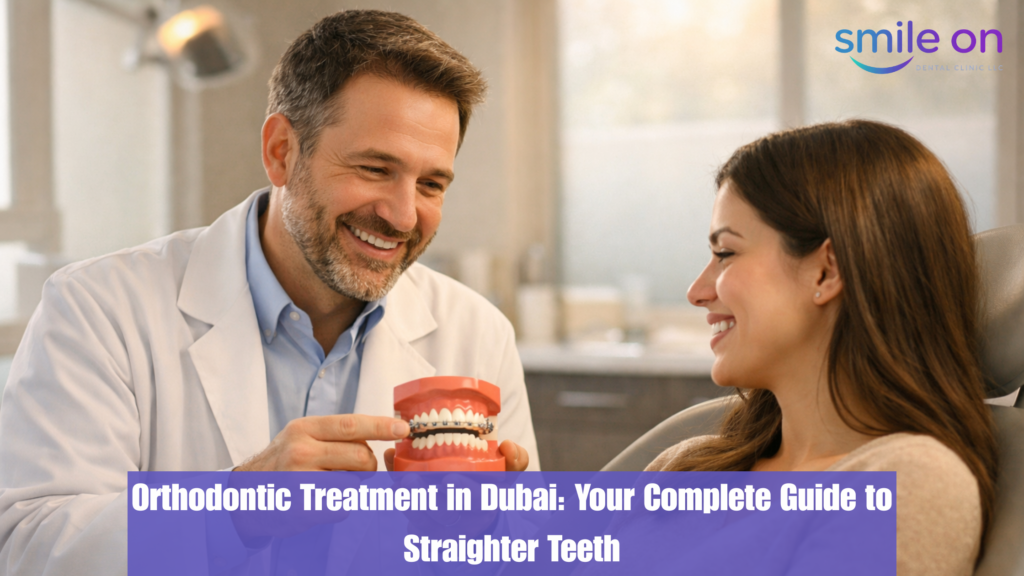
You’ve been thinking about it for a while. Maybe it’s the slight crowding on your lower teeth, an overbite you’ve learned to live with, or gaps you’ve always felt self-conscious about. Whatever the reason, if you’re considering orthodontic treatment, you’re not alone. Thousands of people in Dubai, both children and adults, start this process every year, and the options available today are far better than what most people imagine. Orthodontic treatment is the branch of dentistry focused on correcting the alignment of teeth and jaws. It uses appliances like braces or clear aligners to move teeth gradually into their correct positions, improving both function and appearance. In Dubai, where appearance and professional presentation matter to many residents and expats, demand for orthodontic care has grown significantly. This guide covers everything you need to know: the types of treatment available, who needs it, how long it takes, what it costs, and how to choose the right orthodontist in Dubai. What Does Orthodontic Treatment Actually Fix? Orthodontic treatment addresses a range of alignment issues, not just crooked teeth. The most common conditions treated include crowding (teeth that overlap due to insufficient space), spacing (gaps between teeth), overbite (upper teeth covering too much of the lower teeth), underbite (lower teeth sitting in front of upper teeth), crossbite, and open bite. Beyond aesthetics, misaligned teeth can cause real functional problems. Crowded teeth are harder to clean, which increases the risk of decay and gum disease. An uncorrected bite issue can lead to jaw pain, uneven wear on tooth enamel, and even headaches in some cases. So when people pursue orthodontic treatment, they’re often investing in their long-term dental health, not just a more confident smile. The right treatment for you depends on the type and severity of the misalignment, your age, and your lifestyle preferences. That’s why a proper clinical assessment from a qualified orthodontist is always the starting point. What Are the Types of Orthodontic Treatment Available in Dubai? Dubai clinics now offer several well-established types of orthodontic appliances, and the choice between them depends on your specific case as much as your personal preferences. Traditional Metal Braces Metal braces remain one of the most reliable and cost-effective options for complex cases. They use metal brackets bonded to the teeth, connected by an archwire that applies gentle, consistent pressure over time. Modern metal braces are smaller and more comfortable than older versions, and they work well for patients of all ages. Damon Braces Damon braces use a self-ligating bracket system, meaning they don’t require the elastic ties used in traditional braces. This can reduce friction during tooth movement and may mean fewer adjustment visits. Many patients find them more comfortable, and they can work faster in certain cases. Lingual Braces Lingual braces are fixed to the back surface of your teeth, making them essentially invisible from the front. They’re a good choice for adults who want the effectiveness of fixed braces without the visible brackets. They do require a short adjustment period for speech and tongue comfort. Invisalign (Clear Aligners) Invisalign uses a series of custom-made, removable clear aligners to shift teeth gradually. Each set of aligners is worn for about one to two weeks before moving to the next. Because they’re removable, you can eat and brush normally without any restrictions. Invisalign is popular with adults and older teenagers in Dubai, particularly those in professional or social environments where visible braces feel like an obstacle. The right choice isn’t always obvious from the outside. An orthodontist will assess your bite, jaw structure, and bone density before recommending a specific appliance. How Long Does Orthodontic Treatment Take? This is one of the first questions people ask, and the honest answer is: it varies, but there are useful benchmarks. For mild cases, such as minor crowding or small gaps, treatment with clear aligners can be completed in as little as six to twelve months. Moderate cases typically take twelve to eighteen months. More complex cases involving significant bite correction or jaw alignment can take anywhere from eighteen months to three years. Age plays a role too. Teenagers tend to see faster tooth movement than adults because their bone density is lower and their jaws are still developing. That said, adults achieve excellent results with orthodontic treatment; it simply requires patience and consistency. Compliance matters more than most people expect. With removable aligners, wearing them for the recommended 20 to 22 hours a day is essential for staying on track. Missing appointments or not wearing your aligners as prescribed are the most common reasons treatment takes longer than expected. What Is the Cost of Orthodontic Treatment in Dubai? Orthodontic treatment costs in Dubai vary depending on the type of appliance, the complexity of the case, and the clinic you choose. As a general guide: Traditional metal braces typically range from AED 5,000 to AED 10,000 for a full course of treatment. Damon or self-ligating braces tend to be slightly higher, in the AED 7,000 to AED 12,000 range. Lingual braces, due to their custom fabrication, usually start from AED 12,000 and can go higher for complex cases. Invisalign treatment in Dubai commonly ranges from AED 8,000 to AED 18,000, depending on the number of aligners required. These figures are estimates and your actual cost will be confirmed after a clinical assessment. Many clinics, including Smile On Dental Clinic, offer flexible payment plans, which makes the process more manageable for families or individuals budgeting carefully. Some UAE insurance plans cover a portion of orthodontic costs for children, so it’s worth checking your policy. Who Should Consider Orthodontic Treatment, and When Is the Right Age? There is no single right age for orthodontic treatment, but timing can affect both the ease of treatment and the long-term outcome. For children, the ideal window for a first orthodontic assessment is around age seven. At this stage, an orthodontist can spot developing issues early, even while most baby teeth are still present. Early intervention doesn’t always mean starting braces
How to Keep Your Child Calm During Their First Dental Visit
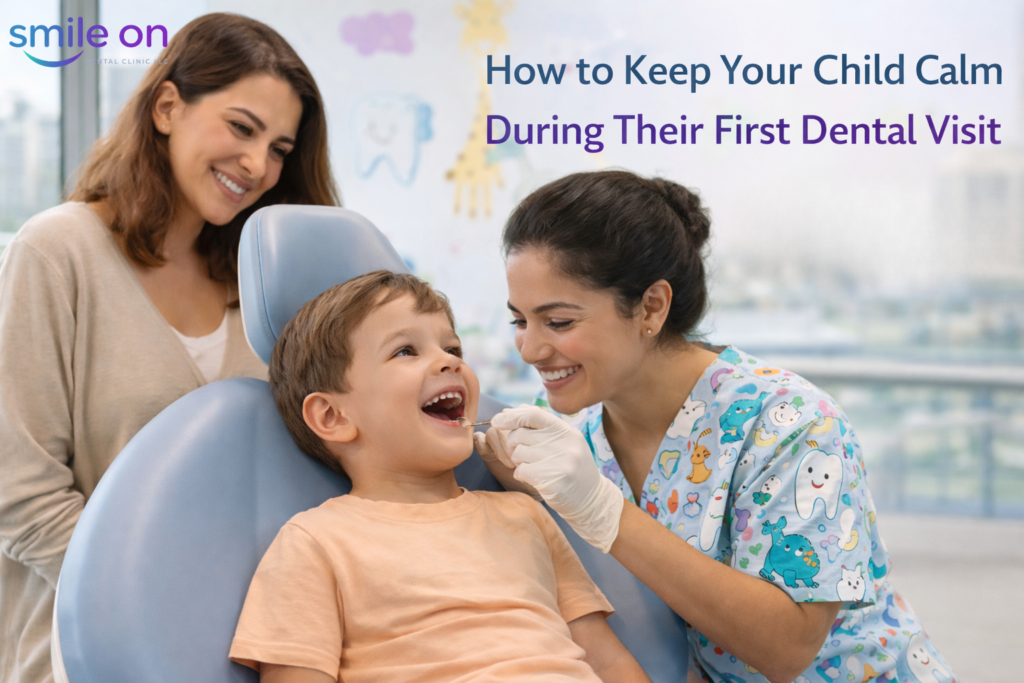
Your child’s first dental visit is more than just a checkup. It sets the tone for how they’ll feel about dental care for years to come. With the right preparation, you can turn what might feel like a stressful milestone into a positive experience your child actually enjoys. This guide provides proven strategies to help your child feel comfortable, confident, and even excited about their first dental appointment. Why the First Visit Matters Children remember their first experiences vividly. Research shows that when a first dental visit is comforting and reassuring, children develop a favorable opinion of dental care that lasts into adulthood. A positive early experience builds trust and good habits, while a scary visit can create anxiety that makes future appointments difficult for everyone. The foundation you build today influences your child’s oral health habits for decades to come. When to Schedule the First Visit Dental experts recommend bringing your child to the dentist by their first birthday or within six months of their first tooth erupting, whichever comes first. This might seem early, but there are important reasons: Early visits set the stage for a lifetime of positive dental experiences. Your Attitude Sets the Tone Kids are incredibly perceptive about emotions. If you’re anxious about the dentist, your child will pick up on it, even if you think you’re hiding it well. Before the appointment, check in with yourself. Are you carrying your own dental fears? Acknowledge them but don’t let them show. Your calm, positive attitude is one of the most powerful tools you have. Use Positive Language Say this: “We’re going to meet a friendly doctor who helps keep your teeth strong” Not this: “Don’t worry, it won’t hurt” The second approach, even though well-intentioned, plants the idea that pain might be involved. Keep your language upbeat and matter-of-fact. Make Preparation Fun The unknown is often scarier than reality. Help your child understand what will happen by making preparation a game rather than a lecture. Read Books Together Children’s books about going to the dentist help normalize the experience. Stories featuring friendly characters visiting the dentist let your child see that other kids go too, and it’s nothing to fear. Reading these together a few days before the appointment builds familiarity without pressure. Make it part of your regular storytime routine. Play Dentist at Home Role-playing is one of the most effective ways to reduce dental anxiety. Set up a pretend dental office where you take turns being the dentist and patient. How to play: The more playful you make it, the less intimidating it becomes. This hands-on play helps children feel more in control and less surprised during the real visit. Watch Age-Appropriate Videos Many pediatric dental clinics have short videos that walk through what a dental visit looks like. Watching these together helps set realistic expectations without overwhelming your child. Keep videos brief and positive. Choose a Pediatric Dentist Pediatric dentists receive additional training specifically focused on treating young patients. They know how to communicate in age-appropriate ways and create welcoming environments. Look for a practice with: At Smile On DC in Satwa, our pediatric dental team specializes in making children comfortable from the moment they arrive. We understand that how we interact during the first visit shapes their relationship with dental care for life. What to Bring to the Appointment Simple items can make a big difference in your child’s comfort level. Comfort Object A favorite stuffed animal, blanket, or toy provides security in an unfamiliar environment. Don’t hesitate to bring whatever makes your child feel safe. Your Patience Arrive 10-15 minutes early so you’re not rushed. A calm, unhurried arrival sets a relaxed tone for the entire visit. Build in extra time for parking and finding the office. Snacks (Optional) Check with the dental office first, but having a light snack beforehand can prevent crankiness from hunger. Avoid sugary snacks right before the appointment. Timing Matters When you schedule the appointment can significantly affect how well it goes. Best practice: Schedule morning appointments when possible. Kids are typically well-rested and in better moods earlier in the day. Morning visits also mean less time during the day for your child to worry about the appointment. Avoid scheduling right before naptime or when your child is usually hungry or tired. What to Expect During the Visit Understanding what happens helps both you and your child feel prepared. Duration The first appointment usually lasts 30-45 minutes. This includes time for your child to get comfortable with the environment and staff. What the Dentist Will Do The dentist will gently examine your child’s teeth, gums, and mouth to check development and look for early signs of problems. They might: Additional Services A gentle cleaning might be included, depending on your child’s age and comfort level. The dentist will also discuss: The Goal For very young children, the first visit is often more about getting comfortable than doing extensive procedures. The primary goal is building trust and familiarity with the dental environment. During the Appointment: How to Help Your behavior during the appointment can significantly impact your child’s experience. Stay Relaxed Your child looks to you for cues on how to feel. Smile, stay calm, and offer gentle encouragement. Avoid showing any anxiety or nervousness you might feel. Use Positive Reinforcement Praise specific behaviors rather than generic compliments. Effective: “You did such a great job keeping your mouth open”Less effective: “Good job” Specific praise helps children understand exactly what they’re doing well. Let the Dentist Lead Trust the pediatric dentist to guide the interaction. They’re trained in behavior management and know how to communicate effectively with children. Too many voices giving instructions can be confusing. Distraction Helps Some children do better holding a toy or focusing on something else. The dentist might use gentle distraction techniques like: If Your Child Gets Upset Even with perfect preparation, some children get anxious. That’s completely normal and nothing to worry about. What to Do If your child starts